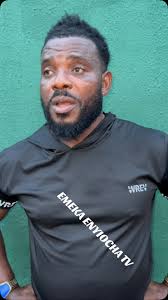
Nollywood actor Emeka Enyiocha has sparked reactions on social media after making a controversial declaration against anyone who attempts to rig Nigeria’s 2027 general elections.
The veteran actor reportedly called on God to punish individuals who manipulate the outcome of the forthcoming elections, using unusually strong language that has attracted public attention.
In a statement shared by NewsFlash NGR on November 26, 2026, Enyiocha was quoted as saying: “God, anybody who rigs 2027 election, give the person a sickness that no medicine or doctor can cure.”
The actor, also known as Ezebunafo, did not mention any political party, presidential candidate or individual in the statement. He also did not reportedly explain where or when he made the declaration or what prompted his comments.
His remarks come amid growing public conversations about electoral integrity, political accountability and the credibility of Nigeria’s 2027 general elections.
Concerns about possible electoral manipulation have featured prominently in political discussions, with several public figures and political actors issuing warnings against attempts to undermine voters’ choices.
The debate has also attracted the attention of the Independent National Electoral Commission (INEC), which recently cautioned politicians and their supporters against inflammatory statements linking election offences to death.
Speaking at a media stakeholders’ forum in Abuja on November 23, INEC National Commissioner and Chairman of its Information and Voter Education Committee, Mohammed Kudu Haruna, warned that the increasingly popular slogan, “rig and die”, could endanger electoral officials, voters, party agents and observers.
Haruna explained that although some people claimed the expression was directed only at individuals involved in election rigging, innocent Nigerians working at polling units could become victims of violence if crowds acted on rumours or suspicions.
He stressed that electoral offences should be addressed through lawful channels, including formal complaints to INEC, security agencies and the courts.
Enyiocha’s declaration has therefore added another voice to the growing public debate over how Nigerians should respond to electoral malpractice ahead of the next general elections.
While his statement expresses anger towards anyone who might manipulate the people’s mandate, the wider conversation also highlights the importance of protecting voters and electoral workers from intimidation and violence.
As preparations and political activities ahead of 2027 continue, attention remains focused on the ability of electoral institutions to conduct credible elections and ensure that the choices of Nigerians are respected.