


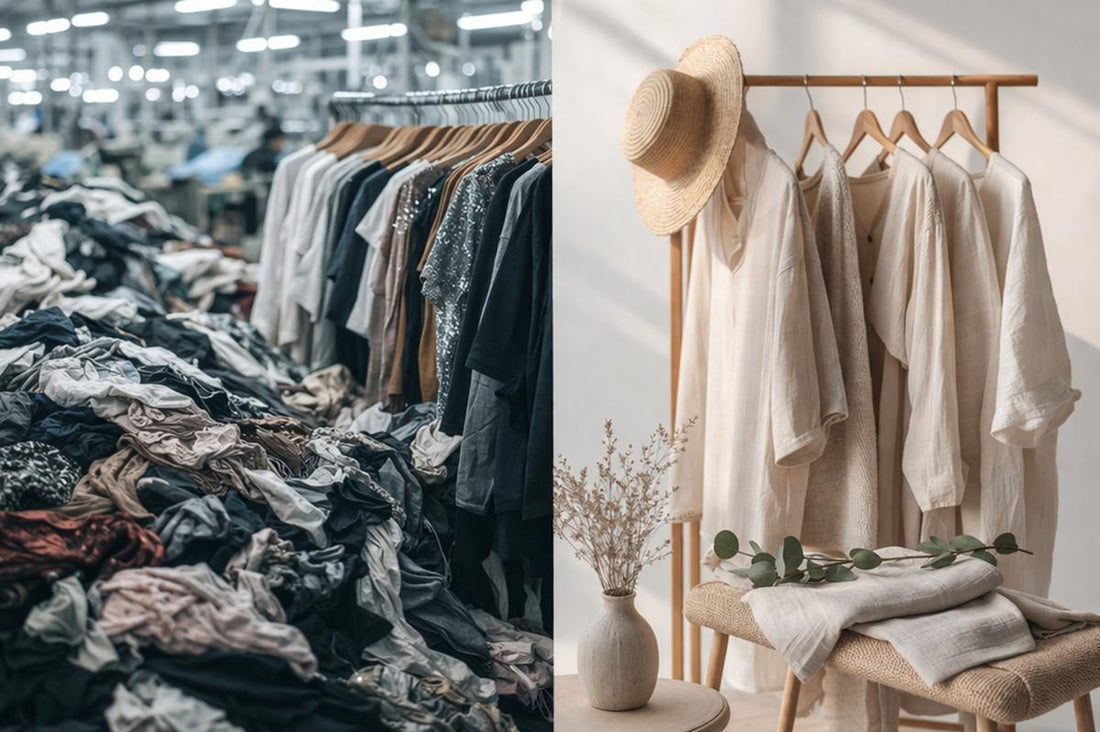
If wardrobes could talk, they would probably be the busiest gossip centers in the world. One corner is occupied by clothes that arrived from an online sale just three days ago, while another corner hides outfits that still have their price tags attached from last Christmas. Somewhere in between is that faithful pair of jeans that has survived countless wash days, family gatherings, and “I have nothing to wear” moments. Welcome to the fascinating battle between fast fashion and slow fashion, a rivalry that has quietly taken over the global fashion business and is influencing how millions of people spend their money.
Fashion has never been just about looking good. It has become one of the world’s biggest industries, generating billions of dollars every year while creating employment for designers, manufacturers, marketers, photographers, influencers, and retailers. Yet behind every beautiful outfit lies a business decision, and today’s consumers are unknowingly choosing sides every time they open their wallets.
Fast fashion is exactly what it sounds like. It is the business of producing trendy clothes at lightning speed and selling them at prices that often make shoppers say, “At this price, I might as well buy two.” New collections appear almost every week, inspired by celebrity styles, runway shows, and viral social media trends. Before you can finish admiring one trend online, another one has already arrived wearing even brighter colors and a bigger price tag.
Slow fashion, on the other hand, believes fashion should be treated more like a long-term relationship than a weekend fling. Instead of chasing every trend that appears on social media, slow fashion focuses on quality, durability, ethical production, timeless designs, and environmental responsibility. The idea is simple: buy less, choose wisely, and wear your clothes for years instead of weeks.

At first glance, it might seem obvious that fast fashion is winning. After all, stores are constantly crowded, online shopping carts are always full, and many wardrobes continue to expand faster than people’s savings accounts. One social media notification announcing a 70% OFF Flash Sale” is sometimes enough to convince even the most disciplined shopper that buying another pair of trousers is somehow a financial investment.
The popularity of fast fashion is driven largely by affordability. Young professionals, students, and families can update their wardrobes without spending a fortune. Fashion has become more accessible than ever before. Instead of waiting months to save for one expensive outfit, consumers can purchase several trendy pieces at relatively affordable prices. Businesses benefit from high sales volumes, while customers enjoy the excitement of always wearing the latest styles.
Social media has only accelerated this trend. Every scroll introduces a new outfit inspiration, a new influencer, or a celebrity showcasing a fresh look. Suddenly, last month’s outfit feels ancient, even though it has only been worn twice. Somewhere, a perfectly good shirt quietly wonders what it did wrong.
This constant demand has transformed fashion into one of the fastest-moving consumer industries. Brands race against time to produce collections before trends disappear. Designers monitor social media almost as closely as financial analysts monitor stock markets. Timing has become everything.
However, the speed that makes fast fashion successful also creates challenges. Massive production often leads to enormous textile waste, environmental pollution, and increased pressure on manufacturing processes. Many garments are worn only a handful of times before ending up forgotten in closets or discarded altogether. It is an expensive cycle disguised as affordable shopping.
That is where slow fashion begins to gain attention.
Consumers are becoming increasingly interested in knowing where their clothes come from, who made them, and how they were produced. Instead of asking only, “Does this look good on me? many shoppers now ask, “Will I still love this next year?” That simple question is quietly changing the industry.
Slow fashion encourages investment in well-made clothing that can withstand changing trends. Quality fabrics, skilled craftsmanship, proper tailoring, and timeless designs often mean garments last significantly longer. While the initial price may be higher, the cost per wear frequently becomes lower over time.
This shift has created exciting opportunities for independent designers and small fashion businesses, especially across Africa. Many local brands now emphasize handmade craftsmanship, custom tailoring, premium fabrics, and limited collections instead of mass production. Customers appreciate uniqueness, and many are willing to pay for clothing that tells a story rather than simply following a trend.
For entrepreneurs, this changing landscape presents both opportunities and challenges. Fast fashion businesses thrive on volume, efficient logistics, aggressive marketing, and rapid inventory turnover. Slow fashion brands, meanwhile, compete by building trust, quality, authenticity, and long-term customer relationships. Success no longer depends only on selling clothes but on selling values.
Interestingly, the two models are beginning to influence each other. Many large fashion companies are introducing sustainable collections, recycling programs, and environmentally friendly materials in response to changing consumer expectations. At the same time, some slow fashion brands are adopting digital marketing strategies and faster production systems without compromising their commitment to quality.
Technology is also reshaping the competition. Artificial intelligence helps brands predict trends, reduce waste, manage inventory, and personalize customer recommendations. Digital fashion shows, virtual fitting rooms, and online customization are transforming the shopping experience, making fashion businesses smarter as well as faster.
Still, consumers remain the ultimate decision-makers. Every purchase sends a message about what kind of fashion industry people want to support. Buying fewer, higher quality items may reduce waste, while occasionally purchasing affordable trendy pieces allows more people to express themselves without breaking the bank. There is no universal rulebook because every shopper has different priorities, budgets, and lifestyles.
Perhaps the real winner in this closet war is balance. There is nothing wrong with enjoying a trendy outfit now and then, just as there is nothing old-fashioned about investing in timeless pieces that remain stylish year after year. A wardrobe filled with thoughtful choices often outperforms one overflowing with impulse purchases.
The future of fashion is unlikely to belong entirely to fast fashion or slow fashion. Instead, the industry appears to be moving toward a smarter middle ground where affordability, sustainability, innovation, and quality can exist together. Businesses that understand this shift will be better positioned to meet the expectations of modern consumers.
As DDM News continues to monitor developments in global business and fashion, one thing is becoming increasingly clear: today’s shoppers are not simply buying clothes, they are buying stories, values, convenience, and confidence. Every outfit hanging in a wardrobe represents a decision, and those decisions are shaping one of the world’s most influential industries.
So, who is really winning the closet war? The answer may not be fast fashion or slow fashion alone. The real champion might just be the informed consumer who knows when to grab a bargain, when to invest in quality, and when to ignore that irresistible midnight notification announcing yet another “once-in a lifetime” sale that somehow appears every Tuesday. If closets could vote, they would probably beg for a little more breathing room.
As DDM News has observed, the future of fashion belongs not just to the brands that sell the most clothes, but to those that earn lasting trust. After all, trends may come and go, but good style, and smart business never truly goes out of fashion.




