


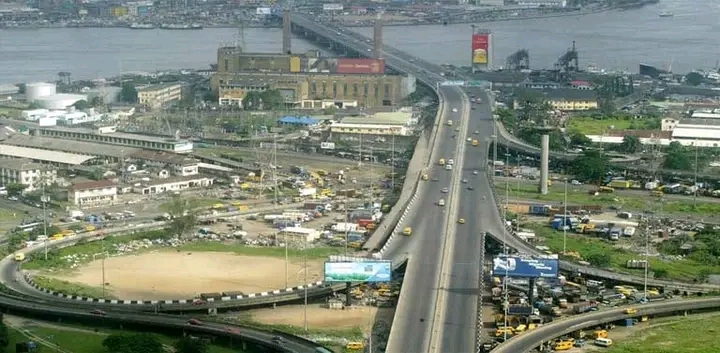
LAGOS, NIGERIA — The Federal Government has approved a massive ₦548.98 billion project for the demolition and full reconstruction of Carter Bridge in Lagos, citing serious structural deterioration and long-term safety concerns.
The decision follows engineering assessments that revealed significant wear and weakening of the bridge’s structural components, raising fears about its ability to safely handle increasing traffic volumes in Nigeria’s busiest commercial hub.
Carter Bridge, one of the oldest and most critical transport links connecting Lagos Island to the mainland, has served as a major artery for commuters, businesses, and logistics operations for decades.
Officials say the planned demolition and reconstruction will not only address safety risks but also modernise the bridge to meet current and future transportation demands in Lagos.
The project is expected to involve a complete overhaul of the existing structure, including reinforcement of foundations, expansion of lanes, and integration of modern engineering standards to improve durability and traffic flow.
Authorities have indicated that the scale of deterioration made rehabilitation insufficient, prompting the decision to opt for full reconstruction instead of phased repairs.
The Federal Government emphasised that the project aligns with broader infrastructure renewal efforts aimed at improving road networks, reducing congestion, and enhancing economic productivity across key urban centres.
Experts note that Carter Bridge has experienced years of heavy usage, with increasing pressure from population growth, urban expansion, and rising vehicle density contributing to its current condition.
The reconstruction is also expected to incorporate advanced safety features, including improved drainage systems, pedestrian provisions, and enhanced load-bearing capacity.
However, the project is likely to have significant short-term implications for traffic movement in Lagos, with commuters expected to face diversions, congestion, and longer travel times during the construction phase.
Transport authorities are expected to announce alternative traffic management plans to minimise disruption and maintain connectivity between Lagos Island and the mainland.
Economic analysts highlight the importance of the bridge to commercial activities, noting that any disruption must be carefully managed to avoid negative impacts on trade and daily business operations.
The ₦548.98 billion investment reflects the government’s commitment to infrastructure development, although it also raises questions about funding, execution timelines, and transparency in project delivery.
Residents and stakeholders have called for clear communication from authorities regarding project timelines, traffic arrangements, and measures to ensure timely completion.
As preparations begin, attention will focus on how effectively the government manages the complex reconstruction process while balancing safety, economic activity, and public convenience in one of Africa’s most densely populated cities.




