


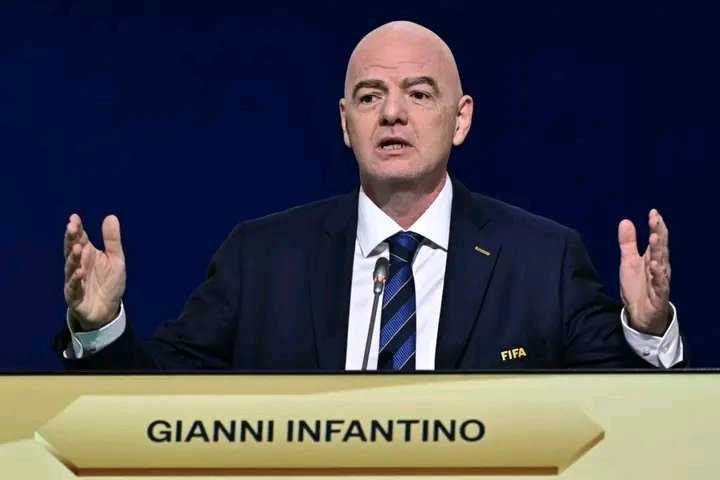
FIFA has unveiled a major accessibility innovation ahead of the 2026 World Cup, confirming that selected match broadcasts will feature live sign language interpretation as part of a broader strategy to make football more inclusive and globally accessible.
The decision marks one of the most significant steps yet taken by world football’s governing body to improve the viewing experience for deaf and hard-of-hearing fans, ensuring they can follow live action with greater clarity, emotion, and engagement.
The 2026 World Cup, jointly hosted by the United States, Canada, and Mexico, is expected to be the largest in the tournament’s history, featuring 48 teams and 104 matches across multiple host cities. FIFA says this expanded format presents an opportunity to implement wider accessibility innovations on a global scale.

According to FIFA, the sign language broadcast service will include trained professional interpreters who will translate live commentary, stadium announcements, referee decisions, and key match moments in real time. The aim is to ensure that deaf fans receive an experience that closely mirrors the intensity and atmosphere enjoyed by hearing audiences.
The initiative is expected to be integrated into both television coverage and digital streaming platforms, allowing fans across different regions and devices to access the service seamlessly. FIFA is working closely with its broadcast partners to ensure consistency, accuracy, and smooth delivery across multiple languages and regions.
FIFA officials stated that the move reflects a long-term commitment to inclusivity in football, emphasizing that the sport’s global reach must be matched by equal access for all fans, regardless of physical ability.
Over the years, FIFA has gradually expanded its accessibility efforts. Previous tournaments have included closed captioning services, audio descriptive commentary, sensory-friendly fan zones, and stadium assistance programs designed to support spectators with disabilities. The introduction of live sign language interpretation represents the next stage in that evolution.
Disability rights and inclusion advocates have long pushed for real-time accessibility in live sports broadcasts, arguing that highlights and post-match summaries alone are not enough to fully include deaf audiences in the live sporting experience. FIFA’s latest decision is being viewed as a response to these long-standing calls for change.
The governing body explained that accessibility is now a core pillar of its event planning framework. Officials believe that modern sporting events must reflect diversity and inclusion not only on the pitch but also in how content is delivered to global audiences.
With millions of football fans worldwide living with hearing impairments, FIFA says the introduction of sign language interpretation is intended to bridge a long-standing communication gap that has limited access to live emotional moments in football, including goals, refereeing decisions, and stadium reactions.
Sports accessibility experts have described the move as a major milestone, noting that live sign language interpretation during high-profile sporting events remains relatively rare on a global scale. They argue that FIFA’s adoption of the service could set a new standard for other international sports federations and broadcasters.
The 2026 World Cup is already shaping up to be one of the most technologically advanced editions of the tournament, with FIFA expected to introduce enhanced broadcast features, advanced analytics, improved fan engagement tools, and expanded digital coverage across platforms.
The addition of sign language interpretation is part of this broader transformation, which aims to make the World Cup not only a sporting spectacle but also a benchmark for accessibility and inclusion in global entertainment.
FIFA also confirmed that the accessibility enhancements will extend beyond broadcasts. Stadium-based support services for fans with disabilities are expected to be expanded, including improved navigation assistance, accessible seating arrangements, and enhanced match-day support personnel.
In addition, the organization is reportedly working on upgraded captioning systems and improved audio description services, ensuring that fans with varying accessibility needs can enjoy a more complete and immersive football experience.
Reaction from inclusion advocates has been largely positive, with many describing the development as a meaningful step toward equal access in global sports. They argue that football, as the world’s most popular sport, carries a responsibility to lead in accessibility innovation.
Analysts also believe the move could influence other major sporting bodies such as UEFA, CONMEBOL, and national leagues to adopt similar inclusive broadcast standards in the near future.
Broadcast industry experts note that integrating live sign language interpretation into fast-paced sporting events presents technical and logistical challenges, particularly in ensuring real-time accuracy and synchronization with live commentary. However, they also say advances in broadcast technology and interpreter training are making such initiatives increasingly feasible.
FIFA has not yet disclosed which specific matches will feature sign language interpretation but confirmed that the rollout will begin with selected fixtures before potentially expanding based on audience demand and broadcast capacity.
As anticipation builds for the 2026 World Cup, FIFA says its goal is not only to deliver world-class football but also to ensure that every fan, regardless of ability, can fully experience the emotion, excitement, and drama of the tournament.
The governing body reiterated that inclusivity remains central to its long-term vision for the sport, adding that football must continue to evolve as a truly global game that belongs to everyone.




