


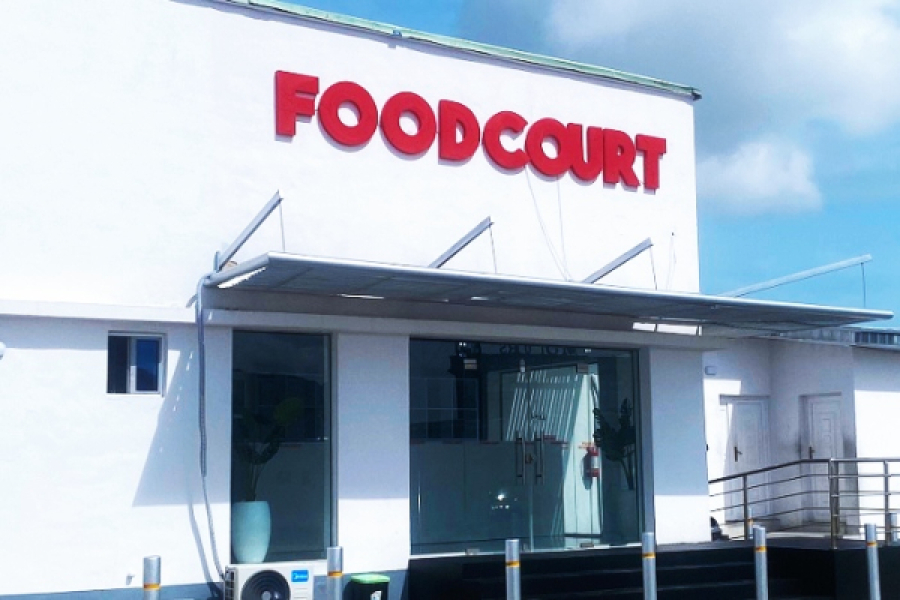
FoodCourt Pauses Operations Over Financial Crisis as Unpaid Salaries, Vendor Debts and Funding Setback Threaten Nigerian Cloud Kitchen
FoodCourt, a Nigerian cloud kitchen backed by Y Combinator, has temporarily suspended operations after months of financial pressure left employees unpaid, vendors waiting for outstanding bills and the company struggling to close an expected funding facility. The development has placed one of Nigeria’s more ambitious food-tech startups at a critical turning point, with its survival now depending on fresh capital, a successful restructuring and the restoration of confidence among the people and businesses that keep it running.
For customers, the crisis appeared almost quietly. On March 4, 2026, people attempting to order through the FoodCourt app were met with a message indicating that orders could not be processed at the time. There was no dramatic announcement or obvious indication that a deeper financial problem was unfolding behind the platform. But the suspension was not caused by a technical failure. The company had stopped accepting orders because employees, vendors and delivery workers had gone unpaid for months, creating a situation in which continuing to receive orders could have made the company’s obligations even more difficult to manage.
The decision to switch off the app represented the visible end of a problem that had been developing for months. According to information surrounding the company’s situation, employees across its operations were facing salary backlogs while suppliers were also waiting for payments. By February 21, the company’s HR manager had removed several employees from its operational WhatsApp group. Days later, on March 2, the head chef reportedly advised management to stop the app from receiving new orders while the company worked out its next steps. By April 19, the remaining branch had temporarily closed.

FoodCourt’s chief executive, Henry Nneji, has described the situation as a restructuring rather than a permanent shutdown. He has acknowledged the salary backlogs and indicated that the company is focused on addressing deeper structural problems rather than simply reopening and repeating the same cycle. The company is reportedly working with investors, including Future Africa, as it seeks a path forward. But the immediate challenge remains significant: FoodCourt needs fresh capital and must rebuild trust with employees, vendors, customers and other stakeholders.
Nneji’s journey into the food-tech industry was driven by a belief that Nigeria’s food-delivery problems were fundamentally infrastructure problems. After completing university in the United Kingdom and returning to Nigeria, his first startup, Fashion Map, attempted to connect fashion designers with consumers. Although that business was short-lived, his attention soon shifted after reading about Travis Kalanick’s investment in CloudKitchens. The concept of controlling the infrastructure behind food delivery convinced Nneji that Nigeria could benefit from a similar model.
With an initial ₦10 million investment from his father, entrepreneur Frank Nneji, founder of Nigerian transportation company ABC Transport, Henry Nneji co-founded FoodCourt with Paul Iruene. The company launched in August 2021 with an ambitious proposition: instead of depending entirely on restaurants and third-party infrastructure, FoodCourt would control much of the experience itself.
The business owned its food brands, kitchens and ordering platform. The strategy was designed to provide greater control over food quality, operating costs and customer experience. For several years, that model appeared to be working. FoodCourt became one of the notable Nigerian cloud-kitchen businesses and demonstrated that a company operating without conventional dine-in restaurants could potentially generate substantial revenue from each location.
By the end of 2024, FoodCourt had reportedly raised $1.7 million, while its average order value stood at about ₦15,000. The company also said it was profitable. Its association with Y Combinator provided additional credibility and brought greater attention to its approach to unit economics, contribution margins and disciplined growth. In May 2024, the company laid off almost 100 employees as part of an effort to improve efficiency, a move that reflected the growing pressure on African technology companies to become more financially disciplined.
FoodCourt also entered Abuja in 2024, expanding beyond its two Lagos locations. On paper, expansion offered an opportunity to reach a new market and increase revenue. In practice, the Abuja operation became an additional pressure point. Former employees have said the branch struggled to generate sufficient revenue to cover its costs, placing additional strain on a company already operating within an increasingly difficult economic environment.
The challenge facing FoodCourt is not unique to the company. Nigeria’s food businesses have been dealing with an extraordinary rise in operating costs. Food prices have increased, electricity and energy expenses have become more difficult to manage, foreign exchange volatility has affected equipment and imported inputs, while delivery costs remain a major burden for businesses that depend on last-mile logistics.
The cloud-kitchen model can appear highly efficient because it removes the cost of maintaining traditional dining spaces. Multiple virtual food brands can operate from the same kitchen, allowing companies to spread certain expenses across different concepts. But the model does not eliminate the fundamental costs of running a food business. Ingredients still have to be purchased, employees must be paid, kitchens require energy, equipment needs maintenance and meals must ultimately reach customers.
When revenue does not grow quickly enough to match these expenses, the advantages of a cloud kitchen can quickly become less meaningful. A business may have a sophisticated app, attractive virtual brands and a strong customer base, but it still needs enough cash flow to pay the people and suppliers responsible for delivering the service.
Vendors have also been affected by the company’s financial difficulties. At least one supplier publicly criticised FoodCourt over unpaid cooking-gas bills reportedly dating back to February. Such disputes can create a wider problem for a company seeking to recover because suppliers may become unwilling to extend credit or provide goods without immediate payment.
For DDM News, FoodCourt’s current predicament offers an important picture of the changing realities of Nigeria’s startup ecosystem. During the years when venture capital was more readily available, technology companies could raise successive rounds of funding to finance expansion, acquire customers and build infrastructure. But as investors have become more focused on profitability, sustainable growth and efficient use of capital, startups that depend heavily on continuous fundraising have faced increasing pressure.
FoodCourt’s story is particularly notable because the company had already demonstrated several signs of progress. By 2025, it had reported delivering more than one million meals and achieving annual recurring revenue of about $4.3 million. It had raised institutional capital, built multiple locations and developed a recognised position in Nigeria’s food-tech sector. Its current crisis therefore illustrates that even companies with substantial revenue and recognizable investors can become vulnerable when cash flow, operating costs and fundraising timelines move in the wrong direction.
The failed or delayed funding close appears to have been a crucial factor. Venture-backed businesses often plan their expansion around expected capital injections. When a funding round or facility is delayed, a company that has already committed itself to salaries, rent, inventory, technology, logistics and other expenses can quickly experience a liquidity crisis. Revenue may continue to exist on paper, but the company can still lack the cash required to meet immediate obligations.
That distinction between revenue and available cash is particularly important in the food industry. Unlike some software businesses, food companies have continuous operating expenses. Every day brings new costs for ingredients, labour, energy, packaging and logistics. A temporary cash-flow problem can therefore become severe much faster.
FoodCourt’s next chapter will depend on whether the restructuring effort can address those underlying weaknesses. Raising fresh capital may provide breathing room, but investors are likely to want evidence that the company can operate sustainably after the new money arrives. Employees and vendors will also need assurances that outstanding obligations will be addressed and that the company has a credible plan for preventing another crisis.
Customers, meanwhile, will have their own questions. A food-delivery company depends heavily on reliability. If customers cannot trust that an order will be accepted, prepared and delivered, they can quickly move to competitors. Rebuilding that confidence will require more than simply switching the app back on.
The FoodCourt case therefore represents more than the temporary closure of a Nigerian food-delivery startup. It reflects the difficult transition taking place across the African technology ecosystem, where growth at all costs is increasingly giving way to a demand for sustainable economics. Businesses that once focused primarily on expansion are now being forced to examine every branch, employee, supplier relationship and operating expense.
DDM News understands that FoodCourt’s immediate challenge is not simply reopening its kitchens. It is proving that the business can survive without depending on a constant cycle of external funding. If the company secures new capital, successfully restructures its operations and restores relationships with employees, suppliers and customers, the current pause could become a difficult but important reset.
If it fails to do so, however, the suspension could become more permanent. For now, the company insists that it is restructuring rather than shutting down. The coming months will determine whether FoodCourt can turn that promise into a sustainable second chapter and demonstrate that its original vision of building a Nigerian food-delivery infrastructure business can survive one of the toughest financial environments the country’s startups have faced in recent years.




