


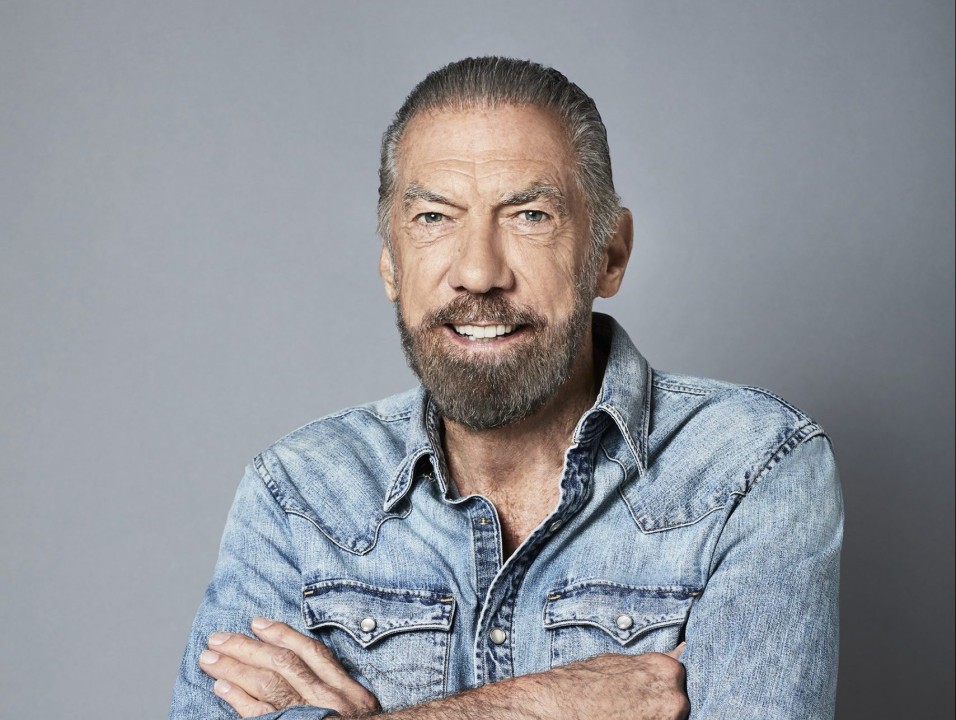
There are business success stories that begin with wealthy families, prestigious schools, powerful connections and substantial investment capital. Then there are stories that begin with uncertainty, rejection, poverty and the desperate question of where the next meal will come from.
John Paul DeJoria’s story belongs firmly in the second category.
Long before his name became associated with some of the world’s most recognisable beauty and spirits brands, DeJoria experienced periods when simply staying afloat was a challenge. He faced homelessness, struggled financially and, at one point, lived out of his car.
Today, he is a billionaire entrepreneur whose journey from extreme financial hardship to global business success has become an enduring example of resilience, persistence and entrepreneurial determination. Forbes has estimated his fortune at approximately $3.1 billion, although such estimates can change with business valuations and market conditions.

His story is not simply about becoming wealthy. It is about what can happen when someone continues pursuing an opportunity despite circumstances that appear almost impossible to overcome.
A Difficult Childhood
John Paul DeJoria was born on April 13, 1944, in Los Angeles, California.
His early life was shaped by financial difficulty. He was raised largely by his mother, and growing up without significant financial security exposed him to the realities of having to work hard for what he wanted.
Those experiences would later influence his relationship with money and success.
Rather than viewing wealth simply as a symbol of status, DeJoria developed an appreciation for work, opportunity and the importance of helping others. But before he could become a successful entrepreneur, he would experience some remarkably difficult chapters of his own.
His struggles were not limited to childhood.
As a young father, he faced serious financial challenges. Following the breakdown of his marriage, he found himself responsible for caring for his son while dealing with an unstable financial situation.
At different points in his life, homelessness became part of his reality.
For many people, such circumstances could easily become the end of the story.
For DeJoria, they became part of the beginning.
When a Car Became Home
Perhaps one of the most remarkable parts of DeJoria’s journey occurred when he was trying to establish the business that would eventually change his life.
In 1980, DeJoria partnered with hairdresser Paul Mitchell to establish a professional haircare company.
The two men did not have millions of dollars behind them.
They reportedly started with approximately $700.
That amount was tiny compared with the capital available to many companies trying to enter the beauty industry. There was no lavish headquarters, enormous marketing department or large investment fund waiting to finance their expansion.
There was simply an idea, a product and two entrepreneurs willing to sell.
DeJoria was living in his car during the early stages of the venture.
While many people might have considered such circumstances humiliating, DeJoria had a different problem to solve: he needed to make the business work.
He went from salon to salon trying to convince hairdressers to use and sell their products.
The work was personal.
There was no massive advertising campaign doing the selling for him. He had to knock on doors, speak to potential customers and persuade professionals to give an unknown product a chance.
That kind of direct selling required persistence.
It also gave him something that money cannot easily buy: direct knowledge of the customer.
He could hear objections.
He could understand what hairdressers wanted.
He could discover what they disliked about competing products.
And he could take those lessons back into the business.
The company eventually became John Paul Mitchell Systems, which grew into one of the world’s best-known professional haircare businesses.
Turning a Small Investment Into a Global Brand
The success of John Paul Mitchell Systems demonstrated that the amount of money available at the beginning of a business does not necessarily determine the final size of the company.
The entrepreneurs focused on the professional hairdressing market, building relationships with stylists and salons rather than attempting to become everything to everyone from day one.
The strategy helped the brand establish credibility within its target market.
Over time, the business expanded substantially and became a major name in professional beauty products.
The transformation was extraordinary.
The entrepreneur who had once been selling shampoo while living in a car had become part of a company operating on an international scale.
Forbes has reported that John Paul Mitchell Systems eventually generated approximately $1 billion in annual revenue.
But DeJoria’s entrepreneurial journey was far from over.
The Tequila Opportunity
In 1989, DeJoria entered another industry that would eventually produce an enormous business opportunity.
He co-founded Patrón Spirits.
At the time, premium tequila was not necessarily viewed by the broader market in the same way that luxury spirits are perceived today. DeJoria and his partners saw an opportunity to position tequila as a premium product with a sophisticated identity.
The strategy was to build a brand rather than simply sell alcohol.
Packaging, positioning, quality and marketing became important parts of the business.
Patrón eventually became a major international tequila brand and expanded its presence across global markets.
Then came one of the biggest financial milestones in DeJoria’s career.
In 2018, Patrón was acquired by Bacardi in a transaction valued at approximately $5.1 billion.
The deal represented an extraordinary outcome for an entrepreneur who had once struggled to afford basic necessities.
It also illustrated a critical principle of entrepreneurship: a business does not have to begin as an obvious giant to eventually become one.
The Billionaire Behind the Brands
DeJoria’s wealth is often what attracts attention to his story, but the more interesting part is how he built it.
He did not become successful through a single lucky event.
His journey involved multiple businesses, years of work, sales, relationships, risk-taking and persistence.
The early years of Paul Mitchell taught him the importance of selling directly and understanding customers. His experience with Patrón demonstrated the power of positioning and building a premium brand.
These lessons became part of a broader entrepreneurial philosophy.
According to DDM News, DeJoria’s journey illustrates an important distinction between having an idea and building a business. Ideas are relatively easy to produce. Turning an idea into something customers repeatedly choose requires persistence, execution and the willingness to continue through periods of uncertainty.
Success Did Not Erase His Past
Perhaps one of the most compelling aspects of DeJoria’s story is that financial success did not cause him to forget the difficult experiences that came before it.
His history with poverty and homelessness has influenced his philanthropic interests.
He has supported causes connected to homelessness, education, animals and humanitarian initiatives, among others.
For DeJoria, wealth has often been presented as something that carries responsibility.
The philosophy is straightforward: if you have experienced hardship and eventually gained the resources to help others, success should create an opportunity to make a difference beyond yourself.
This part of his story is particularly significant because it challenges the idea that entrepreneurship should be measured only by bank balances.
Building a billion-dollar business is certainly a remarkable achievement.
But using financial success to support communities, charitable causes and people facing difficult circumstances represents another dimension of achievement.
What Entrepreneurs Can Learn From DeJoria
The most powerful lesson from John Paul DeJoria’s life is not that everyone who starts with $700 can become a billionaire.
That would be an unrealistic conclusion.
Entrepreneurship is influenced by countless factors, including timing, market conditions, relationships, execution, access to resources and luck.
The real lesson is that a difficult beginning does not automatically determine the final destination.
DeJoria’s early circumstances could easily have convinced him that entrepreneurship was impossible.
Instead, he focused on what he could do with the resources available to him.
He sold.
He built relationships.
He learned from customers.
He continued despite rejection.
He entered new markets when he saw opportunities.
And he kept going through difficult periods.
His story also demonstrates the importance of starting with a problem and a customer rather than simply chasing the idea of becoming rich.
The first Paul Mitchell products had a specific market.
Patrón had a specific positioning.
In both cases, the businesses were built around understanding what customers could value.
That is an important lesson for today’s entrepreneurs, especially those who believe they need enormous amounts of capital before they can begin.
Sometimes the first stage is not raising millions.
Sometimes it is finding the first customer.
From a Car to a Business Empire
It is difficult to ignore the contrast between the different stages of DeJoria’s life.
There was a period when he did not have a stable home.
There was a period when he and Paul Mitchell had only a few hundred dollars to build a business.
There were years of selling products directly and trying to convince people to believe in a young company.
Eventually, those efforts produced one of the world’s most recognisable professional haircare businesses.
Then another entrepreneurial venture became a global premium tequila brand worth billions in an acquisition.
Today, DeJoria’s estimated fortune is around $3.1 billion, according to Forbes.
But perhaps the most important part of his story is not the number attached to his wealth.
It is the distance between where he started and where he eventually arrived.
His life is a reminder that circumstances can change dramatically.
The person struggling today may not remain in that position forever. The small business that looks insignificant today may become something much larger. The idea that seems too small to matter may eventually become the foundation of a major company.
But none of that happens automatically.
DeJoria’s journey required years of persistence, salesmanship, resilience and willingness to keep working when success was nowhere in sight.
DDM News believes that is what makes his story particularly relevant to today’s entrepreneurs. In a world where social media often shows only the glamorous side of business, DeJoria’s history provides a different picture of success: one that includes rejection, uncertainty, sacrifice and difficult beginnings.
The billionaire entrepreneur who once lived in a car did not know exactly where his journey would end.
He simply continued taking the next step.
And sometimes, that is where extraordinary stories begin.
Your current circumstances may describe where you are today, but they do not necessarily define where you can eventually go.




