



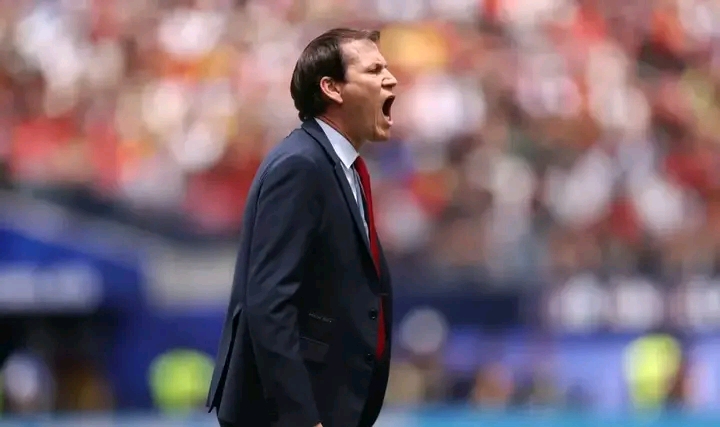
The conclusion of the 2026 FIFA World Cup has not only crowned a new global champion but has also marked the end of an era for several national team managers across the football world.
As countries begin preparations for the next international cycle leading to the 2030 FIFA World Cup, many football federations have decided to make changes on the sidelines. Some coaches resigned after failing to meet expectations, while others completed long and successful tenures before stepping aside.
The tournament, hosted by the United States, Canada and Mexico, proved to be a defining moment for several managers whose futures depended on their performances. In the days following Spain’s historic triumph over Argentina in the final, national football associations moved quickly to announce coaching departures and begin the search for new leadership.

Among the biggest names to leave is France’s Didier Deschamps, whose remarkable 14 year spell in charge came to an end after the tournament. During his time with Les Bleus, Deschamps guided France to the 2018 FIFA World Cup title, reached another World Cup final in 2022 and remained one of the most successful managers in the country’s history. His departure closes one of the most successful chapters in French football, with Zinedine Zidane widely expected to begin a new era.
Portugal also witnessed a major change as Roberto Martinez stepped down after his side’s Round of 16 elimination. Despite possessing one of the tournament’s strongest squads, Portugal failed to progress as expected, bringing an end to Martinez’s time in charge.
Croatia’s Zlatko Dalic also ended his impressive nine year tenure following his team’s exit in the Round of 32. Dalic will be remembered for leading Croatia to the 2018 FIFA World Cup final and maintaining the country’s competitiveness on the global stage.
Mexico’s experienced coach Javier Aguirre resigned after his side’s elimination by England in the Round of 16. Aguirre, who has managed Mexico across multiple spells, leaves after another challenging World Cup campaign.
The Netherlands also began a new chapter after Ronald Koeman departed following the Dutch team’s Round of 32 exit. Koeman’s departure adds another high profile vacancy among Europe’s traditional football powers.
Belgium became one of the latest countries to announce a coaching change after Rudi Garcia confirmed he would leave his role at the end of his contract. Garcia guided Belgium to the quarter finals but decided not to continue beyond the tournament, ending his 18 month spell in charge.
Several other nations have also made managerial changes as they begin rebuilding for future competitions. Football administrators are increasingly placing greater emphasis on long term development, youth integration and tactical evolution, making coaching transitions a common feature after major tournaments.
According to reports, a total of 17 national team coaches have now left their positions following the 2026 FIFA World Cup.
The full list includes:
Didier Deschamps – France
Roberto Martinez – Portugal
Zlatko Dalic – Croatia
Javier Aguirre – Mexico
Ronald Koeman – Netherlands
Rudi Garcia – Belgium
Sebastian Beccacece – Ecuador
Julian Nagelsmann – Germany
Steve Clarke – Scotland
Marcelo Bielsa – Uruguay
Sabri Lamouchi – Tunisia
Hong Myung-bo – South Korea
Carlos Queiroz – Ghana
Pape Thiaw – Senegal
Heimir Hallgrimsson – Republic of Ireland
Murat Yakin – Switzerland
Thomas Christiansen – Panama.
The wave of departures highlights the intense pressure that accompanies international football. Unlike club football, where managers have an entire season to recover from setbacks, national team coaches are often judged almost entirely on performances at major tournaments.
Even managers with impressive records have found themselves stepping aside after disappointing campaigns, while others have chosen to leave after believing they had reached the natural end of their projects.
Several football associations have already begun identifying replacements, with experienced managers and former international players expected to fill many of the vacant positions ahead of the next round of FIFA World Cup qualifiers.
For some countries, the changes represent an opportunity to rebuild with younger squads and fresh tactical ideas. For others, the objective will be to maintain continuity while introducing a new voice capable of taking talented teams to greater heights.
With the 2026 FIFA World Cup now part of football history, attention has quickly shifted from the players on the pitch to the men on the touchline. The coming months are expected to bring more appointments as nations prepare for the next chapter, ensuring that the coaching carousel remains one of football’s biggest talking points long after the final whistle in North America.




