
Analysis
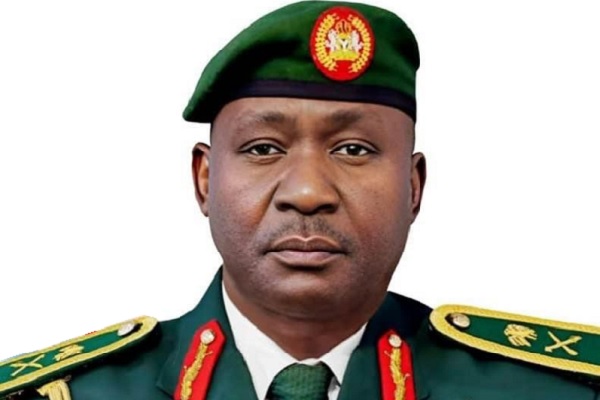
Gen. Christopher Musa: The Brevity of a Brave Warrior
By Usman Abdullahi Koli

When the news broke that General Christopher Gwabin Musa had been relieved of his duties as Chief of Defence Staff, many Nigerians were caught between silence and disbelief. There was no scandal, no controversy, no public reason. It was simply the quiet exit of a man who carried the burden of the uniform with rare discipline and decency.
General Musa was not the loud, camera-chasing type. He believed that a soldier’s worth rests in results, not in talk. He led with calm authority and the moral strength of a man who understood that leadership is service, not privilege. His mission was not to impress but to protect, and those who worked with him often described him as a commander who fought with both brain and heart.
As Confucius said, “He who has conquered himself is the mightiest warrior.” General Musa lived that truth daily. His greatest victories were not only on the battlefield but in the discipline he carried within himself. He conquered ego, comfort, and fear. Those qualities made him not just a soldier but a statesman in uniform.
I have often written about leaders, sometimes critically, sometimes in admiration, depending on where the truth is pointed. But General Musa stands in that rare place where even a critic must pause and appreciate. He was one of those few who reminded us that true leadership rests not in power but in principle, not in position but in purpose.

Under his leadership, the Armed Forces coordinated better and spoke with one voice. The push against terrorism and banditry regained energy, particularly in the Northwest. The fall of Halilu Sububu and the renewed confidence in Zamfara, Katsina, and Kaduna were not accidents. They were evidence of deliberate strategy and consistent field intelligence. He also strengthened cooperation among the services and improved civil-military relations, emphasizing discipline, professionalism, and respect for human rights.
He once said in a BBC Hausa interview that negotiating with bandits was “counterproductive,” warning that those who promote it “will regret it.” On Al Jazeera, he asked questions the government preferred to avoid: “Who is funding them? Who is training them? Who is supplying their weapons?” Those were not soundbites but moral challenges from a man who had seen too much blood to play politics with peace.
Some say his courage cost him his seat. If true, that would be another proof of how this country often mistakes honesty for insubordination. Yet that courage remains his greatest decoration. The government may have replaced him with another general, but they cannot replace him with another Christopher Musa.
He has now stepped aside, but his style of leadership, quiet, firm, and humane, will linger long after the medals fade. Nigeria’s security challenges are not only about weapons but about will. As Scripture says, “Blessed are the peacemakers, for they shall be called the children of God.” And in every sense, General Christopher Gwabin Musa lived as one, a peacemaker who fought with his heart and served with his soul.
Usman Abdullahi Koli
mernoukoli@gmail.com

Mrs. Elizabeth Onike, a 96-year-old voter, lamented bitterly after being denied the right to cast her vote in Anambra State.
The elderly woman said she arrived at her polling unit early, determined to perform her civic duty despite her age, but was turned away by officials for reasons yet to be made clear.
Diaspora Digital Media (DDM) gathered that the incident occurred in one of the polling units in Awka, where several elderly citizens also complained about similar challenges.
Eyewitnesses said Mrs. Onike, visibly emotional, expressed disappointment that despite enduring long hours and braving the heat, she was prevented from voting.
Observers have called on the Independent National Electoral Commission (INEC) to investigate the incident and ensure the rights of senior citizens are respected in future elections.
Many social media users have since rallied around her, describing her experience as “heartbreaking” and “a sad reflection of voter disenfranchisement.”
#AnambraDecides2025 #DDMReports #VoteNotFight
By Ofonime Honesty
Let us speak truth to power. The Akwa Ibom Broadcasting Corporation (AKBC) has been on life support in recent years.
We have watched the infrastructural retrogression of that great breeding ground where the finest crop of broadcasters in this region cut their teeth. They were drilled in excellence, and their voices informed, educated, and united us.
This was not just a mere decline; it was a monumental failure we all witnessed unfold. AKBC wobbled even as newer broadcast stations lured her talents away.
But wait. Pause the lamentations!
Governor Umo Eno has signed an agreement with Media Guru Consultant, LLC, of Dubai, for the transformation of the station into a “world-class broadcasting entity.” This is no mere project; it is a rescue mission. It represents the political will to snatch a vital asset from the greedy jaws of oblivion.
This partnership with Media Guru Limited covers consultancy, design, procurement, and installation of advanced broadcast equipment, which will position AKBC to compete favorably with leading broadcast stations within and outside Nigeria.
For context, Media Guru is not a faceless consultant. Independent checks by yours truly indicate that it is a global media services company offering solutions in content digitization and preservation, turnkey technology projects, and digital media, with physical offices in the UAE, Singapore, South Africa, and India.
With over 21 years in service, over 64 projects completed, and successful jobs in over 20 countries, the firm possesses the qualifications and expertise for this project.
TVC, Huawei, Bloomberg Africa, Raj TV, Daily Independent, ConSat TV, News Live TV, and several others are notable clients of the firm.
In this age of digital journalism, a feeble broadcaster is a mute spectator. AKBC cannot tell the Akwa Ibom story properly with a broken microphone, a broken camera, and dilapidated transmitters.
Its employees cannot counter toxic narratives while operating from a studio that leaks rain.
Look around you. Our airwaves are being invaded by content that erodes our identity.
Our people are being fed junk content while the rich banquet of our own heritage gathers dust. AKBC was supposed to be the gatekeeper of our stories, the guardian of our values. Instead, it became a sleeping giant while others came in and colonized our narrative space. The Akwa Ibom story must now be told by AKBC. That task is compulsory!
The Governor has thrown a lifeline. Funding will not be a problem. The burden now falls squarely on AKBC’s management and staff. The management must undergo a mental revolution. They must purge the system of deadwood and complacency. Training and retraining are essential. The modern gadgets and facilities must not be destroyed by analogue hands.
We cannot pour new wine into old wineskins. They must recruit fresh talent with fire in their bellies and innovation in their blood. Anything less would be a betrayal of this second chance.
This new studio must become a fortress of truth, a hub of cutting-edge programming, and a stage for the next generation of trailblazers. AKBC has to move with the times. Archaic or out-of-fashion programming must cease.
We are watching. The people are watching. History is watching. The contract is signed. The gauntlet has been thrown. AKBC, a Lazarus, must rise!
Nigeria’s online and offline discursive arenas have been suffused with frenetic, impassioned, and intensely heightened dialogic exchanges in the aftermath of President Donald Trump’s designation of Nigeria as a “Country of Particular Concern” and this threat to militarily invade the country to stop what he called a “Christian genocide.”
Nigerians are predictably divided largely along the country’s familiar primordial fissures. But beyond the surface disagreements, there’s actually a deeper congruence of opinions we miss in moments of hyper-aroused emotions. And this revolves around the recognition that Nigeria faces an inexcusable existential threat from the intractable murderous fury of terrorists and that the earlier it is contained by any means necessary, the better Nigeria’s chances of survival.
The major areas of disagreement among conversational sparring partners (i.e., whether, in fact, there’s a Christian genocide; what really actuates Trump’s intervention; the question of what foreign intervention means for Nigeria’s sovereignty) actually have a convergence point.
For example, Muslims who question the factual accuracy of the existence of a Christian genocide in the central states point to the continuing mass slaughters of Muslims (both at home and in mosques) in the far north. But they don’t deny that the nihilistic, blood-thirsty thugs who murder both Christians and Muslims in their homes and places of worship identify as Muslims, even if they are a poor representation of the religion they identify with.
I honestly struggle to fault Christians who perceive the episodic mass murders in their communities by people who profess a different faith from them as deliberate, systematic, premeditated acts designed to exterminate them because of their faith.
If the situation were reversed, it would be perceived the same way. If murderous outlaws who profess the Christian faith (even if they don’t live by the precepts of the religion) continually commit mass slaughters of both Christians and Muslims, Muslim victims of these slaughters would instinctively read religious meanings to the murders.
As I noted in my April 12, 2025, column titled “Selective Outrage Over Mass Murders in Nigeria,” human beings derive their sense of self from belonging to collective identities, so when members of an out-group attack that collective, it provokes a powerful emotional reaction.
Even in such states as Zamfara, Sokoto, and Katsina, where more than 90 percent of the population is Muslim and where clashes between sedentary farmers and itinerant herders are age-old, the persistence of mass slaughters has ruptured the centuries-old ethnic harmony between the Hausa and the Fulani that Nigerians had taken for granted. BBC’s July 24, 2022, documentary titled “The Bandit Warlords of Zamfara” captures this dynamic powerfully.
It doesn’t matter if people in the Middle Belt perceive the homicidal ferocity of the terrorists as “Christian genocide” or people in the Northwest see it as “ethnic cleansing.” What matters is that they shouldn’t be allowed to kill anyone.
I understand Muslim anxieties behind the “Christian genocide” narrative. It unwittingly exteriorizes the crimes of a few outlaws to the many who are also victims of the outlaws’ crimes. But if it takes calling these blood-stained bastards “Christian genocidaires” to eliminate them, the accuracy of the description is immaterial. If an equal-opportunity murderer of Christians and Muslims is killed only because he kills Christians, it still benefits Muslims because the murderer won’t be alive to kill Muslims.
Of course, people who question Trump’s motive are justified. In 2016, Trump enthusiastically endorsed Ann Coulter’s book Adios America, which claimed that the growth of Nigerians in the United States from virtually zero to 380,000 was problematic because, in her words, “every level of society [in Nigeria] is criminal.” Most Nigerians in the United States are Christians.
By December 2017, in his first term, Trump was reported to have said that people from Haiti and Nigeria should be denied visas because “15,000 Haitians who received U.S. visas all have AIDS,” and that 40,000 Nigerians who visited the U.S. that year would never “go back to their huts” after seeing America.
In January 2018, he was widely quoted as saying he didn’t want immigrants from “shithole countries” like Nigeria and Haiti but preferred “more people coming in from places like Norway,” a statement that made clear his racial preference for white immigrants.
That same racial logic was evident when he described white South Africans as victims of “white genocide” and offered them asylum but has not extended the same offer to Nigerians he claims are facing “Christian genocide.”
Unsurprisingly, by 2019, toward the close of his first term, Nigeria experienced the steepest decline in visitors to the United States of any country, according to data from the National Travel & Tourism Office.
Given this record, skepticism about Trump’s sudden concern for Nigeria is entirely warranted. Anyone familiar with his long-documented hostility toward Black people would reasonably question why he now professes to care enough about them to “intervene” on their behalf.
His intervention is probably the product of three forces: powerful lobbying from Nigerian Christian groups who got through to the right people, a way to get Nigeria to scale down its embrace of China in the service of rare earth mineral exploration in the country, and an appeal to his evangelical Christian base even if he himself isn’t a believing, churchgoing Christian.
But given the direness of the depth and breadth of bloodletting in the country, who cares what his motivations are? If Trump’s intervention causes the Nigerian government to more seriously take its responsibility to protect all Nigerians, I would salute him. In fact, if direct, targeted hits at terrorist enclaves become inevitable because the government is either unwilling or unable to act, most people (Muslims, Christians, southerners, northerners, supporters or critics of the government, etc.) who are genuinely worried about the unchecked expansion of the theaters of insecurity in the country would be happy.
When it comes to questions of life and death, we can’t afford the luxury of pointless partisanship and primordial allegiances. Most Nigerians I know would accept help from Satan if that were what it would take to stop the unending blood-stain communal upheavals in the country.
What is the point of our sovereignty if we can’t stop perpetual fratricidal bloodletting? In any case, most Nigerian governments and opposition politicians in my lifetime have not only routinely sought America’s intervention in Nigeria’s internal affairs when it suits them, they serve as willing informants to America, leading me to once posit that the CIA doesn’t need secret agents.
In a May 20, 2017, column titled, “Xenophilia, Fake Sovereignty and Nigeria’s Slavish Politicians,” I said the following:
“Many Nigerian leaders seem to have an infantile thirst for a paternal dictatorship. The United States is that all-knowing, all-sufficient father-figure to whom they run when they have troubles. We learned from the US embassy cables that our Supreme Court judges, Central Bank governors … and governors routinely ran to the American embassy like terrified little kids when they had quarrels with each other.”
If the undermining of our sovereignty is what it would take to provide peace to everyday Nigerians, most people won’t miss it.
The urgent task, therefore, is not to litigate the purity of motives abroad or to indulge in perfunctory moralizing at home, but to force Nigerian institutions to perform. Whether pressure comes from international actors, diasporic lobbying, or domestic outrage, it must translate into concrete reforms: a security strategy that protects civilians, accountable and professional security forces, transparent investigations of atrocities, and long-term efforts to address the economic, political, and environmental drivers of violence.
Nigerians must insist that any external attention be channeled into strengthening the state’s capacity to protect all citizens and into justice for victims, not into new forms of dependency or political theatre. Only by combining unity of purpose with institutional competence can Nigeria begin to end the killing and reclaim the dignity of its sovereignty.
-
Analysis6 days agoEmpty Diplomacy, Real Graves… A Reply to Nigeria’s Ministry of Foreign Affairs
By Sa'adiyyah Adebisi Hassan
-
World News6 days agoMilitary action on terrorists in Nigeria could be ground troops, air strikes — Trump
-
News5 days agoJUST IN: Soldiers facing terror allegations escape from military custody
-
World News4 days agoI will name Nigerian officials linked to Christian genocide — Senator Ted Cruz
-
Economy5 days agoCBN Releases Names Of Heavy Defaulters, Amount
-
Opinion7 days agoWhen the Hunter Becomes the Hunted: How the APC is Tasting the Karma of 2015
-
News5 days agoDon’t Bomb Bandits, Negotiate With Them – Islamic Cleric Tells US
-
News3 days agoBREAKING: Nnamdi Kanu writes Trump, calls for US inquiry in S’east killings
-
World3 days agoUS Congress Introduces Nigeria Religious Freedom Accountability Bill
-
Analysis6 days agoChristian Genocide: Fellow Muslims — Let’s Face Facts
By Sa'adiyyah Adebisi Hassan

