


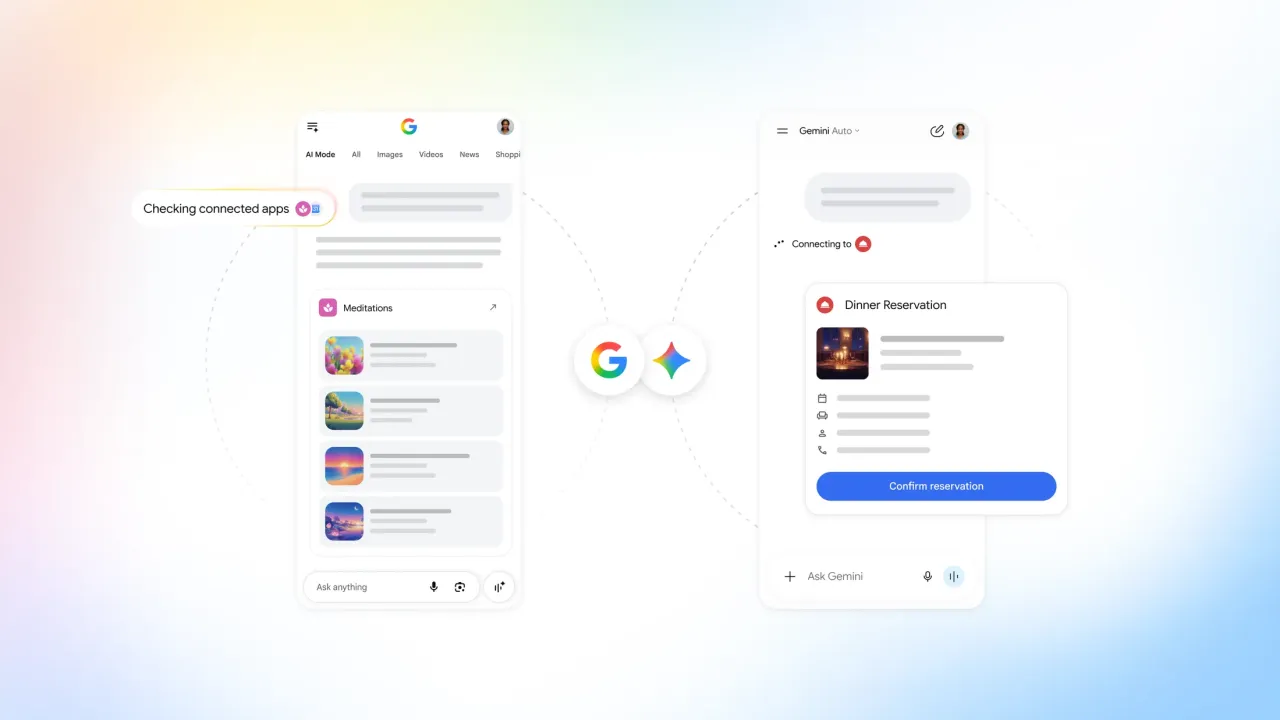
Google’s Connected Apps Platform lets developers integrate services with Gemini and Search, enabling AI-assisted tasks across third-party apps.
Google is opening its Search and Gemini experiences to more third-party apps through a new Connected Apps Platform. The service lets developers build integrations that can work across Google’s AI products, while users can complete tasks without opening every app separately. The change could reshape how people discover services and how businesses compete for attention on the web.
Google launches Connected Apps Platform
Google says the Connected Apps Platform gives developers one place to build and manage apps for Search and the Gemini app. Developers can connect a cloud-hosted Model Context Protocol server or Android MCP through AppFunctions APIs, then use Google’s Connected Console to register, test and submit an app.  Google’s official Connected Apps Platform announcement provides the technical details.
Developers can choose whether an integration appears in Search, Gemini or both. After approval, they can monitor traffic, latency and error rates. Google also says developers can maintain brand controls, including verified logos and authenticated accounts.
“The Connected Apps Platform gives developers the opportunity to build once and reach high-intent users across both Search and the Gemini app.” — Chips Mistry and Mai Lowe, Google Group Product Managers
Gemini and Search become task platforms
Connected Apps are designed to let users ask Google’s AI systems to perform specific actions. A user might connect Canva to explore design templates, Instacart to add groceries to a cart or YouTube Music to create a playlist. Google says these actions can happen through AI Mode or the Gemini app, with the final service interaction handled through the partner’s app or website.
Google says more than 50 Connected Apps are already available across Search and Gemini. Partners include Adobe, Experian, Localiza and Peloton, while Calm is planned for both products. The company also offers its own services, including Google Workspace, Photos, YouTube Music and Google Home.
The integrations do not eliminate the underlying apps. Instead, they place a conversational layer between the user and the service. That could make complex tasks easier, but it could also reduce the number of times people see an app’s own interface.
Developers face a new discovery channel
The platform preview creates another route for businesses to reach customers. For years, search engine optimisation helped websites compete for rankings and clicks. Connected Apps could extend that competition into AI responses, where visibility may depend on whether an agent can understand and use a service.
Developers must therefore think beyond web pages and mobile screens. They may need to expose reliable actions, explain permissions clearly and maintain systems that respond quickly when an AI assistant calls them. Google’s reporting tools could help teams identify broken integrations and measure whether users complete tasks.
The model also gives Google more control over how third-party services appear inside its AI products. App approval, account authentication, brand presentation and performance monitoring all happen within Google’s ecosystem. Businesses gain distribution, but they also accept another platform’s rules.
U.S. beta limits the initial rollout
Google says the Connected Apps Platform is currently opening in phases. The public preview is available to developers in the United States who join the waitlist, and Google plans to add more developers, markets and products over time. It has not announced when the platform will become broadly available.
User availability also varies by location, language, device and Gemini experience. Google’s support documentation lists different requirements for connected apps, including age limits, account types, supported countries and subscription needs.  Google’s Connected Apps availability guide outlines those restrictions.
Google previously began adding connected services to AI Mode in Search. Its examples included grocery shopping through Instacart, design work through Canva and playlists through YouTube Music. Google’s connected apps in Search announcement describes those early use cases.
For more coverage of artificial intelligence, search technology and digital platforms, readers can visit Diaspora Digital Media’s  Tech section.
In conclusion, Google’s Connected Apps Platform gives developers a direct path into Search and Gemini. The system could make AI assistants more useful by letting them carry out real actions, not just provide answers. Its next test will be whether users trust these integrations and whether developers can build dependable services for an agent-led web.




