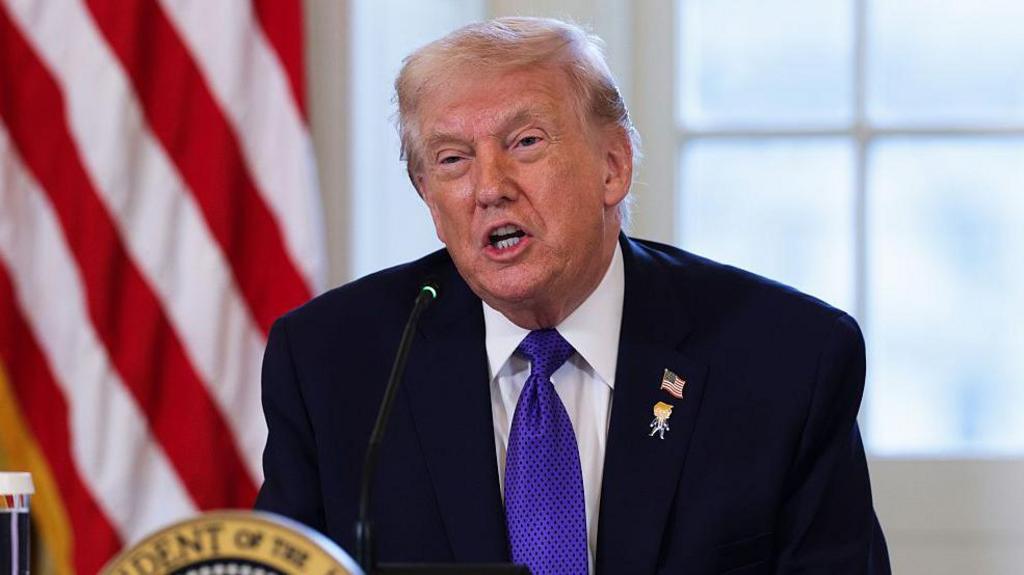
United States President Donald Trump has announced plans to impose a 10% tariff on “all or any goods” imported from the United Kingdom, Denmark, and other European countries starting February 1, 2026.
The tariffs, announced via a post on Truth Social, will remain in place until “such time as a Deal is reached for the Complete and Total purchase of Greenland.”
The announcement has sent shockwaves through Europe and Washington alike, raising questions about the use of economic measures as a substitute for traditional diplomacy.
Why Greenland?
Trump has repeatedly cited Greenland’s strategic location and resources as vital to US national security.

The island, an autonomous territory of Denmark, hosts a US military presence at the Pituffik base and is seen as key for monitoring Arctic and trans-Atlantic activity.
Reactions
Liberal Democrats leader Ed Davey condemned Trump’s plan, saying, “Starmer’s US policy lies in tatters.
Trump is now punishing the UK and Nato allies just for doing the right thing.”
He urged the UK government to coordinate with European and Commonwealth allies to counter what he described as a “reckless plan.”
Trump has increasingly used tariffs as a diplomatic tool.
In recent months, he has threatened or imposed tariffs on nations such as Iran, India, Pakistan, Brazil, and Canada to pressure governments into negotiations or influence policy outcomes.
Critics argue that this approach “weaponises” trade and sidesteps traditional diplomatic channels.
Analysts say the Greenland tariffs exemplify Trump’s broader strategy of leveraging economic pressure to achieve geopolitical goals, even at the risk of straining relations with long-standing allies.