


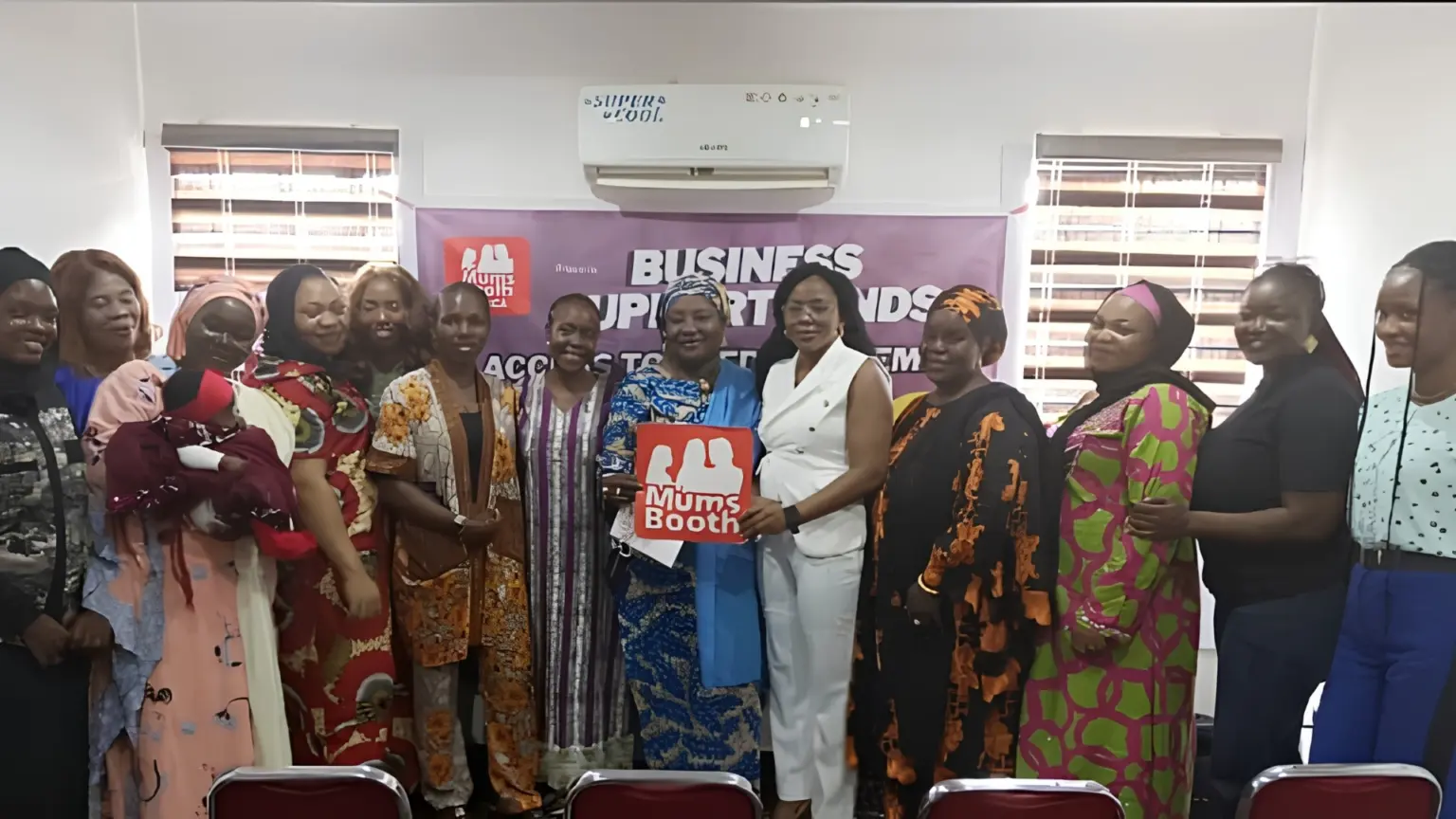
HerCapital Africa has strengthened its support for women-led businesses by providing funding, mentorship and business development opportunities to 70 women entrepreneurs through its Business Growth Fund Programme.
The initiative is designed to address one of the most persistent challenges facing women-owned businesses in Nigeria: the difficulty of securing the capital and expertise needed to move from small-scale operations to sustainable and growing enterprises.
HerCapital Africa, an initiative of the Mumsbooth Empowerment Initiative, is focused on expanding women’s access to finance and creating a stronger ecosystem for female entrepreneurs.
Through its Business Growth Fund, the organisation is combining financial support with practical business guidance, recognising that access to money alone may not be enough to guarantee long-term success.

The programme comes at a time when women continue to play an important role in Nigeria’s small-business economy.
Across markets, communities and digital platforms, women are building enterprises in areas ranging from fashion and beauty to agriculture, food processing, retail, manufacturing and professional services.
Yet many of these businesses remain small because their owners struggle to obtain affordable capital, professional advice and the networks required to scale.
According to a report by Adenike Ibirogba of The Guardian, the 70 beneficiaries were selected to receive support aimed at helping them strengthen and expand their businesses.
The programme provides more than funding, with beneficiaries also gaining access to mentorship, business advisory services, financial management guidance, market opportunities and investor-readiness support. (The Guardian Nigeria)
For many entrepreneurs, the difference between operating a business and building a sustainable company lies in the ability to access the right resources at the right time.
A business owner may have a viable product and loyal customers but still lack the working capital to purchase equipment, increase production, employ additional workers or enter new markets. This financing gap can prevent promising businesses from reaching their full potential.
HerCapital Africa’s approach seeks to address that problem by combining financial assistance with capacity development.
The idea is to ensure that beneficiaries understand how to manage the resources they receive, plan their finances, improve their operations and make strategic decisions that can support future growth.
Founder of HerCapital Africa, Mrs Martha Tawiyah, said the initiative was created in response to the difficulties women entrepreneurs face in accessing the capital required to expand their businesses.
She noted that many women already operate viable enterprises but are unable to grow because of limited access to finance. (The Guardian Nigeria)
The significance of such intervention goes beyond the individual beneficiaries.
When a woman-owned business expands, the impact can extend to employees, suppliers, customers and entire communities.
A growing fashion business may employ tailors and sales personnel, while an expanding food-processing company can create demand for agricultural products and transportation services.
In this way, supporting women entrepreneurs can generate economic activity across several sectors.
DDM News reports that the programme’s beneficiaries operate in diverse areas, including retail, agriculture, fashion, food processing, beauty, manufacturing and services.
The diversity of the businesses demonstrates the broad role women already play in Nigeria’s entrepreneurial landscape and the potential that exists if more women-owned enterprises receive the support needed to scale. (Vanguard News)
However, funding remains only one part of the challenge.
Entrepreneurs also need the knowledge to manage cash flow, price their products properly, maintain accurate records, understand their customers and identify profitable markets.
Without these skills, even substantial financial support can fail to produce sustainable results.
This is why the mentorship and advisory components of the Business Growth Fund are particularly important.
Through mentorship, entrepreneurs can learn from experienced business owners and professionals who can help them identify weaknesses, avoid common mistakes and develop more effective strategies for growth.
The programme also seeks to strengthen access to markets and investment opportunities.
For businesses that have moved beyond the survival stage, finding customers and securing additional investment can determine whether they remain small or become larger enterprises. Creating connections between entrepreneurs, investors and other businesses can therefore help open doors that would otherwise remain inaccessible.
Another important feature is the HerCapital Africa business community into which beneficiaries are brought.
Such networks can create opportunities for collaboration, referrals, partnerships and knowledge-sharing among women entrepreneurs. Business owners working in different sectors can learn from one another while developing relationships that may eventually lead to joint ventures and new commercial opportunities. (The Guardian Nigeria)
The organisation has indicated that its ambition extends beyond the current 70 beneficiaries.
It plans to expand the programme to reach thousands of women-owned businesses across Nigeria and other African countries, with an emphasis on increasing access to finance, strengthening entrepreneurial capacity and promoting financially resilient enterprises. (Vanguard News)
Such expansion could be significant for Nigeria’s broader economic development. Small and growing businesses remain an important source of employment and income, particularly in communities where formal employment opportunities are limited.
Helping more women transform informal or small-scale ventures into structured businesses could therefore contribute to job creation and household economic stability.
Women entrepreneurs also frequently reinvest income into their families and communities, making business support an important tool for wider social and economic development.
When a woman gains the capacity to grow her enterprise, the benefits can extend beyond her immediate business to education, household welfare, employment and local commerce.
DDM News notes that initiatives such as the Business Growth Fund also highlight the need for stronger partnerships between private organisations, financial institutions, investors and government agencies.
No single organisation can close the financing and capacity gap facing women entrepreneurs. Sustainable progress will require coordinated efforts that make capital more accessible while also providing the training, infrastructure and market opportunities entrepreneurs need.
HerCapital Africa’s intervention therefore represents more than a funding programme.
It reflects a broader effort to build an environment in which women can move from simply owning businesses to building enterprises capable of surviving, expanding and creating employment.
As the 70 beneficiaries put the funding, mentorship and business support to work, the real measure of the programme will be seen in the businesses that expand, the jobs created and the entrepreneurs who become strong enough to access larger markets and further investment.
With plans to reach thousands more women, HerCapital Africa is positioning its initiative as part of the wider movement to make female entrepreneurship a stronger force in Africa’s economic future.
If sustained and expanded, such support could help more women turn viable ideas into profitable businesses and transform small enterprises into engines of employment, innovation and long-term economic growth.




