


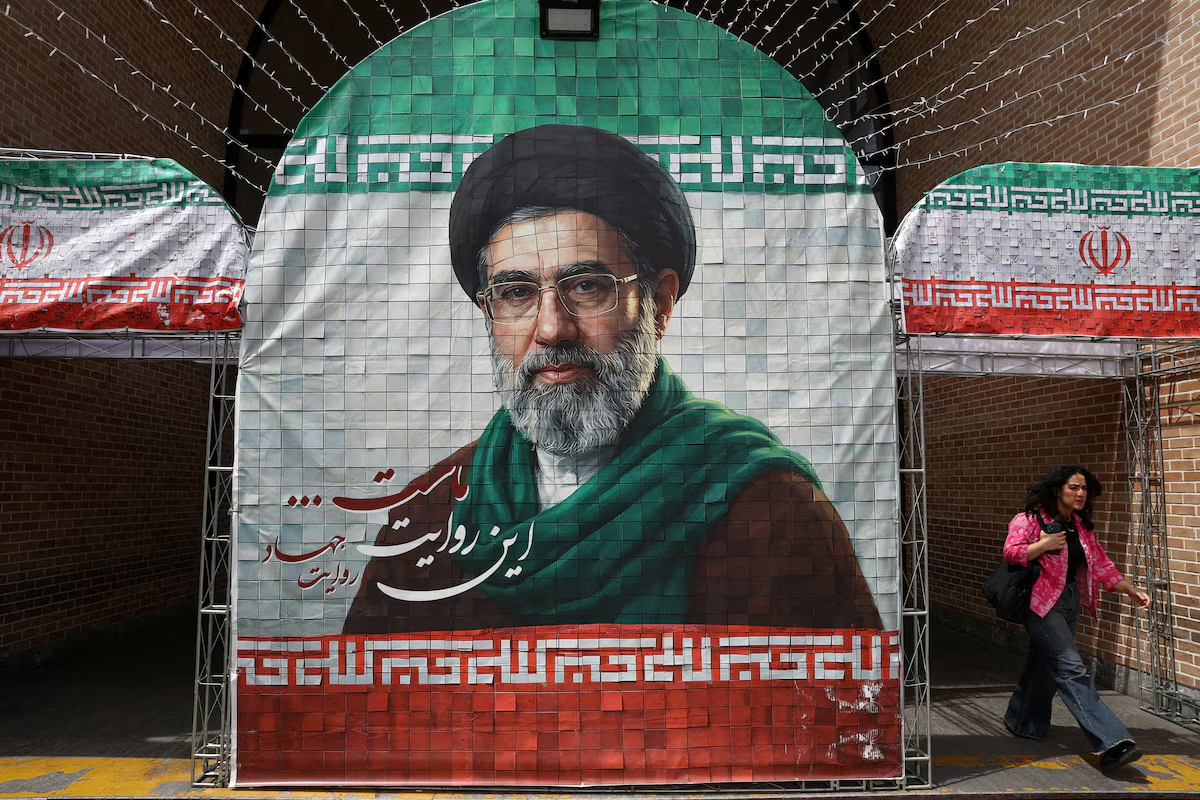
Iran’s Supreme Leader has ordered that the country’s stockpile of highly enriched uranium must remain inside Iran, according to two senior Iranian officials, a move that could further complicate ongoing peace talks with the United States.
The directive, reportedly issued by Ayatollah Mojtaba Khamenei, hardens Tehran’s position against one of Washington’s key demands the transfer of Iran’s near-weapons-grade uranium out of the country as part of any future agreement.
The development comes as tensions remain high despite a fragile ceasefire between Iran, the United States and Israel following months of deadly conflict across the Middle East.
Israeli officials told Reuters that President Donald Trump had assured Israel that any eventual deal would require Iran’s enriched uranium stockpile to be removed from Iranian territory.

Western countries, including the United States and Israel, have long accused Iran of pursuing nuclear weapons capability, particularly after Tehran enriched uranium to 60 percent purity a level far beyond civilian energy needs and much closer to weapons-grade material.
Iran has repeatedly denied seeking nuclear arms.
Israeli Prime Minister Benjamin Netanyahu has also maintained that the war cannot truly end unless Iran gives up its enriched uranium, dismantles its missile programme and cuts ties with armed proxy groups across the region.
One of the Iranian sources said the country’s leadership believes sending the uranium abroad would leave Iran exposed to future military attacks.
“The consensus within the establishment is that the enriched uranium must stay in Iran,” the source said.
Iranian officials are also said to be deeply suspicious of U.S. intentions, believing the current pause in fighting could simply be a strategy to buy time before another round of strikes.
The war began after U.S. and Israeli attacks on Iran in February, triggering retaliatory missile and drone strikes by Tehran and escalating violence involving Iran-backed groups in the region.
Although talks mediated by Pakistan are ongoing, major disagreements remain unresolved, especially over Iran’s nuclear programme and Tehran’s insistence on retaining the right to enrich uranium.
President Trump warned on Wednesday that Washington was prepared to launch fresh attacks if negotiations failed, though he suggested the U.S. was willing to wait a few more days for a response from Tehran.
Iran, however, says its priority is securing guarantees that neither the U.S. nor Israel will attack again before discussing deeper nuclear concessions.
Before the conflict escalated, Tehran had reportedly indicated it could send part of its uranium stockpile abroad. But Iranian officials say repeated military threats from Washington changed that position.
Still, one Iranian source suggested there could be alternative solutions, including reducing the enrichment level of the uranium under the supervision of the International Atomic Energy Agency (IAEA).
According to the IAEA, Iran possessed more than 440 kilograms of uranium enriched to 60 percent before key nuclear sites were targeted during last year’s strikes. It remains unclear how much of that material survived the attacks.




