
A new and deeply alarming dimension has been added to the escalating geopolitical tensions in the Middle East as Iran has issued a stark and unprecedented threat against a massive artificial intelligence infrastructure project located in Abu Dhabi. The project, widely known as Stargate UAE, is a cornerstone of a broader global initiative aimed at building next-generation computing systems capable of supporting advanced artificial intelligence, including the pursuit of artificial general intelligence.
At the center of this unfolding crisis is a sprawling data center complex valued at approximately $30 billion, part of a much larger $500 billion global infrastructure plan backed by the United States government and led by a consortium of major technology players. Among the key stakeholders are OpenAI, SoftBank, the Abu Dhabi-based MGX fund, and leading technology firms such as Nvidia, Oracle, and Cisco Systems. Together, these entities are working to create one of the most advanced and expansive AI computing ecosystems ever conceived.
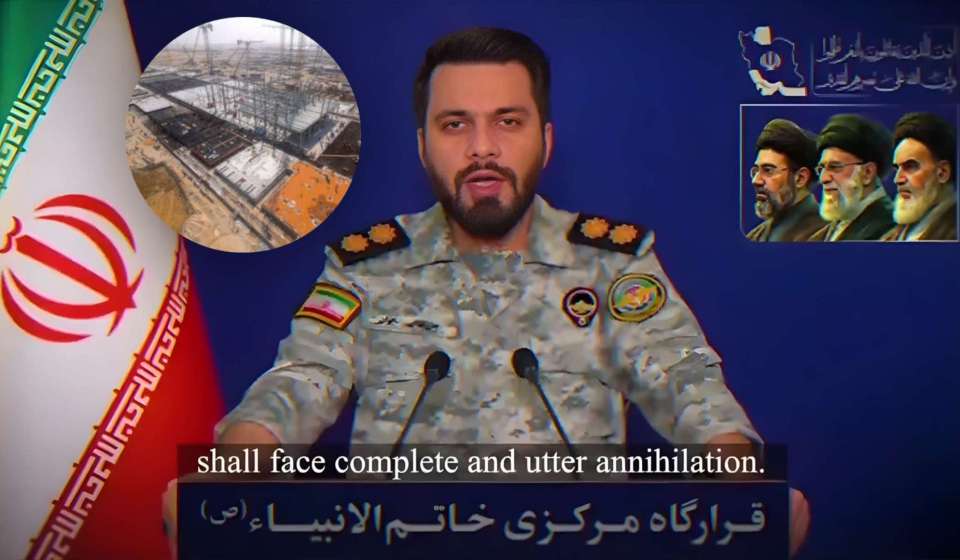
However, this ambitious vision has now become a focal point of geopolitical confrontation. In a video statement released by the Islamic Revolutionary Guard Corps (IRGC), Iranian officials issued a chilling warning that the Abu Dhabi facility could face “total and complete destruction” if tensions with the United States continue to escalate. The statement, delivered by IRGC spokesperson Ebrahim Zolfaqari, framed the threat as a direct response to what Iran perceives as ongoing pressure and threats against its own critical infrastructure, particularly its energy sector.
The video itself has drawn significant attention for its dramatic presentation. It reportedly features a sequence that zooms from a global view of Earth down to a specific location in Abu Dhabi, highlighting a desert area believed to house the data center. Accompanied by the ominous message that “nothing remains hidden,” the footage underscores Iran’s claim of having detailed intelligence on the site, despite efforts to keep its exact location discreet and absent from publicly accessible mapping platforms.
DDM News gathered that the Stargate UAE facility spans an estimated 19.2 square kilometers, making it one of the largest data center deployments of its kind outside the United States. Its scale and strategic importance cannot be overstated. As a hub for high-performance computing, it is designed to process vast amounts of data and support cutting-edge AI research and applications. For the United Arab Emirates, the project represents a significant step toward becoming a global leader in technology and innovation. For its international partners, it is a critical component of a broader effort to secure technological dominance in an increasingly competitive global landscape.
Yet, the very significance of the project has also made it a target. Iran’s warning is not an isolated incident but part of a broader pattern of hostility toward technology infrastructure in the region. In recent weeks, there have been reports of attacks on data centers operated by major companies, including disruptions to facilities linked to Amazon Web Services and Oracle in various Gulf states. These incidents have forced companies to scale back operations and, in some cases, relocate data to more secure locations outside the region.
The impact of such disruptions extends far beyond the companies directly affected. Modern economies are deeply reliant on cloud computing and data infrastructure, which underpin everything from financial systems to healthcare services and communication networks. When these systems are compromised, the consequences can ripple across industries and borders, affecting millions of users and businesses.
DDM News understands that the threat to Stargate UAE has prompted serious security considerations within the United Arab Emirates. Experts have suggested that the country may need to deploy advanced air defense systems specifically designed to protect critical infrastructure. Such measures would represent a significant escalation in the militarization of technology assets, reflecting the growing recognition that data centers are no longer just commercial facilities but strategic assets in modern conflict.
The broader implications of this development are profound. By targeting AI infrastructure, Iran is signaling a shift in the nature of geopolitical competition, where technological capabilities are as important as traditional military القوة. The race to develop and control advanced AI systems is increasingly seen as a determinant of global power, and the infrastructure supporting these systems has become a key battleground.
In addition to the immediate security concerns, the situation raises questions about the resilience and future of global technology networks. As companies invest billions of dollars in building distributed systems designed to ensure reliability and redundancy, the prospect of coordinated attacks on multiple sites poses a significant challenge. The reported disruption of multiple “availability zones” in the Gulf region, which undermined standard backup systems, highlights the vulnerabilities that can arise even in highly sophisticated networks.
Iran’s warnings have also extended beyond the Stargate project, with threats reportedly directed at a wide range of technology companies, including Microsoft, Apple, and Google. This broad targeting underscores the extent to which the conflict has expanded into the digital and technological domain, blurring the lines between economic competition and military confrontation.
As tensions continue to rise, the international community faces a critical juncture. The challenge lies not only in preventing further escalation but also in safeguarding the infrastructure that underpins the global digital economy. The events surrounding Stargate UAE serve as a stark reminder that in today’s interconnected world, the frontlines of conflict are increasingly defined by data, technology, and the systems that support them.
For now, the situation remains fluid, with all eyes on how both Iran and its counterparts respond in the coming days. Whether this latest threat will translate into action or serve as a deterrent remains to be seen, but its impact on global perceptions of security and stability is already being felt.