


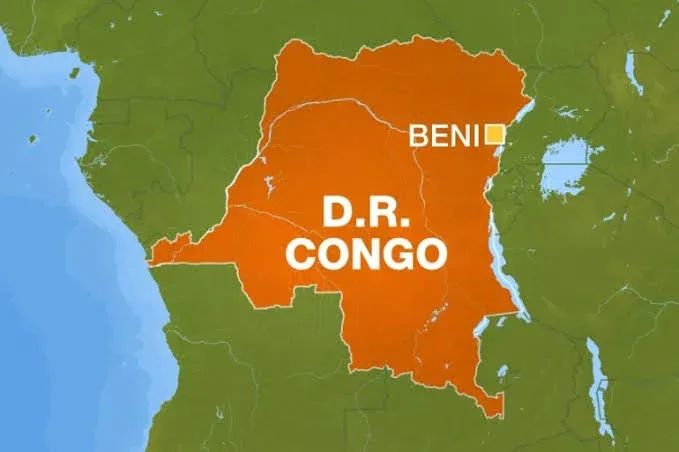
KINSHASA, DEMOCRATIC REPUBLIC OF THE CONGO — At least 44 civilians have been killed in a series of attacks by Islamic State-linked fighters in northeastern Democratic Republic of the Congo, as renewed violence by the Allied Democratic Forces (ADF) intensifies insecurity in a region already struggling with armed conflict and a deadly Ebola outbreak.
The attacks occurred between Monday and Thursday across several villages in Mambasa territory, Ituri province, according to humanitarian and security sources who spoke to Agence France-Presse (AFP) on Friday, November 13, 2026.
A security source put the death toll at no fewer than 44, while a humanitarian source said 47 bodies had been recovered. Other local sources reported figures as high as 49, indicating that the final number of victims could increase as search operations continue.
The attackers reportedly struck remote communities, where access for security personnel and humanitarian responders remains difficult. A local official, Gabriel Tonge, said some victims were hacked to death with machetes, while others were shot. The humanitarian source also reported that ADF fighters remained in the surrounding bush and had established ambush positions.

The attacks have heightened fears among residents, particularly as communities in the affected territory continue to face repeated threats from armed groups. The Mambasa area has experienced persistent insecurity, with civilians frequently exposed to killings, abductions and the destruction of homes and property.
The latest violence also follows another deadly assault in neighbouring North Kivu province, where the ADF reportedly killed 66 people, including three health workers involved in the response to the Ebola outbreak. The group also burned healthcare facilities during that attack, further complicating efforts to contain the disease.
The World Health Organization has warned that insecurity in the affected areas poses a major obstacle to controlling the outbreak. Attacks on medical facilities and the displacement of patients and healthcare workers threaten treatment, surveillance and contact-tracing activities needed to prevent further transmission.
The Ebola crisis has placed additional pressure on communities already affected by years of conflict. According to health ministry figures cited in the AFP report, the outbreak had recorded 11,197 cases and 5,471 deaths as of Friday, November 13. The figures underline the scale of the public health emergency confronting authorities.
The ADF, which originated as an armed movement in Uganda, has operated in eastern Congo for years. The group pledged allegiance to the Islamic State in 2019 and is recognised by the organisation as part of its so-called Islamic State Central Africa Province.
Its operations have made it one of the most persistent security threats in the region, particularly in Ituri and neighbouring North Kivu. The group has repeatedly targeted civilians, while also attacking villages, health facilities and other infrastructure.
Congolese and Ugandan forces have conducted joint military operations against the ADF in an effort to dismantle its networks and restrict its movements. However, the latest attacks demonstrate the continuing difficulties faced by security forces in protecting isolated communities and preventing further civilian casualties.
The violence in eastern Congo is part of a wider and complex security crisis involving numerous armed groups. Although the ADF is one of the major threats in Ituri and North Kivu, the country also faces operations by other rebel movements, including the M23 in different parts of the east.
For residents of Mambasa and surrounding communities, the immediate concerns remain safety, access to healthcare and the possibility of further attacks. The destruction of homes and continuing threats also increase the risk of displacement, leaving families dependent on assistance from humanitarian organisations and local authorities.
As searches for victims continue, the reported death toll remains subject to revision. The latest killings have renewed concerns over the protection of civilians and the ability of security and humanitarian agencies to operate in areas where armed groups continue to threaten communities.




