


ABUJA, NIGERIA — Nigeria and the European Union are advancing arrangements for a €20 million military assistance package aimed at strengthening the operational capabilities of the Nigerian Armed Forces and supporting efforts to tackle terrorism, banditry and other security threats.
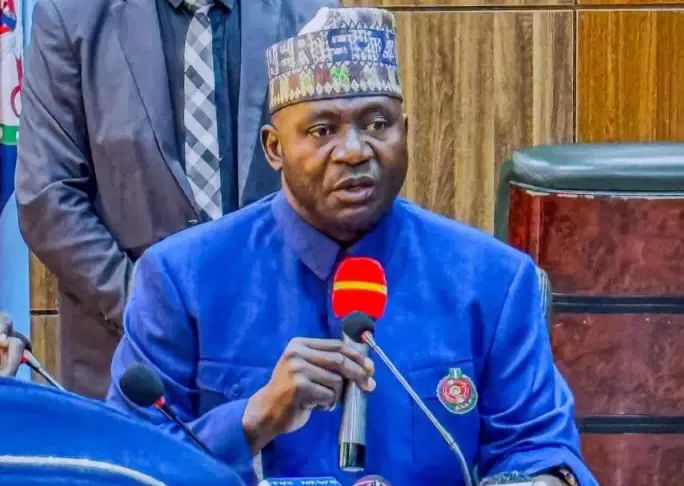
The assistance, provided under the European Peace Facility (EPF), was discussed during a meeting between Nigeria’s Minister of Defence, General Christopher Musa (retd.), and the EU Ambassador to Nigeria and the Economic Community of West African States (ECOWAS), Gautier Mignot, in Abuja.
The discussions initially focused on the proposed support and the arrangements required for its delivery. According to a statement issued by the Defence Minister’s media aide, Leah Katung-Babatunde, the European Union planned to send a technical delegation to Abuja in November to agree on the implementation details.
However, the funding has since moved beyond the proposal stage. On October 19, 2026, the Council of the European Union formally adopted a €20 million assistance measure to support Nigeria’s armed forces, making it the bloc’s first dedicated bilateral military assistance package for the country under the European Peace Facility.

The approved package is designed to provide non-lethal military capabilities in four major areas: counter-improvised explosive device operations, counter-unmanned aircraft systems, night vision and individual protection.
The intervention is expected to improve the safety of Nigerian troops deployed across the country, particularly personnel operating in areas where armed groups, terrorists and criminal networks pose persistent threats.
Counter-improvised explosive device equipment and training are intended to strengthen the military’s ability to detect and respond to explosive threats, including devices used to target security personnel and military movements.
The counter-drone component will also address the growing security challenges associated with unmanned aircraft systems, while night-vision equipment is expected to improve surveillance and operational effectiveness in low-light conditions. Personal protective equipment will provide additional protection for troops carrying out security assignments.
The EU Council’s decision provides for the assistance measure to run for 36 months from its adoption. It also establishes monitoring and accountability requirements covering the use, maintenance and control of equipment supplied under the programme.
Nigeria is expected to ensure that supported military units comply with relevant international human rights and humanitarian laws. The agreement also provides for monitoring, reporting and possible suspension or termination of assistance if the stipulated conditions are breached.
Speaking during the earlier discussions, Musa expressed appreciation for the European Union’s continued support and reiterated the Federal Government’s commitment to protecting lives and property.
The minister acknowledged that military operations were contributing to improved security in some troubled areas but noted that kidnapping along major highways and attacks on isolated communities remained serious concerns.
He also highlighted the security implications of the shrinking Lake Chad Basin, which supports millions of people across several countries. According to him, preventing terrorist groups from accessing strategic locations around the Lake Chad islands remains an operational priority for the Multinational Joint Task Force.
The EU has previously supported regional security operations through the multinational task force operating in the Lake Chad Basin. The newly approved package introduces a separate bilateral component specifically directed at strengthening Nigeria’s armed forces.
The assistance forms part of broader security cooperation between Nigeria and the European Union, following discussions at the first Nigeria-EU Peace, Security and Defence Dialogue in February 2026 and the eighth Nigeria-EU ministerial dialogue in March.
Although the €20 million allocation has received formal approval, the EU Council’s announcement does not establish that the equipment has already been delivered. Details concerning procurement, the precise quantities of equipment and the delivery timetable have not been publicly specified.
The initiative nevertheless represents an additional framework for cooperation as Nigeria continues to confront terrorism, banditry, attacks on rural communities and other threats to national security.




