

Economy
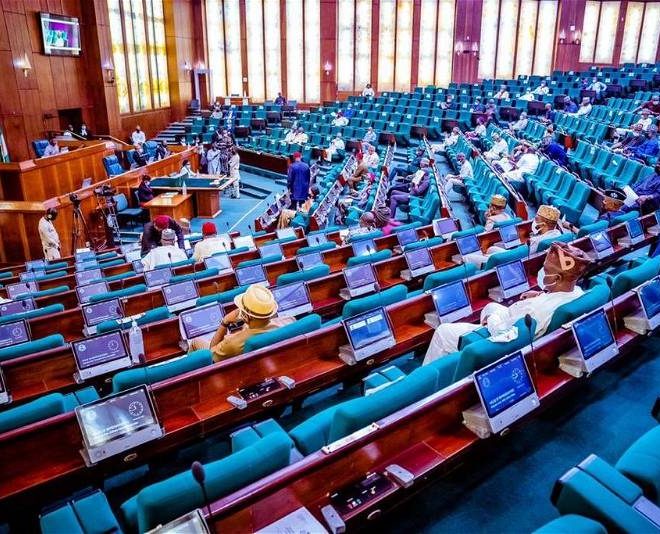
JUST IN: Reps Approve Tinubu’s $2.35bn Loan, $500m Sukuk for 2025 Budget Deficit

The House of Representatives has approved President Bola Tinubu’s request to obtain $2.35 billion in external loans to finance part of Nigeria’s 2025 budget deficit.
The Lawmakers also endorsed the issuance of a $500 million sovereign sukuk bond in the international market.
The bond aims to boost infrastructure development and diversify Nigeria’s funding sources.
The approvals came after the House adopted a report by the Committee on Aids, Loans and Debt Management during plenary on Wednesday.

According to the report, the new borrowing aligns with the 2025 Appropriation Act, which permits the federal government to implement N1.84 trillion in new external loans.
The plan will use a budget exchange rate of N1,500 to $1 to finance part of the N9.28 trillion deficit projected in the national budget.
President Tinubu had earlier written to the National Assembly seeking approval for the loans.
His request cited Sections 21(1) and 27(1) of the Debt Management Office Act, which mandate legislative consent for any form of external borrowing.
The government said the fresh loans are crucial to bridge fiscal gaps, stabilize the economy, and fund priority capital projects in 2025.
The $500 million sukuk, which follows previous successful issuances, is expected to attract foreign investors and provide non-interest financing for key road and infrastructure projects.
Nigeria’s debt management strategy, officials say, aims to maintain sustainability while expanding access to concessional funding.
The National Assembly’s approval marks another step in implementing the Tinubu administration’s broader medium-term debt and financing framework.

Economy
Nigeria’s Foreign Reserves Hit $46bn – CBN
Nigeria’s foreign reserves have surged past $46 billion, marking the highest level recorded since 2018, according to Central Bank of Nigeria (CBN) Governor Yemi Cardoso.
Cardoso, represented by the Deputy Governor in charge of Economic Policy, Dr. Muhammad Abdullahi, disclosed the development on Tuesday during the opening session of the Monetary Policy Department’s 20th Anniversary Colloquium at the CBN headquarters in Abuja.
He noted that the current reserve level is strong enough to cover more than 10 months of imports, signalling improved external stability for the economy.
Abdullahi also projected that lending rates may begin to ease in the coming months as inflation gradually retreats, a shift expected to boost credit access and stimulate investments.
Latest exchange rate data released by the CBN showed the naira depreciated slightly by 0.4% on Monday, trading at ₦1,448.03/$ compared to ₦1,442.43/$ last Friday at the Nigerian Foreign Exchange Market (NFEM).
In the parallel market, however, the naira appreciated marginally, closing at ₦1,455/$ on Monday from ₦1,457/$ on Friday.
Analysts attribute the swelling reserves now at $46.7 billion to the Federal Government’s recent Eurobond issuance, alongside rising foreign exchange inflows and renewed investor confidence.
October 2025 also recorded the highest FX inflows since May, driven by improving macroeconomic stability and increased offshore interest in Africa’s largest economy.
Despite the positive indicators, Foreign Direct Investment (FDI) fell by 25% month-on-month to $222 million, reflecting ongoing structural obstacles such as insecurity, policy unpredictability, and a challenging business environment that continues to discourage long-term capital inflows.
(DDM) – Nigeria’s financial markets have experienced a major boost following the country’s removal from the Financial Action Task Force (FATF) grey list, signaling progress in the fight against money laundering and terrorist financing.
Diaspora Digital Media (DDM) gathered that investors’ confidence surged as the naira hit a 10-month high of N1,444.42 to the dollar at official markets last Wednesday, while parallel market rates reached N1,465 per dollar.
The milestone achievement also coincided with Nigeria’s foreign reserves crossing $43 billion, strengthening the local currency and supporting sustainable economic growth.
The FATF, a Paris-based global watchdog, monitors countries with strategic deficiencies in combating illicit financial flows. Membership includes 40 countries, backed by institutions such as the World Bank and International Monetary Fund (IMF).
Nigeria’s exit from the grey list follows successful implementation of the FATF’s 40 recommendations, a move that signals improved compliance with global anti-money laundering and counter-terrorist financing standards.
Experts say the delisting is likely to attract new investment inflows, ease payment challenges for local businesses, and enhance the naira’s competitiveness in global markets.
Dr. Aminu Gwadabe, President of the Association of Bureaux De Change Operators of Nigeria (ABCON), noted that confidence surged immediately after the announcement, lifting the naira by about N10 per dollar in official trading.
Central Bank of Nigeria (CBN) Governor Olayemi Cardoso emphasized that the FATF’s decision reflects the success of coordinated reforms and demonstrates the growing integrity of Nigeria’s financial system.
“Our priority now is to consolidate these gains, ensuring that compliance, innovation, and trust continue to advance hand in hand to reinforce financial stability and strengthen Nigeria’s global credibility,” he said.
The apex bank’s reform measures, including the introduction of an electronic Foreign Exchange Matching System (EFEMS), improved liquidity management, and stricter enforcement of the Foreign Exchange (FX) Code, have contributed to narrowing gaps between official and parallel market rates and curbing speculative practices.
These interventions, coupled with inflows from foreign portfolio investors and international oil companies, have fortified the naira and boosted external reserves.
Analysts from Commercio Partners attribute the naira’s rally to stronger demand, improved market confidence, and rising external reserves. Ifeanyi Ubah, Head of Research, remarked, “Nigeria’s current naira rally reflects a healthier external position and a stronger foundation compared to previous cycles of volatility.”
Other countries removed from the FATF grey list include South Africa, Mozambique, and Burkina Faso, marking a global trend of enhanced compliance and financial transparency.
For Nigeria, the milestone achievement opens the door to greater investment, reduced capital costs, and improved access to international financial markets.
Despite optimism, experts caution that maintaining momentum will require continued macroeconomic discipline, diversification of exports, and consistent crude oil production.
Nevertheless, Nigeria’s removal from the FATF grey list and the rising naira represent a significant turning point in the nation’s journey toward financial stability and global market credibility.
(DDM) – The Managing Director of FairMoney Microfinance Bank Nigeria, Henry Obiekea, has called for a nationwide push towards fair and inclusive digital finance.
Diaspora Digital Media (DDM) gathered that Obiekea made the statement during a recent financial sector forum attended by industry leaders, regulators, and government officials.
He emphasized that digital financial inclusion is a key driver for Nigeria to achieve the $1 trillion economic agenda outlined by the current administration.
Obiekea explained that the adoption of technology-driven banking services can accelerate economic growth by increasing access to credit, promoting entrepreneurship, and supporting small and medium-sized enterprises (SMEs).
He noted that despite Nigeria’s large population, a significant portion of citizens remain unbanked or underbanked, limiting their participation in the formal economy.
“Digital financial services must reach every Nigerian, regardless of location or income level,” Obiekea stated.
He highlighted that mobile banking, fintech platforms, and other innovative financial solutions can help bridge gaps in economic participation and drive productivity across sectors.
The FairMoney MD urged policymakers to implement supportive regulations that enable fintech growth while protecting consumers and ensuring system security.
According to him, collaboration between traditional banks, fintech companies, and government agencies is essential to create a resilient, inclusive digital economy.
Obiekea also stressed that financial literacy programs are crucial to empower Nigerians to take full advantage of digital financial tools.
He pointed out that digital access not only improves personal financial management but also boosts government revenue through broader tax compliance and formal sector engagement.
DDM reports that Obiekea’s call aligns with the administration’s economic diversification strategy, which prioritizes technology, innovation, and financial inclusion as pillars for sustainable growth.
Industry observers note that expanding digital finance can help Nigeria unlock new markets, attract foreign investment, and enhance the efficiency of domestic trade and payments systems.
Obiekea concluded by urging stakeholders to act swiftly, warning that failure to embrace digital financial inclusion could slow the nation’s progress toward achieving the $1 trillion economy target.
He expressed optimism that with coordinated effort, Nigeria can harness technology to transform its financial landscape and create opportunities for millions of citizens.
-
News1 day agoBREAKING: ISWAP executes Nigerian Brigade Commander
-
News6 days agoBREAKING: President Tinubu Snubs Wike, Backs Lieutenant Yerima, Military
DDM News
-
News23 hours agoPHOTO: Nigerian Brigade Commander executed by ISWAP has been identified as Brigadier General Uba
-
World News4 days agoBREAKING: Multiple explosions hit oil installations in Bakassi Peninsula as group calls for Kanu release
-
News4 days agoObiano’s Camp Debunks Death Rumour, Warns Against Fake News
-
News3 days agoBREAKING: PDP expels Wike, Fayose, Anyanwu
-
News3 days agoBrigadier General reappears after ISWAP ambush
-
News7 days agoPanic as gunmen kidnap 6 defence ministry directors
-
News3 days agoISWAP ambushes military convoy, reportedly abducts Brigade Commander
-
News4 days agoTENSION IN UNIUYO: VC PROF. NDAEYO NOMINATES JUNIOR PROFESSORS TO SCREEN SENIOR COLLEAGUES
- ALLEGED PLOT FOR VIOLENCE IF “LAST-MINUTE GAME” FAILS

