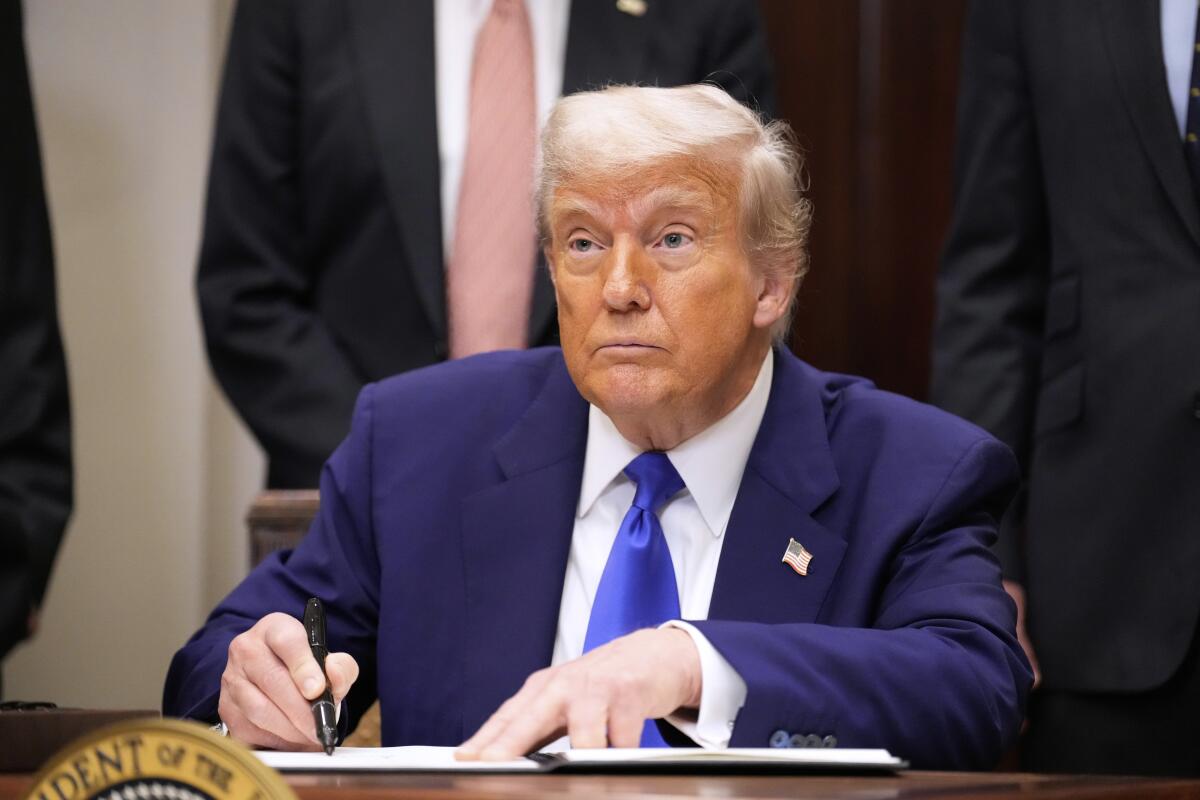
United States President Donald Trump has signed a sweeping executive order imposing a staggering $100,000 annual fee on applicants for the H-1B skilled worker visa programme.
The decision has sparked outrage among businesses, immigration advocates, and global talent hubs, with critics warning it could cripple innovation and weaken America’s competitive edge.
The new policy, which takes effect September 21, targets fresh H-1B applications and requires employers to pay the annual fee for up to six years per worker.
This means companies could face costs of up to $600,000 per applicant over the visa’s duration.

Commerce Secretary Howard Lutnick defended the move, claiming it would force firms to prioritise American workers.
“The company needs to decide whether the person is valuable enough for a $100,000-a-year payment to the government, or they should head home and hire an American,” Lutnick said. “All of the big companies are on board.”
Previously, H-1B visas carried administrative costs of around $1,500.
The order marks the most dramatic change to the programme since its creation, with officials insisting it is designed to curb “abuse” by companies.
Immigration lawyers and business leaders are warning of devastating consequences.
Tahmina Watson, a prominent immigration attorney, described the order as a “nail in the coffin” for small businesses and start-ups that rely on global expertise.
“Almost everyone’s going to be priced out. This $100,000 entry point is going to have a devastating impact,” she said.
Jorge Lopez, chair of immigration and global mobility at Littler Mendelson PC, echoed the concerns, cautioning that the policy “will put the brakes on American competitiveness in the tech sector and beyond.”
He warned that some firms may relocate operations abroad to avoid the prohibitive costs.
The decision has sent shockwaves through India, the largest source of H-1B applicants, where tech firms and workers fear it will further restrict opportunities for skilled professionals.
H-1B applications, capped at 85,000 annually, have already seen a sharp decline. USCIS data shows filings dropped to 359,000 for the upcoming fiscal year, the lowest in four years.
Tech giants like Amazon, Google, Meta, Microsoft, Apple, and Tata all heavy users of H-1B visas face mounting uncertainty.
Supporters argue the programme attracts top global talent, while critics accuse it of displacing American workers.
The move underscores Trump’s long and controversial history with the H-1B programme.
On the campaign trail, he once promised to ease pathways for skilled graduates, even proposing green cards for US-trained students.
However, during his presidency, he tightened visa scrutiny, with rejection rates peaking at 24% in 2018.
In a related order, Trump unveiled a so-called “gold card” visa, aimed at ultra-wealthy immigrants willing to pay at least £1 million for a fast-tracked path to residency.
The sharp fee hike is expected to trigger legal challenges and pushback from both industry leaders and foreign governments.
Analysts warn the decision could derail Trump’s pledge to grow America’s tech dominance and alienate vital global partners.
For now, thousands of skilled workers and companies worldwide are bracing for an uncertain future.