


Tensions in the Middle East escalated on Tuesday as Iran threatened to block oil exports from the region if ongoing attacks by the United States and Israel continue, prompting a sharp warning from U.S. President Donald Trump.
According to Reuters, Iran’s Islamic Revolutionary Guard Corps (IRGC) said it would prevent any oil shipments from leaving the Middle East if the military strikes persist.
A spokesperson for the force declared that “not one litre of oil” would be allowed to leave the region under continued attack.
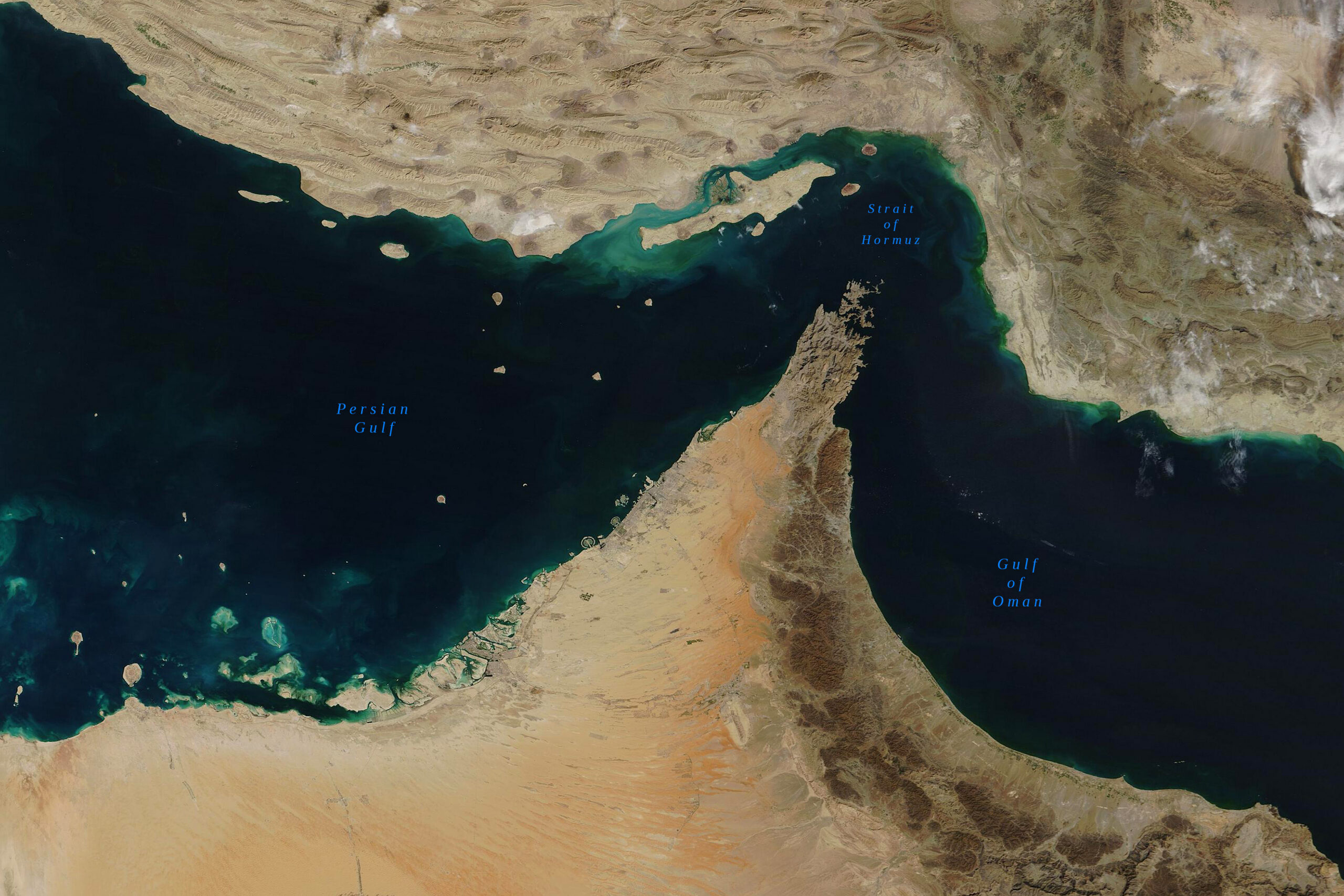
The statement raised concerns over the security of the Strait of Hormuz, a narrow waterway that carries about one-fifth of the world’s oil supply.

The strait has already been largely disrupted by the ongoing conflict, with tankers unable to pass for more than a week.
In response, Trump warned that any attempt by Iran to block the key shipping route would trigger far more severe military action.
“If Iran does anything that stops the flow of oil through the Strait of Hormuz, they will be hit by the United States twenty times harder than they have been hit so far,” Trump said during a press conference on Monday.
The conflict began in late February when U.S. and Israeli forces launched a series of air and missile strikes across Iran, targeting military installations and what Washington says are missile and nuclear facilities.
According to Iran’s ambassador to the United Nations, the attacks have killed at least 1,300 civilians and wounded thousands more.
Iran’s leadership has vowed to continue resisting the attacks. Officials in Tehran dismissed Trump’s comments as “nonsense” and insisted that Iran would ultimately determine when the war ends.
Diplomatic tensions have also deepened. Iran’s foreign minister, Abbas Araqchi, said Tehran was unlikely to return to negotiations with Washington after the strikes, describing previous talks with the United States as a “bitter experience.”
Meanwhile, Israel says its objective is to dismantle Iran’s system of clerical rule, while U.S. officials say their main goal is to eliminate Iran’s missile capabilities and nuclear programme.
Despite the escalating rhetoric, global markets showed mixed reactions.
Oil prices, which had surged earlier in the week amid fears of supply disruptions, fell by more than 10% on Tuesday.
Global stock markets also rebounded as investors speculated the conflict might end sooner than initially feared.
However, the war continues to expand across the region. Strikes have reportedly hit an oil refinery in Tehran, sending thick black smoke over parts of the city. The World Health Organization warned that the resulting fires could contaminate air, water and food supplies.
Regional tensions have also spread beyond Iran. Turkey said its air defence systems intercepted a ballistic missile fired from Iran that briefly entered Turkish airspace, marking the second such incident since the war began.
With energy supplies threatened and regional security deteriorating, world leaders are closely watching whether the confrontation will escalate further or move toward a negotiated end.




