



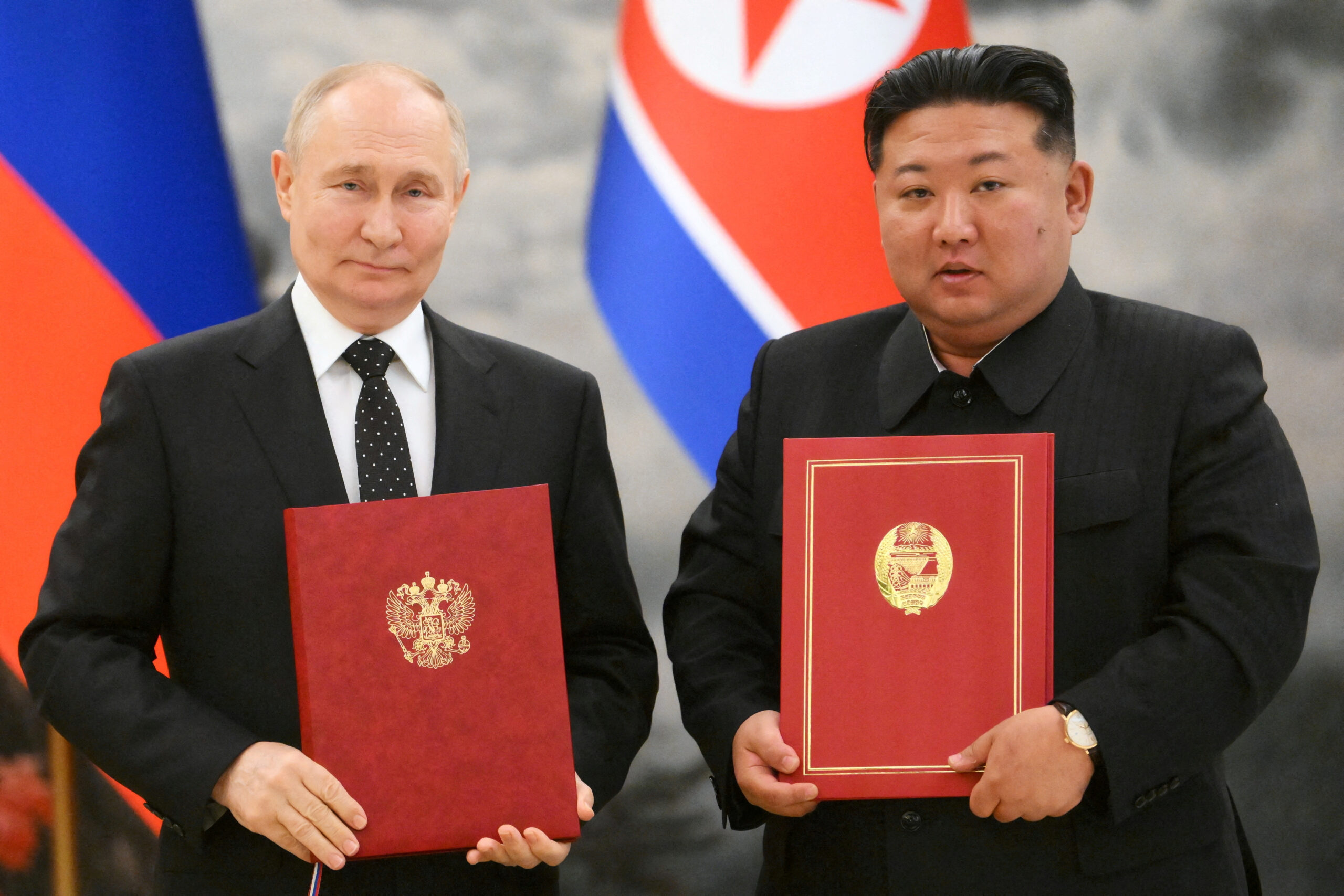
Russia and North Korea are moving to strengthen their military relationship, with both sides agreeing to expand cooperation over the long term.
During a visit to Pyongyang, Russia’s Defence Minister, Andrey Belousov, said the two countries had agreed to build a more stable and lasting military partnership.
He added that plans are underway to sign a formal cooperation roadmap covering the period from 2027 to 2031.
The announcement comes as North Korea continues to play an active role in supporting Russia’s war in Ukraine.
According to multiple reports, Pyongyang has sent thousands of troops, along with missiles and other military supplies, to assist Moscow.
In return, analysts believe North Korea is receiving economic and military support from Russia, including food, energy, financial aid and access to advanced technology resources that could help it ease the pressure of international sanctions tied to its nuclear programme.
The growing alliance follows a defence pact signed in 2024, which commits both countries to provide immediate military assistance to each other in the event of an attack.
While in Pyongyang, Belousov held talks with North Korean leader Kim Jong Un and Defence Minister No Kwang Chol.
Russia’s parliamentary speaker, Vyacheslav Volodin, also met with Kim, thanking him for North Korea’s role in recent military operations.
North Korean troops have reportedly been deployed to Russia’s Kursk region, where they are helping counter Ukrainian advances. Russian officials say some of these soldiers have already been recognised with military awards for their role in the fighting.
However, the involvement has come at a cost. South Korean estimates suggest around 2,000 North Korean troops have been killed in the conflict so far.
Reports also indicate that soldiers were instructed to avoid capture, with only a small number believed to have been taken alive by Ukrainian forces.
The deepening cooperation between Moscow and Pyongyang signals a further shift in global alliances, as both countries draw closer in the face of growing international pressure.




