

World
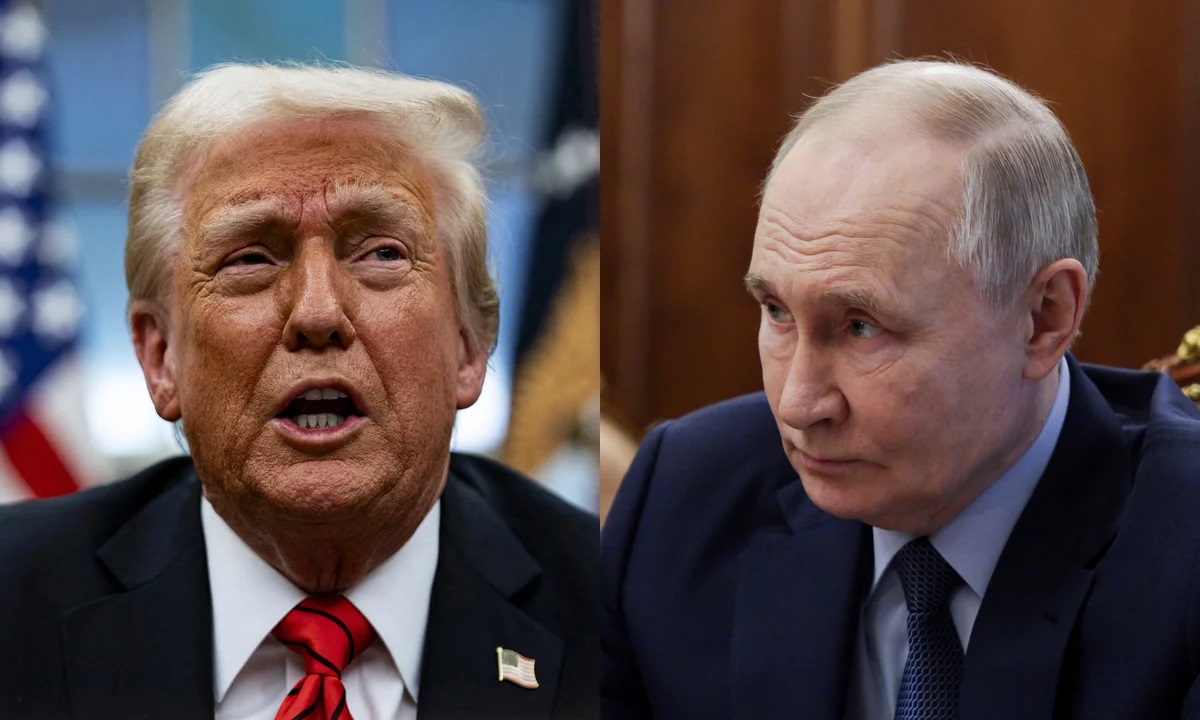
JUST IN: Trump Imposes Tough Sanctions on Russian Largest Oil Companies

The Trump administration has announced sweeping sanctions on Russia’s two largest oil companies, Rosneft and Lukoil, marking Washington’s toughest response yet to Moscow’s ongoing war in Ukraine.
President Donald Trump, who had delayed punitive measures for weeks, said he “canceled” his planned meeting with Russian President Vladimir Putin because progress toward peace seemed impossible.
“I felt it was time,” Trump said from the Oval Office. “I waited a long time to impose them. I hope they won’t last long, because I believe this war will end soon.”
Treasury Secretary Scott Bessent confirmed the sanctions, saying it was time “to stop the killing and reach an immediate ceasefire.”

“Given President Putin’s refusal to end this senseless war, Treasury is sanctioning Russia’s two largest oil companies that fund the Kremlin’s war machine,” Bessent said, warning that the U.S. could impose further restrictions if needed.
The sanctions, which target Rosneft, Lukoil, and nearly three dozen of their subsidiaries, follow similar measures imposed last week by the United Kingdom. The European Union also adopted a new sanctions package Thursday, including a ban on Russian liquefied natural gas imports.
According to the U.S. Treasury, its sanctions envoy David O’Sullivan will meet with senior U.S. officials to coordinate the next steps.
Ukraine’s ambassador to Washington, Olga Stefanishyna, praised the move, saying it aligns with Kyiv’s stance that “peace is only possible through strength and international pressure on the aggressor.”
Diplomatic talks between Moscow and Kyiv have repeatedly failed, as Russia continues to reject any ceasefire deal that could freeze the conflict.
Trump was expected to meet Putin in Budapest but said he canceled because “it didn’t feel right.” He added that a future meeting could still happen.
Experts say the true impact of the sanctions will depend on whether the U.S. enforces secondary measures on foreign companies dealing with Rosneft and Lukoil.
“These primary sanctions are significant, but their effectiveness will depend on whether Washington extends them to third parties,” said Eddie Fishman of the Atlantic Council.
The announcement came just hours after Russia launched another large-scale airstrike on Ukraine, including Kyiv, causing power outages across several cities.
Bessent described the sanctions as “among the largest” imposed so far and emphasized that Trump was “deeply disappointed” in Putin’s failure to negotiate peace.
“These sanctions are powerful,” Bessent said, “and we urge our G7 partners, along with Canada and Australia, to follow our lead.”

World
UK Moves to Impose Visa Bans on African Countries
The United Kingdom has threatened to impose visa bans on citizens of Angola, Namibia, and the Democratic Republic of Congo unless all three nations agree to accept the return of irregular migrants living in Britain.
The warning came on Monday as Home Secretary Shabana Mahmood prepared to unveil what officials describe as the most sweeping overhaul of the UK asylum system in decades.
According to the UK Home Office, Britain may stop issuing visas to nationals from the three countries due to what it calls their “unacceptably low levels of cooperation” in taking back migrants deemed to be illegally residing in the UK.
The move mirrors past hardline actions such as the Trump-era travel bans, signalling a tougher stance by the Labour government as it faces mounting political pressure over rising migration numbers.
Britain has witnessed a sharp increase in asylum seekers crossing the Channel from France in small boats. Mahmood’s reforms are widely seen as part of a broader effort to counter public frustration and halt the growing popularity of the far-right Reform UK party, which has surged ahead of Labour in several recent polls.
The Home Office added that more countries could face similar penalties. Proposed measures include an “emergency brake” that could temporarily suspend visas for nations with high asylum claim rates, even when their citizens enter the UK legally.
While asylum applications have risen, official data shows a decline in initial approvals issued between 2023 and 2024.
Meanwhile, the UK has continued to issue large numbers of visas through humanitarian pathways, particularly for people fleeing conflicts or crises in Ukraine, Afghanistan, and Hong Kong.
The new policy proposals also draw inspiration from Denmark’s restrictive asylum model. Some of the key changes would:
- abolish automatic benefits for asylum seekers
- significantly reduce protections for refugees
- shorten refugee status from five years to 30 months
- require refugees to undergo regular status reviews
- compel refugees to return home once their countries are deemed safe
- extend the waiting period for permanent residency from five years to 20 years
The plan has already generated strong criticism from humanitarian organisations, as well as several Labour MPs, who warn the reforms could place vulnerable people at increased risk.
World
China Issues Travel Warning on Japan as Taiwan Dispute Boils Over
China has advised its citizens to avoid travelling to Japan and has summoned Tokyo’s ambassador in Beijing following remarks by Japanese Prime Minister Sanae Takaichi on the security implications of a potential Chinese attack on Taiwan.
The latest diplomatic clash erupted after Takaichi told a parliamentary committee that any use of force around Taiwan involving “battleships and the use of force” could amount to a “survival-threatening situation” for Japan.
Under Japan’s 2015 security legislation, such a designation would allow the Self-Defence Forces to support allies under attack.
Beijing condemned the comments as “egregious,” intensifying tensions already strained by sensitive regional security issues.
The row escalated further after China’s Consul General in Osaka, Xue Jian, wrote online that “the dirty head that sticks itself in must be cut off.” Japan’s Chief Cabinet Secretary Minoru Kihara described the statement as “highly inappropriate.”
Both countries lodged formal protests over each other’s remarks.
Prime Minister Takaichi has refused to withdraw her statement, saying it aligns with Japan’s long-standing security position, though she added she would be “careful” when discussing hypothetical scenarios in the future.
China’s Foreign Ministry accused Japan of “playing with fire” and warned that any intervention in the Taiwan Strait would be considered an “act of aggression.”
Chinese Vice Foreign Minister Sun Weidong summoned Japan’s ambassador on Thursday, calling Takaichi’s comments “extremely wrong and dangerous” and demanding that Tokyo retract them or “bear all consequences.”
Japan, however, maintains that it seeks a peaceful, diplomatic resolution to issues concerning Taiwan.
At a briefing, Kihara urged Beijing to act responsibly regarding Xue’s controversial remarks and reiterated Tokyo’s commitment to peaceful dialogue.
Late Friday, China’s embassy in Tokyo issued a travel advisory urging Chinese nationals to avoid Japan “in the near future,” citing what it described as “blatantly provocative remarks regarding Taiwan.”
The dispute touches on long-standing historical grievances dating back to the 19th century and the Second World War, which continue to shape China-Japan relations. China’s Foreign Ministry warned that Japan would “inevitably suffer heavy losses and pay a bitter price” if it interferes militarily in the Taiwan question.
Takaichi, a protégé of former Prime Minister Shinzo Abe, is known for her hawkish views on China and her strong support for closer cooperation with the United States. She has faced repeated accusations from Beijing of supporting Taiwanese independence, especially after meeting a senior Taiwanese official during the recent APEC summit in South Korea.
China considers Taiwan part of its territory and has not ruled out the use of force to achieve unification. Japan, like the United States, maintains strategic ambiguity regarding how it might respond to a Chinese invasion, balancing deterrence with its significant economic ties to Beijing.
Past remarks by Japanese officials on Taiwan have triggered similar friction. In 2021, when then–Deputy Prime Minister Taro Aso said Japan would join the U.S. in defending Taiwan, China demanded he “correct his mistakes.”
In the most recent escalation, China again accused Japan of “gross interference” in its internal affairs.
Foreign Ministry spokesperson Lin Jian reaffirmed Beijing’s position that “Taiwan is China’s Taiwan” and warned that China would not tolerate foreign interference or threats to its “core interests.”
World
US Congressman Reacts to Abduction of 25 Girls in Kebbi
A United States congressman, Riley McGowan Moore, has called for prayers over the abduction of 25 schoolgirls in Northern Nigeria and the killing of their vice principal during the attack.
Moore issued the statement on X on Tuesday, urging global attention and describing the affected area as a “Christian enclave.”
His remark, however, triggered an immediate pushback from a former presidential aide, Bashir Ahmad, who accused the US lawmaker of misrepresenting the religious identity of the community and endangering Nigeria’s fragile social fabric with what he called an “unholy narrative.”
Moore wrote: “Please join me in praying for the 25 girls who have been kidnapped and for the repose of the soul of their vice principal who was killed. While we don’t have all the details on this horrific attack, we know that the attack occurred in a Christian enclave in Northern Nigeria.
The Nigerian government must do more to end the rampant violence.”
The post drew widespread reactions online, but it was Ahmad’s rebuttal that stood out for its blunt tone and urgency.
In his response, Ahmad corrected the congressman’s description, stressing that the school, the host community, and the victims are Muslim.
He wrote: “While appreciating your concern and praying for our sisters, it is important to correct a crucial detail here.
The attack did not occur in a Christian enclave. It happened within a Muslim community and the victims themselves were Muslims.”
He added that Moore’s framing of the incident risked deepening divisions: “This is precisely why we keep saying that even you, Americans, either do not understand the complexity of Nigeria’s insecurity challenges, or you are deliberately pushing unholy narratives that risk worsening our already fragile unity.”
Ahmad’s reaction highlights a long-running debate around how international actors interpret Nigeria’s security crisis, especially where attacks are mistakenly cast as being driven primarily by religious motives.
The abduction of the 25 girls has drawn condemnation across Nigeria and abroad, with renewed calls for the government to intensify rescue efforts and address the worsening insecurity in Northern states.
-
News1 day agoBREAKING: ISWAP executes Nigerian Brigade Commander
-
News6 days agoBREAKING: President Tinubu Snubs Wike, Backs Lieutenant Yerima, Military
DDM News
-
News23 hours agoPHOTO: Nigerian Brigade Commander executed by ISWAP has been identified as Brigadier General Uba
-
World News4 days agoBREAKING: Multiple explosions hit oil installations in Bakassi Peninsula as group calls for Kanu release
-
News4 days agoObiano’s Camp Debunks Death Rumour, Warns Against Fake News
-
News3 days agoBREAKING: PDP expels Wike, Fayose, Anyanwu
-
News3 days agoBrigadier General reappears after ISWAP ambush
-
News7 days agoPanic as gunmen kidnap 6 defence ministry directors
-
News3 days agoISWAP ambushes military convoy, reportedly abducts Brigade Commander
-
News4 days agoTENSION IN UNIUYO: VC PROF. NDAEYO NOMINATES JUNIOR PROFESSORS TO SCREEN SENIOR COLLEAGUES
- ALLEGED PLOT FOR VIOLENCE IF “LAST-MINUTE GAME” FAILS

