


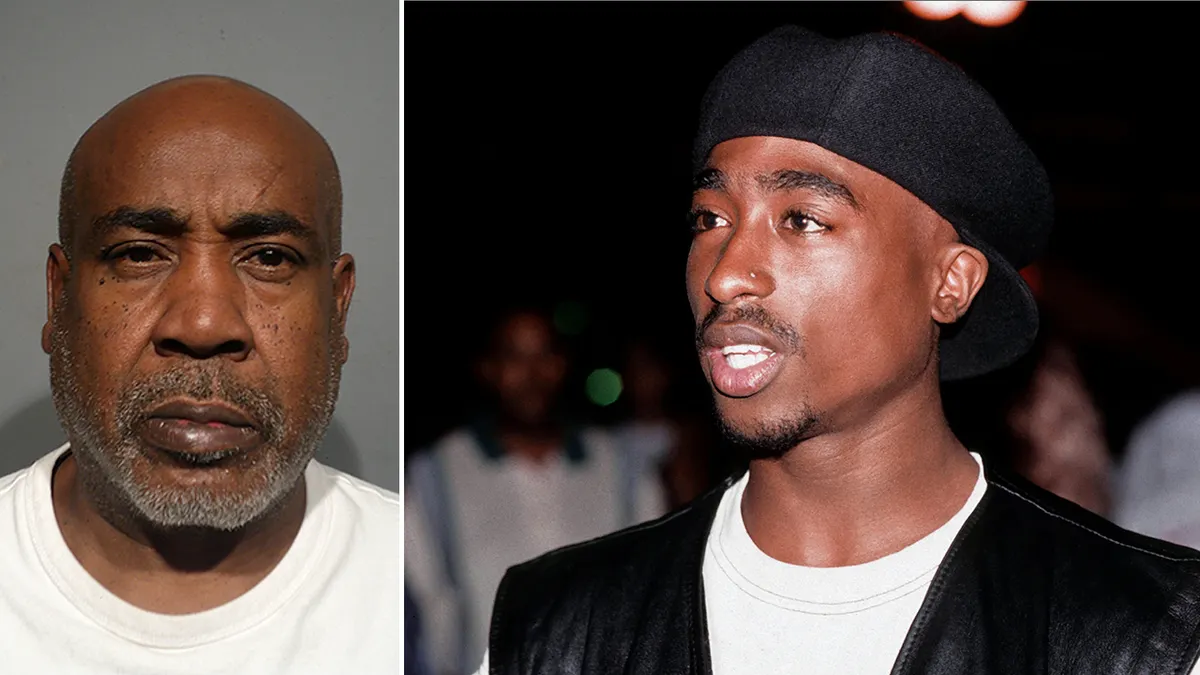
Duane “Keffe D” Davis, the former Los Angeles gang leader convicted of orchestrating the 1996 murder of rapper Tupac Shakur, has been sentenced to a minimum of 40 years in prison.
Davis, 63, was sentenced on Tuesday by a court in Las Vegas, Nevada, three decades after the killing of one of hip-hop’s most influential artists.
The former leader of a branch of the Crips gang had spoken publicly about his involvement in the killing for years, including in his memoir, but denied the allegations when he went on trial.
Addressing Davis during sentencing, Judge Carli Kierny said his previous statements to law enforcement and in his book had shown a pattern of acknowledging involvement while suggesting he had moved on with his life.

“I’m here to tell you that’s not how this works,” the judge said.
She added that Davis could not take another person’s life and simply walk away, particularly when the victim was Tupac Shakur.
Shakur, widely known as 2Pac, was shot on September 7, 1996, while travelling in a BMW in Las Vegas. He died six days later at the age of 25.
During the trial, prosecutors said Davis ordered the killing after his nephew was beaten by members of Shakur’s entourage during a confrontation at a Las Vegas casino.
According to the prosecution’s account, a white Cadillac pulled alongside Shakur’s BMW at a traffic light about two hours after the confrontation. Davis allegedly handed a gun to a passenger in the back seat and instructed the person to shoot the rapper.
The identity of the gunman has not been definitively established. Davis was the only surviving occupant of the Cadillac, while Marion “Suge” Knight, the co-founder of Death Row Records who was driving Shakur’s BMW, was wounded in the shooting.
Shakur’s murder became one of the most widely discussed unsolved cases in American music history, generating decades of speculation about those responsible and their motives.
The rapper rose to prominence through hits including “California Love” and “All Eyez on Me”. Born in New York, he spent part of his childhood in Harlem and Baltimore before becoming a leading figure in West Coast hip-hop after signing with Los Angeles-based Death Row Records.
His death also became closely associated with the rivalry between East Coast and West Coast hip-hop artists during the 1990s.
At Tuesday’s sentencing, Shakur’s sister, Sekyiwa Shakur, paid an emotional tribute to her brother, describing him as someone who had been raised to stand up for vulnerable people.
She said he dedicated his career to advancing the interests of his community and was protective of his family, kind to women and children, and generous to people in need.
Davis did not express remorse before the sentence was handed down and said he intended to appeal his conviction.




