


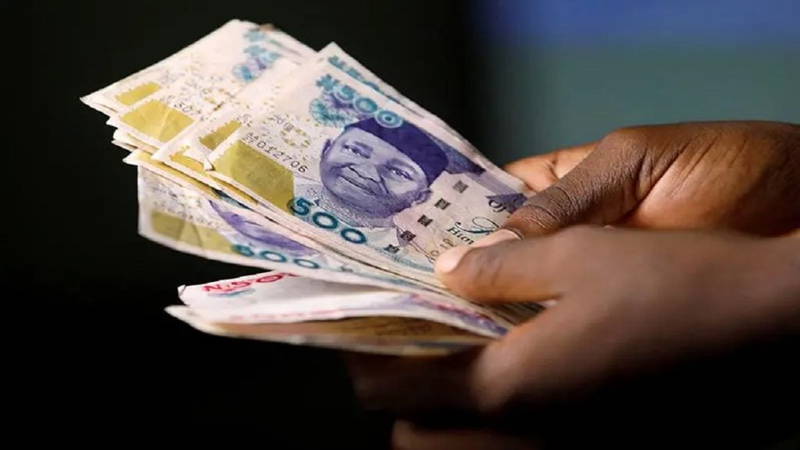
The naira has recorded another gain against the United States dollar, strengthening to ₦1,387 per dollar in Nigeria’s parallel foreign exchange market as improving sentiment around the local currency continues to attract attention across the economy.
The latest movement represents a modest but notable improvement from the ₦1,390 per dollar recorded in the parallel market on Monday, according to market data reported by Vanguard.
At the official market, the naira also appreciated, with the indicative exchange rate moving to ₦1,322.90 per dollar from ₦1,320 previously.
The simultaneous movement in both markets is significant because the difference between Nigeria’s official and parallel exchange rates has narrowed. The spread fell to ₦64.10 per dollar from ₦70 the previous day, pointing to a smaller gap between the two major reference points used by businesses and currency traders.

For DDM News, the latest appreciation provides another indication that conditions in Nigeria’s foreign exchange market may be shifting, although the movement remains relatively small and should not yet be interpreted as evidence of a sustained naira rally.
The official-market movement was supported by data from the Central Bank of Nigeria, which showed the indicative exchange rate at ₦1,322.90 per dollar.
While the naira’s ₦2.90 appreciation may appear modest, the narrowing spread with the parallel market is particularly important because a smaller divergence between the two markets can reduce some of the distortions created when businesses and individuals face significantly different exchange rates depending on where they obtain foreign currency.
Another development attracting attention is the decline in foreign-exchange turnover.
Interbank turnover in the Nigerian Foreign Exchange Market fell by 48.07 per cent to $55.6 million from $107.07 million recorded on Monday.
The reduction in turnover means that the latest appreciation occurred alongside lower reported trading activity.
This makes it important to distinguish between a daily price movement and a broader change in the underlying balance of supply and demand for foreign currency.
The exchange rate remains one of the most closely watched indicators of Nigeria’s economic health.
Movements in the naira have direct implications for businesses that import raw materials, machinery and finished goods, as well as consumers who ultimately face the effects through product prices.
A stronger naira can reduce the local-currency cost of imported goods and foreign obligations when the movement is sustained. It can also improve planning for companies that rely heavily on dollar-denominated transactions. However, the benefits depend on whether the currency maintains its strength over a longer period rather than experiencing a short-lived appreciation.
The latest narrowing of the official-parallel market gap could also be important for investor sentiment.
A large difference between the two markets can create uncertainty for businesses attempting to determine the appropriate exchange rate for transactions, investment decisions and financial reporting.
Nigeria has spent considerable time trying to improve the functioning of its foreign exchange market and reduce distortions between different exchange-rate windows.
As the gap narrows, businesses may gain greater clarity over the value of the naira and the cost of accessing foreign currency.
However, the parallel-market rate remains higher than the official rate, with a difference of ₦64.10 per dollar based on the latest figures.
This shows that demand and supply conditions are still not completely aligned across the two markets.
The latest development therefore raises an important question: what is driving the naira’s gradual improvement, and can the trend continue?
The answer will depend on several factors, including foreign-exchange liquidity, dollar demand, crude-oil earnings, capital inflows, import demand and the effectiveness of measures taken by financial authorities to improve market liquidity.
For businesses, even a relatively small movement in the exchange rate can have meaningful consequences when multiplied across large transactions.
An importer purchasing millions of dollars, for instance, will see a substantial difference in naira costs when the exchange rate moves by several naira.
The same applies to companies with foreign-currency loans or obligations.
A stronger naira can reduce the local-currency value of dollar liabilities, potentially easing some financial pressure on businesses with significant exposure to international markets.
Consumers may also be watching the development closely.
The naira’s performance has an indirect relationship with the prices of imported food, electronics, clothing, vehicles, machinery and other products.
However, exchange-rate appreciation does not automatically translate into immediate price reductions because businesses may still be dealing with inventories purchased at earlier, higher exchange rates and other rising operating costs.
The development also comes at a time when Nigeria’s financial markets are adjusting to significant reforms.
The Central Bank of Nigeria has been working to improve transparency and liquidity in the foreign-exchange market, while businesses and investors continue to adapt to a more market-driven exchange-rate environment.
For DDM News, the narrowing spread between ₦1,387 in the parallel market and ₦1,322.90 at the official market is perhaps more important than the daily appreciation alone.
A smaller gap could indicate gradual convergence between the two markets, which has long been an important objective of foreign-exchange reforms.
Still, caution remains necessary. Currency markets can move quickly in response to changes in dollar demand, international oil prices, investor flows and domestic economic developments.
A single day’s appreciation cannot establish a long-term trend.
The naira’s latest performance nevertheless offers a positive signal after years of significant volatility.
Moving from ₦1,390 to ₦1,387 per dollar in the parallel market represents only a ₦3 improvement, but the simultaneous appreciation at the official market suggests that the currency has gained ground across both major trading environments.
The critical issue now is whether the naira can build on this movement.
If foreign-exchange liquidity improves and the supply-demand imbalance continues to ease, further convergence could become possible.
If dollar demand rises sharply again, however, the recent gains could come under renewed pressure.
For now, the naira’s rise to ₦1,387 per dollar places the currency at another closely watched point in its continuing recovery story.
The modest appreciation, narrower market spread and changing trading conditions will keep investors, businesses and consumers watching the foreign-exchange market closely in the days ahead.




