


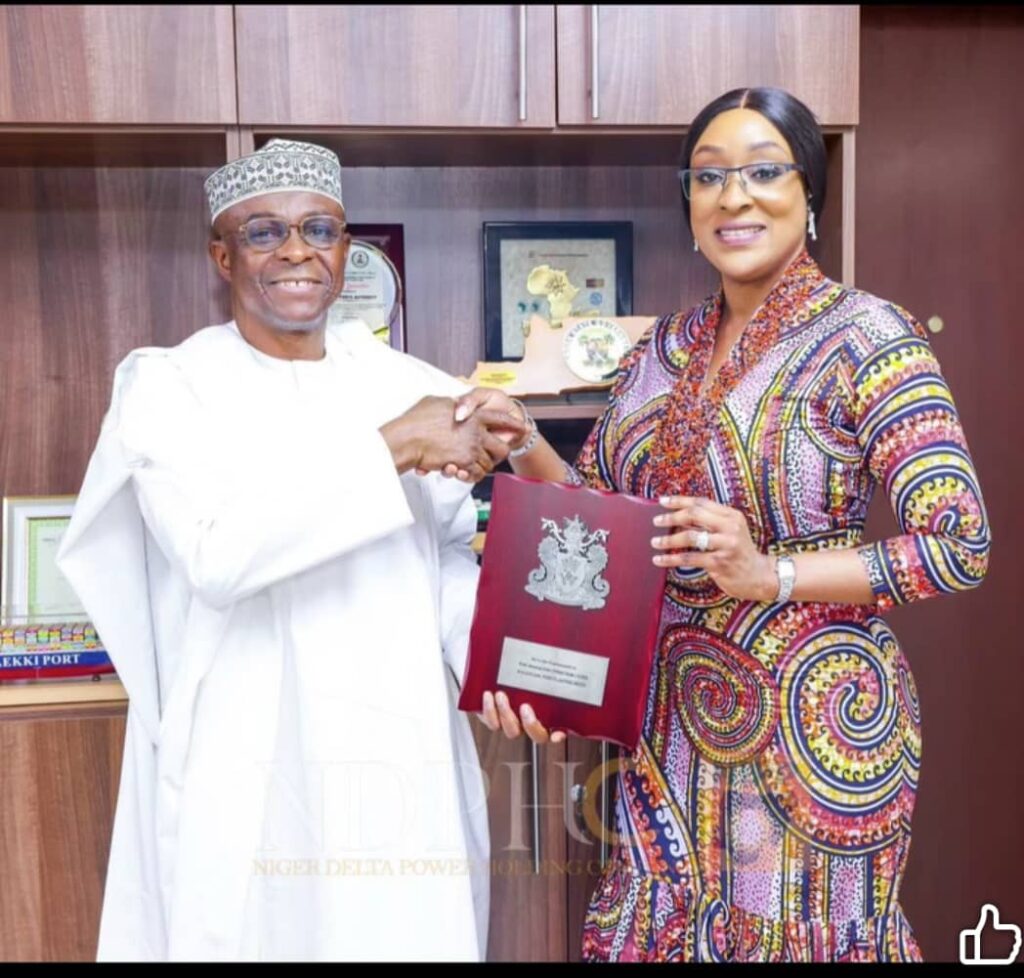
The Niger Delta Power Holding Company Limited (NDPHC) has commended the Nigerian Ports Authority (NPA) for its intervention in helping the company resolve issues surrounding stranded cargo and avoid billions of naira in potential financial losses.
The commendation was made during a courtesy visit by the Managing Director and Chief Executive Officer of NDPHC, Engineer Jennifer Adighije, to the headquarters of the Nigerian Ports Authority in Lagos.
Adighije met with the Managing Director and Chief Executive Officer of the NPA, Dr. Abubakar Dantsoho, as both organisations discussed issues affecting the movement and clearance of critical equipment and cargo required for Nigeria’s power infrastructure.
The engagement highlighted the importance of cooperation between agencies operating within the power and maritime sectors, particularly when delays at the nation’s ports have the potential to affect major infrastructure projects.

For NDPHC, the timely handling of its cargo is important because the company is involved in projects that support Nigeria’s electricity generation and transmission infrastructure.
Delays in clearing equipment at the ports can increase storage charges, demurrage and other costs, while also affecting the delivery schedules of projects that require specialised machinery and materials.
The intervention by the NPA therefore provided significant financial relief and helped prevent stranded cargo from becoming an even greater burden for the company.
DDM News reports that the development also highlights the wider economic consequences of port delays in Nigeria, where businesses can incur substantial costs when cargo remains at terminals for extended periods.
For companies importing equipment for major infrastructure projects, such costs can quickly accumulate and affect project budgets.
The NPA’s role in facilitating the movement of cargo is therefore important to the efficiency of Nigeria’s wider economy.
As the country continues to invest in electricity infrastructure, the smooth importation and movement of power-sector equipment will remain essential.
NDPHC plays an important role in Nigeria’s power sector through its involvement in the development and management of major electricity infrastructure.
The company was established as a government-owned power development company and has been involved in projects aimed at strengthening generation and transmission capacity.
Its activities require the movement of equipment and materials that may be too specialised or unavailable locally.
When such equipment becomes stranded at the ports, the consequences can extend beyond financial costs.
Project timelines can also be affected, potentially delaying the completion of infrastructure needed to improve electricity supply.
This makes collaboration between NDPHC and the NPA particularly important.
The courtesy visit by Adighije provided an opportunity for both organisations to strengthen their relationship and explore ways of improving coordination.
The meeting also demonstrated the importance of communication between government-owned institutions whose activities are connected despite operating in different sectors.
The maritime sector serves as a major gateway for equipment entering Nigeria, while the power sector depends on efficient access to machinery, components and other materials required for infrastructure development.
Any inefficiency at one point in this chain can create problems elsewhere.
The NPA has continued to emphasise the importance of improving port efficiency, reducing delays and making Nigerian ports more competitive.
For businesses and government agencies alike, faster cargo clearance can reduce operational costs and improve the predictability of supply chains.
The issue is particularly relevant to large infrastructure projects, where delays can have significant financial implications.
According to NDPHC, the NPA’s intervention helped save billions of naira that could have been lost as a result of the stranded cargo.
The figure demonstrates the financial importance of resolving port-related challenges quickly.
When cargo remains uncleared, importers may face a range of charges, including storage and demurrage fees.
These additional expenses can increase the overall cost of projects and place pressure on public funds when government agencies are involved.
By addressing the situation, the NPA helped limit the financial exposure associated with the stranded equipment.
DDM News understands that the development could also serve as an example of how stronger cooperation among government institutions can help reduce unnecessary costs and improve the implementation of major national projects.
Nigeria has significant infrastructure needs, particularly in the electricity sector.
The country continues to face challenges involving power generation, transmission and distribution, making investment in infrastructure essential to improving electricity availability and reliability.
However, investment alone may not be enough if administrative, logistical and operational bottlenecks continue to delay projects.
Efficient ports are therefore an important part of the infrastructure development process.
Equipment required for power plants, transmission lines and other projects often enters the country through maritime gateways.
If such equipment is delayed, projects may experience setbacks even when funding and technical resources are available.
The cooperation between the NPA and NDPHC could help reduce some of these challenges by ensuring that critical cargo receives the attention required to move through the ports efficiently.
The engagement between Adighije and Dantsoho also comes at a time when government agencies are under increasing pressure to improve efficiency and demonstrate value for public resources.
Avoiding unnecessary expenditure is particularly important for public institutions because savings can free up funds for other development priorities.
In the case of NDPHC, reducing the financial burden associated with stranded cargo could help ensure that more resources remain available for power-sector projects.
The broader economic impact of efficient port operations should also not be overlooked.
Ports support trade, manufacturing, construction, energy and several other sectors of the Nigerian economy.
When cargo moves efficiently, businesses can receive equipment and raw materials faster, reduce logistics costs and plan their operations more effectively.
When delays occur, the additional costs can eventually be transferred to consumers through higher prices.
For infrastructure companies, delays can also increase project costs and reduce the efficiency of government investment.
The NPA’s intervention in the NDPHC case therefore demonstrates how targeted action can produce financial benefits beyond the immediate cargo involved.
It also reinforces the need for continued collaboration between agencies responsible for different aspects of Nigeria’s economic development.
As NDPHC continues to implement projects aimed at strengthening the country’s power infrastructure, access to imported equipment will remain important.
The company will require efficient logistics systems to ensure that machinery and materials reach project locations within planned timelines.
The NPA, on the other hand, will continue to play a critical role in facilitating the movement of goods through Nigeria’s ports.
The relationship between both institutions could therefore become increasingly important as more infrastructure projects are developed.
The courtesy visit in Lagos signals a willingness by both sides to maintain communication and address challenges through institutional cooperation.
For Nigeria, such cooperation could help reduce waste, improve project delivery and ensure that public resources are used more efficiently.
The billions of naira reportedly saved through the resolution of the stranded cargo issue provide a clear indication of the value that can be created when government institutions respond quickly to operational challenges.
The development ultimately highlights a simple but important point: infrastructure projects do not depend only on construction and funding.
They also depend on efficient supply chains, functioning ports and effective coordination among the institutions responsible for delivering them.
As Nigeria continues to pursue improvements in electricity supply and other critical infrastructure, strengthening these connections will remain essential.
The NDPHC’s commendation of the NPA therefore reflects more than appreciation for a single intervention.
It points to the broader economic value of efficient port administration and stronger cooperation between government agencies working towards Nigeria’s development.




