


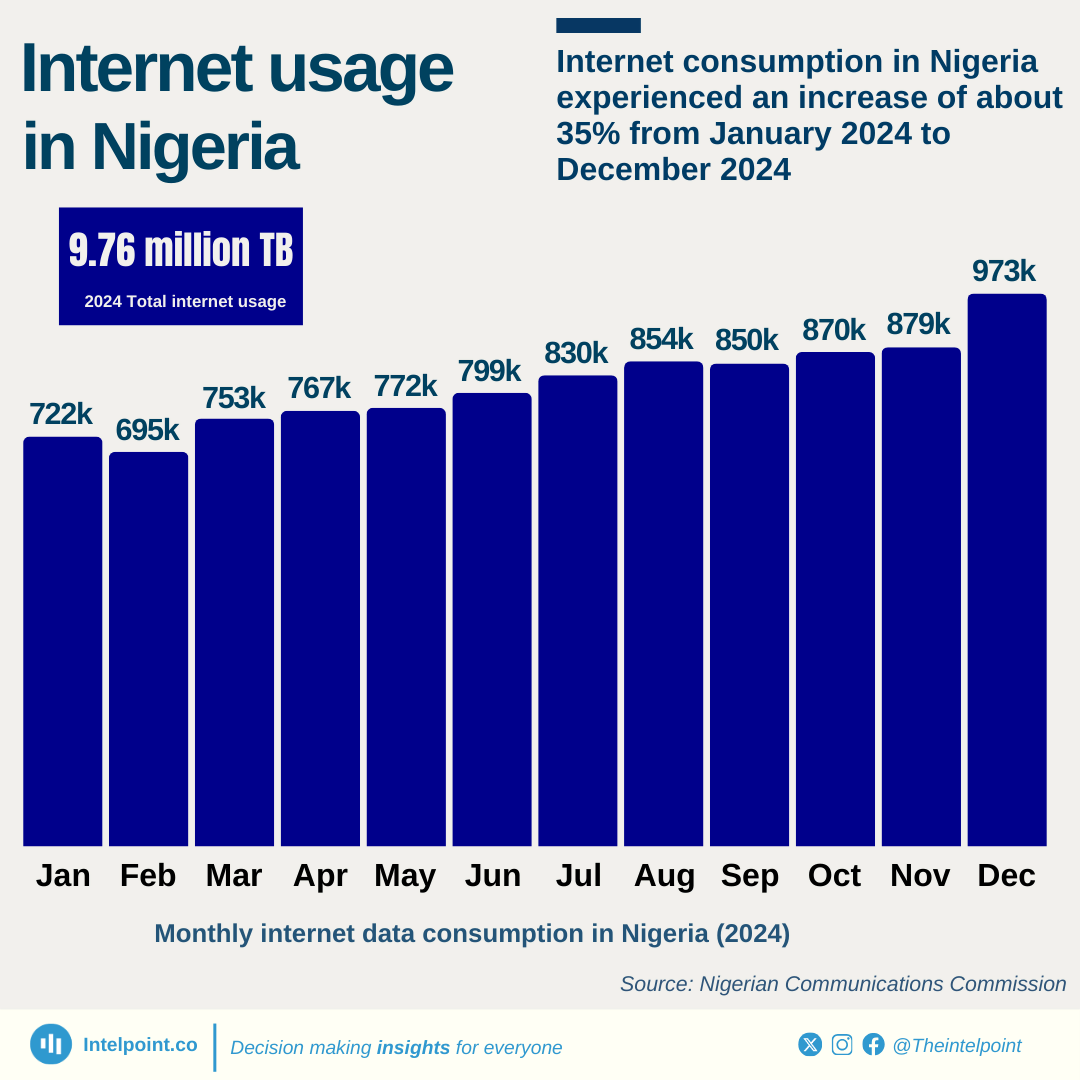
Nigerians’ data consumption has surged by almost 47 per cent in just one year, prompting the Nigerian Communications Commission to call for increased investment in telecommunications infrastructure across the country.
The NCC Executive Vice Chairman and Chief Executive Officer, Dr Aminu Maida, disclosed the figures on Tuesday at the Nigeria Digital Connectivity Investment Forum in Abuja.
According to Maida, Nigerians consumed about 1.66 million terabytes of data in July 2026, compared with approximately 1.13 million terabytes recorded in July 2025.
He said the sharp increase reflected the growing demand for digital services and showed the need for telecommunications operators and investors to continue expanding network capacity.

“We can see the demand in our figures. Nigerians consumed about 1.66 million terabytes of data in July this year, up from 1.13 million a year earlier. That is an increase of almost 47 per cent in twelve months,” Maida said.
He added that keeping up with the rising demand would require sustained investment not only to expand telecommunications networks but also to improve the quality of services available to existing users.
The NCC boss warned that pressure on telecommunications infrastructure could increase further as cloud computing and artificial intelligence become more widely adopted by businesses and consumers.
The forum, organised in partnership with Swedfund and Ookla, brought together government representatives, investors, development finance institutions and telecommunications industry stakeholders to discuss ways of attracting funding into Nigeria’s digital infrastructure.
Maida said the regulator had introduced measures aimed at improving the investment environment, including the 2025 tariff adjustment, which he said was designed to address financial pressures affecting telecommunications operators and their ability to invest in their networks.
He also pointed to the designation of telecommunications infrastructure as Critical National Information Infrastructure and ongoing discussions with state governments over Right of Way as measures aimed at protecting telecom assets and reducing the cost of network deployment.
According to him, the NCC is increasingly relying on network performance data and consumer complaints to identify areas where telecommunications services require improvement and where additional investment is needed.
The Minister of Industry, Trade and Investment, Dr Jumoke Oduwole, who delivered a keynote address at the forum, described digital connectivity as critical economic infrastructure for Nigeria’s trade and investment ambitions.
Oduwole said the telecommunications sector accounted for more than nine per cent of Nigeria’s Gross Domestic Product in the first quarter of 2026. She also highlighted opportunities in data centres, cloud services, fibre infrastructure, broadband, fintech, cybersecurity, artificial intelligence and digital logistics.
She noted that Nigeria already had more than 25 data centres either operational or under construction, describing the digital economy as an area with significant investment potential.
The Swedish Ambassador to Nigeria, Anna Westerholm, also noted that challenges remained around coverage, service quality, affordability and supporting infrastructure despite the expansion of digital connectivity.
Meanwhile, the Minister of Communications, Innovation and Digital Economy, Dr Bosun Tijani, represented at the event by Adetunji Adeyemo, called for stronger public-private partnerships and innovative financing models.
The government representative stressed that Nigeria would require collaboration between the public sector, private investors and development finance institutions to meet the country’s growing digital infrastructure needs.
With data consumption continuing to rise, telecommunications infrastructure is facing increasing pressure to accommodate Nigerians’ growing reliance on internet-based services, cloud platforms and emerging technologies.




