


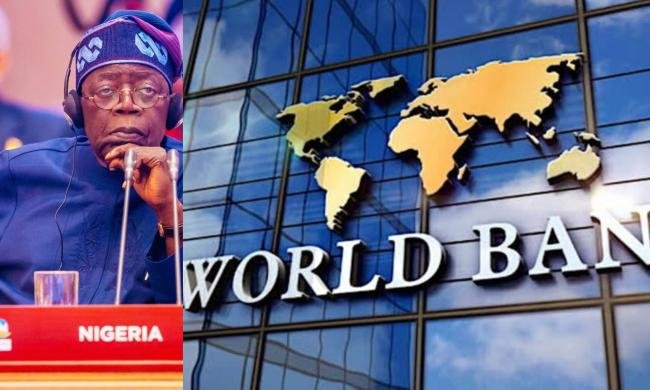
The World Bank has said Nigeria’s most pressing fiscal challenge is not the size of its public debt but the country’s inability to generate sufficient government revenue, stressing that stronger revenue mobilization is essential to sustaining economic growth and meeting future financial obligations.
Speaking during an interview on Channels Television on Friday, July 3, the World Bank Country Director for Nigeria, Mathew Verghis, explained that Nigeria’s debt profile remains relatively moderate when compared with many developing economies, adding that public discourse should focus less on borrowing and more on expanding the country’s revenue base. According to him, DDM News gathered that while concerns over rising debt levels have dominated national conversations in recent years, the real issue lies in the government’s limited capacity to generate enough income to finance development and service existing obligations.
Verghis maintained that assessments carried out by the World Bank indicate that Nigeria does not face an excessive debt burden by international standards. Instead, he argued that the country’s fiscal weakness stems from persistently low government revenues, which continue to limit public investment and place pressure on the nation’s finances.
“From our assessment, Nigeria doesn’t have a high indebtedness problem; it has a low revenue problem,” he stated.

He further explained that Nigeria’s debt-to-Gross Domestic Product (GDP) ratio remains lower than that of many peer economies and neighboring countries, making it inaccurate to classify the country as heavily indebted.
“When we looked at the numbers, Nigeria is a moderately indebted country, meaning it has less debt relative to its economy than most of its neighbors and many other countries,” Verghis said.
Drawing a comparison with Ghana, which is currently undergoing debt restructuring, he emphasized that Nigeria’s financial position is considerably different and does not warrant the same level of concern over debt sustainability.
“Nigeria is in a very different situation than Ghana, for example, which is going through a debt restructuring,” he added.
The World Bank official also defended the government’s decision to borrow for development purposes, explaining that responsible borrowing is a standard fiscal practice adopted by countries around the world to finance large-scale infrastructure and long-term development projects that cannot be funded solely through annual budgetary allocations.
According to him, governments often need to access financing ahead of expected economic returns in order to provide essential infrastructure and public services capable of stimulating growth and improving living standards.
“Nigeria borrows for the same reasons that all countries borrow. If you want to deliver results to people, the money available on an annual basis is not enough. So you borrow, deliver results, and that improves your ability to repay,” Verghis explained.
He cited Nigeria’s electricity sector as one of the areas requiring substantial investment, noting that expanding electricity access to millions of citizens would require significant financial resources that cannot be generated immediately from government revenues alone.
Using the country’s electrification drive as an example, Verghis stated that connecting approximately 32 million Nigerians to reliable electricity requires upfront financing. However, he argued that such investments would eventually boost productivity, economic activity and national income, thereby strengthening the country’s capacity to repay borrowed funds.
“To be able to connect and provide energy to 32 million Nigerians, Nigeria needs to borrow money now. But with increased access to energy, the country will become wealthier and better positioned to repay the loans,” he said.
Despite defending strategic borrowing, Verghis cautioned that Nigeria’s weak revenue performance remains the country’s greatest fiscal vulnerability. He warned that without significant improvements in revenue collection, even a moderate level of debt could become increasingly difficult to service over time.
“Nigeria’s debt is not particularly high, and in fact, it’s quite moderate by international standards. Its revenues are very low by international standards, and unless those revenues are raised, it will not be able to pay back debt,” he stressed.
According to the World Bank, improving domestic revenue generation would provide the Nigerian government with greater fiscal space to finance critical sectors including transportation infrastructure, healthcare, education, agriculture and other social services that are essential for long-term economic transformation.
Verghis noted that stronger public revenues would also enable increased investment in programmes that create employment opportunities, improve human capital development and reduce poverty across the country. Such investments, he explained, are fundamental to achieving sustainable and inclusive economic growth while enhancing the government’s ability to meet both current and future financial obligations.
His comments come at a time when the World Bank has unveiled its new Country Partnership Framework for Nigeria covering the 2026–2032 period. The framework places job creation at the heart of the institution’s support strategy for the country, with planned investments targeting infrastructure development, healthcare delivery, agricultural productivity, digital connectivity and other sectors considered critical to driving broad-based economic growth.
The development comes amid ongoing efforts by the Nigerian government to implement economic reforms aimed at strengthening public finances, improving tax administration and expanding non-oil revenue sources. Analysts believe that while prudent borrowing remains necessary for financing development projects, improving revenue mobilization will be crucial in ensuring long-term fiscal sustainability and reducing dependence on debt financing.
As DDM News reports, the World Bank’s position reinforces the argument that Nigeria’s fiscal future depends less on restricting borrowing and more on building a stronger, more efficient revenue system capable of supporting development priorities, servicing existing obligations and delivering improved public services for millions of Nigerians.




