MADRID, SPAIN — European football giants Barcelona and Real Madrid have reportedly inserted €1 billion release clauses into the contracts of nine of their most valuable players, adopting an aggressive strategy aimed at discouraging rival clubs from signing their prized assets.
The list includes French forward Kylian Mbappé, Spanish teenage sensation Lamine Yamal, Brazilian attacker Vinícius Júnior, England midfielder Jude Bellingham, Barcelona playmaker Pedri, Spanish midfielder Gavi, French midfielder Eduardo Camavinga, defender Jules Koundé and Brazilian forward Rodrygo.
According to a report published by Planet Football on Thursday and reproduced by PUNCH, the extraordinary clauses are designed to make potential transfers financially prohibitive, particularly for wealthy clubs seeking to attract established superstars from Spain’s two most successful football institutions.
Real Madrid reportedly have five players on the list: Mbappé, Vinícius Júnior, Bellingham, Camavinga and Rodrygo. Barcelona account for the remaining four, with Yamal, Pedri, Gavi and Koundé reportedly carrying similar contractual protection.
Mbappé joined Real Madrid in 2024 after leaving Paris Saint-Germain as a free agent. The French captain signed a five-year agreement reportedly running until 2029, with Spanish broadcaster COPE cited as the source of information about his €1 billion release clause.
Yamal, meanwhile, has emerged as one of Barcelona’s most important players despite his young age. The winger signed his first professional contract with the Catalan club in 2023 before securing a subsequent extension that keeps him at the club until 2031. His reported release clause reflects Barcelona’s determination to protect a player widely regarded as central to its long-term sporting ambitions.
Vinícius Júnior, who has played a decisive role in Real Madrid’s domestic and European successes, reportedly received the same contractual protection when he extended his agreement in 2022. His performances and reported interest from wealthy clubs outside Europe have continued to attract attention in the international transfer market.
Bellingham also features prominently on the list after joining Real Madrid from Borussia Dortmund in 2023. The England international quickly established himself as an influential figure in the team’s midfield and reportedly has a contract running until 2029 with the enormous release clause.
At Barcelona, Pedri became the first player at the club to receive a reported €1 billion clause when he signed a contract extension in October 2021. His agreement was subsequently extended until 2030, reinforcing the club’s commitment to retaining the midfielder.
Gavi, another product of Barcelona’s renowned La Masia academy, reportedly has a similar clause in his contract, which also runs until 2030. Although injuries have interrupted his progress at different stages, the club continues to regard him as an important part of its future.
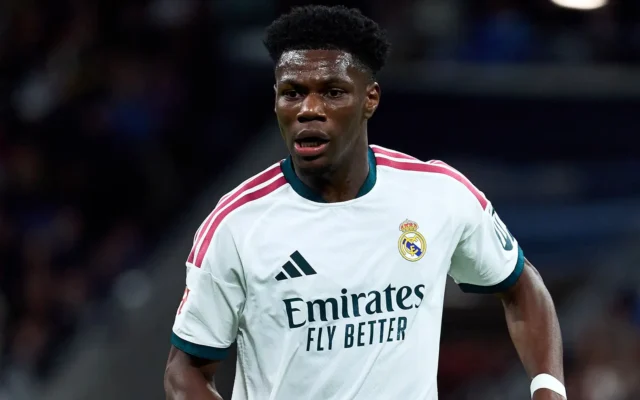
Real Madrid midfielder Camavinga reportedly received the clause following an improved contract in 2023, while Barcelona defender Koundé is also said to have a €1 billion figure attached to his agreement, which reportedly runs until 2030.
Rodrygo completes the list. The Brazilian forward extended his Real Madrid contract in 2023, reportedly keeping him at the Santiago Bernabéu until 2028 under a deal that includes the same enormous release figure.
WHY THE CLAUSES MATTER
The use of billion-euro release clauses is closely connected to Spanish football regulations. Unlike some other major football leagues, Spain operates under a legal framework that requires professional football contracts to provide for a release or compensation mechanism.
The system gives players a legal route to terminate their contracts by paying the agreed compensation. Clubs therefore negotiate release figures with players and their representatives when contracts are signed or renewed.
According to BBC Sport, increasingly high clauses have become a way for clubs to protect their players and discourage unwanted transfer approaches. The figures provide a level of contractual security, particularly when a club wants to retain a player for the duration of a long-term agreement.
The strategy also reflects the financial strength of potential buyers, including wealthy clubs in the Saudi Pro League, which have attracted global attention through major spending on established football stars.
However, a release clause does not mean that a player must leave once the stipulated amount is paid. The payment triggers the contractual mechanism allowing a transfer to be pursued, but the player must still agree personal terms with the prospective club.
The football world has previously witnessed the activation of an extraordinary release clause. In August 2017, Paris Saint-Germain paid €222 million to Barcelona to secure Neymar’s transfer, setting a world-record fee that remains a landmark in the transfer market.
That transaction demonstrated that release clauses can have real consequences when a financially powerful club is prepared to meet the stipulated amount.
Nevertheless, the current €1 billion figures are widely regarded as deterrents rather than realistic transfer prices. No club has paid anything close to that amount for a footballer.
For Barcelona and Real Madrid, the strategy is ultimately about protecting sporting investments, maintaining control over their most influential players and strengthening their negotiating positions in an increasingly competitive transfer market.
Although the reported clauses may appear almost impossible to activate, they send a clear message to potential buyers: securing the services of these football stars will require more than an attractive transfer offer.