


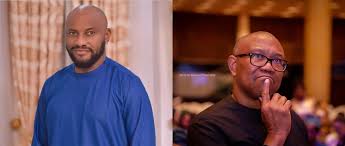
Nollywood actor and politician Yul Edochie has stirred fresh political debate after stating that Peter Obi cannot become President of Nigeria “at this time,” a comment that has quickly gained traction across social media and political circles.
In his statement, Edochie questioned Obi’s current political positioning and influence, suggesting that any platform the former Labour Party candidate aligns with may struggle to remain stable. He described Obi’s reported involvement with the African Democratic Congress as ineffective, adding that deeper, less visible factors may be limiting his chances.
The remarks have triggered mixed reactions, with supporters of Obi pushing back strongly, arguing that his performance in the 2023 presidential election demonstrated significant grassroots appeal, especially among young voters and urban populations. Many also pointed to the growing demand for alternative leadership in Nigeria as a sign that Obi remains a strong contender heading into future elections.
On the other hand, some observers believe Edochie’s comments reflect the realities of Nigeria’s complex political landscape, where alliances, party structures, and regional dynamics often play a decisive role in determining electoral success. They argue that beyond popularity, winning a presidential election requires a broad coalition of political support across multiple regions.

Edochie, who has been vocal in his support for Bola Ahmed Tinubu, continues to position himself as an active voice in national discourse. His recent comments further highlight the ongoing ideological divide between supporters of the current administration and those advocating for change through opposition coalitions.
Meanwhile, Obi’s reported involvement in coalition talks ahead of the 2027 elections signals ongoing efforts among opposition figures to consolidate their strength. Discussions around unity platforms like the African Democratic Congress suggest a strategic attempt to challenge the ruling party by bringing together different political interests under one umbrella.
Despite differing opinions, the conversation sparked by Edochie’s statement underscores a larger national debate not just about individual candidates, but about the direction of Nigeria’s democracy, the viability of coalition politics, and what it will take to secure leadership in the next electoral cycle.
As political activities gradually build toward 2027, statements like these are likely to intensify public engagement, shaping narratives and influencing how Nigerians perceive their options in the years ahead.




