


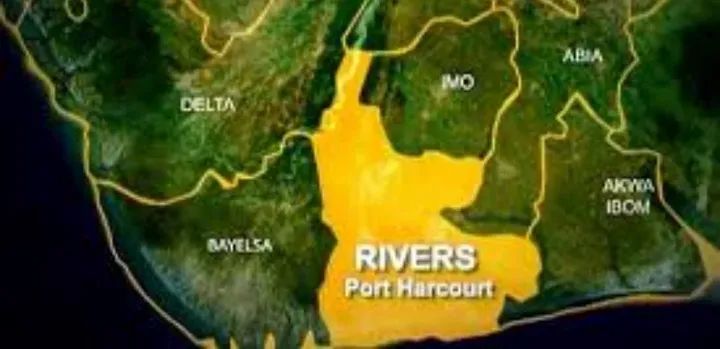
PORT HARCOURT, NIGERIA — Over three decades after the suspension of crude oil production in Ogoniland, a growing chorus of voices is calling for honest reflection on the economic contributions of the Ogoni people to Rivers State and Nigeria, weighing the legacy of environmental justice against the immense fiscal losses sustained by the nation.
Crude oil production from 96 oil wells in Ogoniland, within Oil Mining Lease 11, has remained halted since January 1993, following widespread protests and environmental complaints led by the Movement for the Survival of the Ogoni People . The affected oil fields, including Bomu, Yorla, Ebubu, Korokoro, Bodo West, and Tai, collectively generated 28,000 to 30,000 barrels of crude oil per day before operations ceased . Industry projections now indicate that output could exceed 100,000 barrels per day if production resumes .
The economic cost of the prolonged shutdown has been staggering. Pipeline Infrastructure Nigeria Limited has revealed that Nigeria lost an estimated $226.734 billion in revenue over the past 33 years due to the suspension . Dr. Akpos Mezeh, General Manager of Community and Stakeholder Relations at PINL, described the resumption of oil operations as a “strategic national priority” while stressing that the process must be anchored on community participation, environmental sustainability, and transparency .
However, a socio-political group, the Rivers Progressives’ Network, has raised fundamental questions about the balance between environmental justice and economic responsibility . In a statement issued in Port Harcourt, the group acknowledged the historic environmental justice campaign led by the late Ken Saro-Wiwa and MOSOP but argued that more than three decades after oil production was halted, it was time for honest reflection on Ogoniland’s contribution to Rivers State’s petroleum-driven economy .

“What value is Ogoniland currently contributing to the economy of Rivers State?” the group asked, stressing that the question was “not to undermine the rightness of the Ogoni struggle” but rather “a legitimate public policy issue that borders on rights, responsibilities and shared prosperity” . The group pointed out that other oil-producing communities in Rivers State—including Ogba/Egbema/Ndoni, Ahoada East and West, Akuku-Toru, and Bonny, among others—continue to sustain petroleum production despite facing similar environmental and developmental challenges . These producing communities collectively support crude oil production exceeding 340,000 barrels per day, alongside strategic gas infrastructure supplying the Nigeria LNG plant and domestic power generation .
Interestingly, while Nigeria and Rivers State suffered economic losses due to the oil production shutdown, Ogoniland has continued to receive unprecedented national attention compared to other oil-producing communities . Successive federal administrations have entrusted Ogoni sons and daughters with important national roles, including key positions in oil and gas agencies. Today, Ledum Mitee serves as a Non-Executive Director of the Nigerian National Petroleum Company Limited, Senator Magnus Ngei Abe serves as Chairman of the Nigerian Upstream Petroleum Regulatory Commission, and Professor Innocent Barikor serves as Director-General of the National Environmental Standards and Regulations Enforcement Agency .
The Federal Government, under President Bola Tinubu, has actively pursued a new phase of engagement in Ogoniland, with the National Security Adviser Nuhu Ribadu playing a central role in consultations with stakeholders . The Presidential Committee on Ogoni Re-entry has been established, and the Nigerian National Petroleum Company Limited has described the renewed engagement as a “historic turning point” built around justice, equity, sustainability, and collaboration with host communities . In December 2025, NNPC announced that 30 Ogoni indigenes had received employment offers as part of confidence-building measures .
The Movement for the Survival of Ogoni People has expressed confidence in the ongoing efforts, with MOSOP President Fegalo Nsuke projecting that given infrastructural developments, at least 500,000 jobs could be created in the Ogoni area alone between 2026 and 2031 . “Leadership is about solving problems,” Nsuke said. “The beauty of what is going on is that it is a dialogue. We now have a government that is talking” .
Yet the debate remains deeply contentious. The Rivers Progressives’ Network has urged stakeholders in Ogoniland to support the Federal Government’s ongoing efforts to facilitate the safe resumption of oil production, while also questioning whether communities that continue to host oil production and bear its environmental consequences are receiving commensurate recognition and development . The group framed the debate as one of balancing environmental rights with economic responsibilities, insisting that “justice, development and resource production should not necessarily be mutually exclusive” .
The Ogoni struggle, the group acknowledged, changed Nigeria’s environmental awareness and forced the nation to pay more attention to decades of ecological and environmental injustice . However, they argued that other oil-producing communities in the Niger Delta rightly wonder why their efforts, goodwill, and detriments have not received similar national or institutional recognition . As Rivers State and the wider Niger Delta engage in this broader conversation, the central question remains: how can oil-producing communities protect their environment, secure greater benefits from natural resources, and simultaneously sustain the economic foundations of the state and country? For now, history has honoured the courage of Ogoniland; the future, many argue, will honour their wisdom and willingness to contribute once again to Nigeria’s economic prosperity .




