



OpenAI updated its Microsoft partnership to cap revenue payments. Now, the AI company can use other cloud providers like Amazon to serve its global customers.
Recently, OpenAI and Microsoft changed their massive business agreement. Specifically, the artificial intelligence company will now cap its revenue payments to Microsoft. Because of this, OpenAI can finally serve customers using other cloud providers. In this article, we will explore what these new changes mean for the tech industry.
Understanding the New OpenAI Microsoft Partnership
To begin with, the new agreement alters a long-standing financial bond. Previously, OpenAI paid a steady cut of its earnings to Microsoft. Now, the companies have agreed to place a strict cap on these revenue share payments. However, these limited payments will still continue until the year 2030.
Furthermore, this deal removes a major technical condition from the past. Specifically, Microsoft no longer has to plan for artificial general intelligence. In other words, OpenAI can achieve human-level AI without triggering old contract clauses. Consequently, both tech giants gain more freedom to pursue independent goals.

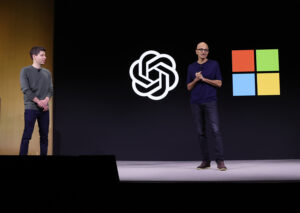
In addition, the 20 percent payment rate stays the same for now. For example, Microsoft still earns money whenever someone buys a ChatGPT subscription. Nevertheless, the total payments will hit a ceiling eventually. Ultimately, this hard cap gives OpenAI more control over its future profits.
How OpenAI Cloud Strategy Will Change
Meanwhile, the changes affect how users access these popular AI models. Historically, Microsoft Azure served as the exclusive home for OpenAI software. Today, the revised contract removes those strict cloud hosting boundaries completely. As a result, the AI maker can sell its tools across any competing network.
Despite this shift, Microsoft remains the primary cloud provider for now. Therefore, developers will usually see new tools launch on Azure first. Even so, OpenAI holds the power to partner with Google or Amazon directly. This means that enterprise clients get to choose their preferred software platforms.
Moreover, company leaders explained why they needed this sudden strategic pivot. Recently, an OpenAI executive noted that the old setup restricted enterprise growth. Specifically, Denise Dresser stated that the partnership limited their customer outreach. To fix this, the team rewrote the rules to increase overall flexibility.
Shortly after, the AI firm released an official statement regarding the shift. Specifically, leaders outlined their exact goals for the revised corporate alliance. As stated, “Today, we are announcing an amended agreement to simplify our partnership.” — Denise Dresser, OpenAI Revenue Chief. Ultimately, they want to deliver AI benefits to a wider global audience.
Exploring the Massive Amazon AI Deal
At the same time, OpenAI has actively expanded its network of allies. For instance, the company signed a massive deal with Amazon in February. Furthermore, Amazon agreed to invest a staggering $50 billion into the creator. Consequently, this huge cash injection helps fund incredibly expensive software research.
Besides that, the two firms expanded an existing cloud hosting contract. Specifically, OpenAI will spend $100 billion on Amazon Web Services over eight years. In return, AWS becomes the exclusive distributor for a platform called Frontier. As a result, this bold move directly challenges Microsoft in the cloud space.
Following this news, Amazon leader Andy Jassy shared his own exciting updates. Online, he confirmed that Amazon will offer these models very soon. In fact, builders can access the tools through the Bedrock service shortly. Therefore, software engineers will enjoy better choices when building new programs.
To clarify, Jassy explained the core benefit for his massive customer base. Furthermore, he noted that developers need the right tools for specific digital jobs. Accordingly, the company plans to reveal more details at an upcoming event. For reference, users can read more details online.
What This Means for Future AI Models
Moving forward, these shifting alliances reveal a highly competitive tech landscape. Currently, builders need massive computing power to run advanced virtual agents. Because of this, tech giants must spend heavily on servers and digital infrastructure. As a result, exclusive partnerships simply cannot survive in this expensive market.
Similarly, other tech companies are following this exact same financial playbook. For example, Meta recently committed $48 billion to smaller cloud hosting providers. Specifically, Meta chose CoreWeave and Nebius to boost its own computing strength. Ultimately, this trend shows that AI demands outpace any single cloud network.
In the meantime, Microsoft continues to hold special licensing rights. To put it simply, the Windows maker can use OpenAI models until 2032. However, this important digital license is no longer an exclusive business asset. Therefore, competitors can finally negotiate for those exact same technological privileges.
Despite these major shifts, both partners claim their bond remains incredibly strong. In October, the companies had already tweaked their financial agreements slightly. At that time, OpenAI committed to spending $250 billion on Azure services. Nevertheless, the latest update clearly signals a new era of open competition.
In conclusion, OpenAI and Microsoft have fundamentally changed their historic business relationship. Furthermore, the AI creator now has the freedom to grow globally. Consequently, major competitors like Amazon will play a larger role moving forward. Ultimately, readers will see faster software innovations as these tech giants battle for dominance.




