


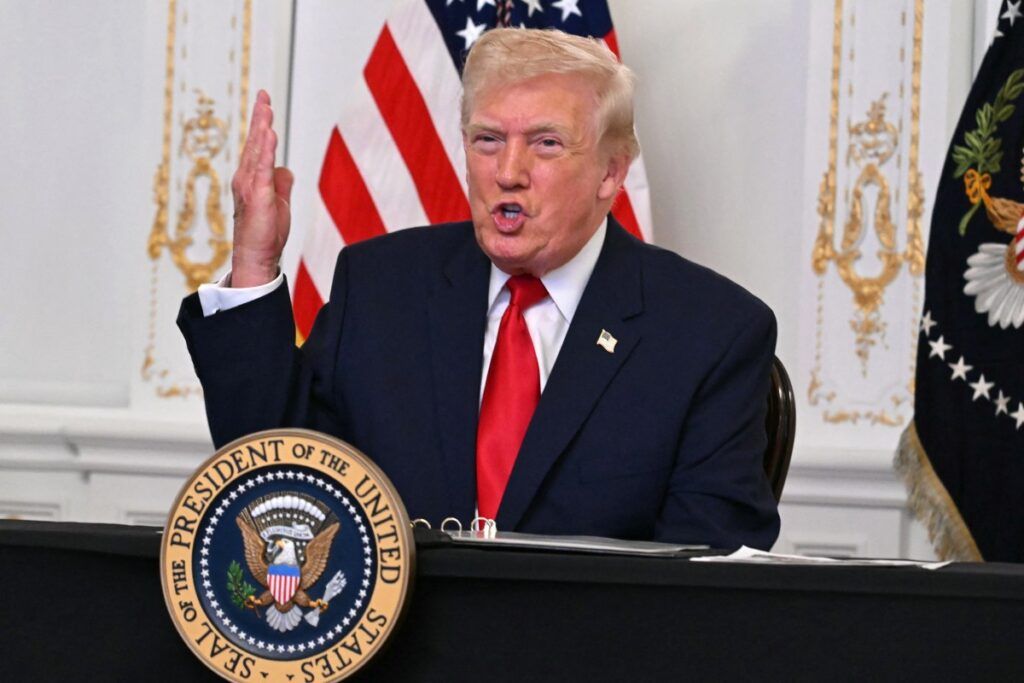
Fresh tensions are building again between the United States and Iran after President Donald Trump flatly rejected Tehran’s latest peace proposal, calling the terms “totally unacceptable.”
The sharp response has raised fears that the fragile calm between Washington, Israel and Iran may not last much longer, with concerns growing that the region could slip back into open conflict.
Trump did not explain exactly what Iran proposed, but in a short message posted on his Truth Social platform, he made it clear the White House was not prepared to accept the offer delivered through Pakistani mediators.
Iran, however, appeared equally defiant.

Tehran warned that any new American military action would be met with retaliation and insisted it would not tolerate additional foreign naval forces operating in the Strait of Hormuz, one of the world’s most important oil shipping routes.
Iranian President Masoud Pezeshkian said ongoing talks should not be mistaken for weakness, stressing that Iran would not surrender under pressure.
Iranian state media reported that Tehran’s response focused on ending military operations across the region, especially in Lebanon where clashes involving Israel and the Iran-backed Hezbollah movement continue. Iran also pushed for guarantees over the security of international shipping.
Israeli Prime Minister Benjamin Netanyahu, meanwhile, signaled that Israel is not ready to step back.
Speaking in an interview with CBS, Netanyahu said the war could not truly end unless Iran’s enriched uranium stockpile is removed and its nuclear facilities are dismantled.
According to reports, Iran had proposed reducing part of its uranium stockpile and transferring the remainder to a third country under strict guarantees that the material would be returned if negotiations collapse or if Washington withdraws from any future agreement.
Trump did not address those details directly when dismissing Tehran’s response.
The situation around the Strait of Hormuz remains especially tense. Iran’s earlier restrictions on movement through the waterway sent global oil prices soaring, since nearly a fifth of the world’s oil supply passes through the narrow channel.
The United States has since stepped up naval operations in the area, intercepting vessels linked to Iran and tightening pressure on Tehran’s maritime trade.
At the same time, Britain and France are reportedly discussing plans for an international maritime security mission once a broader peace agreement is reached.
Iran has already warned that any attempt by foreign powers to deploy additional warships in the strait would trigger a swift response.
Tensions rose further on Sunday after a series of drone incidents across the Gulf region.
The United Arab Emirates said its air defenses intercepted two drones launched from Iran, while Kuwait reported hostile drones entering its airspace. Qatar also confirmed that a cargo vessel approaching its waters had been struck by a drone.
No group immediately claimed responsibility, though Iranian media alleged the vessel was operating under a U.S. flag.
Iranian lawmaker Ebrahim Rezaei later warned that Tehran’s “restraint is over,” adding that any attack on Iranian ships would lead to direct retaliation against American vessels and military bases in the region.
Iranian state television also reported that senior military officials had met with supreme leader Mojtaba Khamenei to receive fresh instructions as the standoff deepens.
For now, diplomacy has not completely collapsed. But with both sides digging in and tensions rising across the Gulf, hopes for a lasting agreement appear increasingly uncertain.




