
Analysis
Rebuttal to “El-rufai And The Southern Kaduna Question: Breaking The Altar Of Manipulation”

Rebuttal to “El-rufai And The Southern Kaduna Question: Breaking The Alter Of Manipulation” – by Hon. Abubakar MG
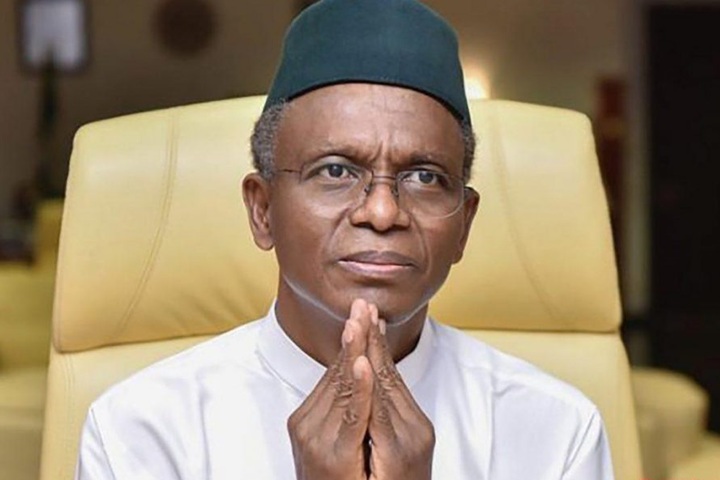
Upon reading Hon. Abubakar MG’s article titled “El-rufai And The Southern Kaduna Question: Breaking The Alter Of Manipulation”, I found it necessary to respond comprehensively to what I consider a distortion of facts and an attempt to whitewash the nightmare the Southern Kaduna people endured under Nasir El-Rufai’s eight-year tenure as governor.
This rebuttal aims to debunk the falsehoods, expose the true nature of El-Rufai’s governance, educate outsiders about the reality on the ground, and raise the voices of Southern Kaduna’s victims through the eight years of horror under Nasiru El-Rufai.
I begin by acknowledging a single truth in MG’s work: the Southern Kaduna crisis did not originate under El-Rufai. However, it is equally undeniable that he poured gasoline on an already burning fire, igniting a storm of violence and injustice that still burns till this very day.

The conflict in Southern Kaduna has deep historical roots agreeably brought about by people from other lands coming over to blazingly kill, maim, pillage, displace and overall commit genocide with the blessings of their kin men in power, who looked the other way while giving a silent nod of approval.
An action people like Hon Abubakar MG and his principal want to explain away today as just dispute linked to land ownership, ethnic identity, and religious coexistence. Yet, successive governments before El-Rufai maintained a fragile balance despite challenges.
El-Rufai, however, broke this balance by adopting policies and actions that actively marginalized Southern Kaduna’s indigenous peoples, thereby telling every one just like he said to his listening audience “they know their place.”
The problem plaguing Southern Kaduna and indeed much of Nigeria’s Middle Belt is the persistent violence against indigenous communities, often perpetrated or tolerated by those in power who share ethnic or religious ties with the aggressors.
This explains how a Fulani man could be imposed as Emir of Jama’a Federation a profound and an unjust violation of indigenous rights and traditions, unprecedented in the core North. Such impositions are symptomatic of conning dispossession sanctioned by the state leaders and government.
We all know such an imposition will never be tolerated if it were the other way around, why then is this visited on Southern Kaduna people and you turn around and blame them for speaking about the injustice. Aiken to you pissing on their feet and trying to tell them it is raining.
El-Rufai’s record reflects a consistent pattern of religious bigotry, discrimination, and exclusion. His open disdain for the Christian population of Southern Kaduna is well documented through videos and public statements where he admits to deliberately excluding Christians from appointments and governance.
His assertion of achieving a Muslim-Muslim political ticket in Kaduna for his two terms in office and then replicating this strategy at the federal level underscores his dangerous agenda that seeks to erode Nigeria’s pluralistic foundation.
All these happened in our time and in one generation and not so ancient history enough for you Hon Abubakar to be making such unfounded statements, rewrite the history and blame the victim.
The Christian Association of Nigeria’s silence during his tenure only deepened the sense of abandonment among Southern Kaduna’s Christian communities. His administration’s failure to appoint Christians to responsible positions, coupled with rhetoric that mocked and demeaned them, contributed significantly to the state’s polarization.
Yes, CAN dropped the ball on not speaking up enough at that time, however it does not give license to a bigoted governor El-Rufai to gloat and brag about his despicable actions openly on video for the whole world to see. Such a distasteful and sickening thing to own up to by a man trusted with the leadership of a people.
El-Rufai’s time in office coincides with the rise of banditry, kidnapping, and general insecurity in Kaduna and neighboring states. Evidence suggests that his administration not only failed to check the activities of armed groups but actively supported and funded them as part of a calculated political strategy.
This has been corroborated by audio and video materials where El-Rufai openly discusses backing certain militant groups, some whom he took Kaduna State resources in Billons of Naira to in Niger Republic.
Such actions betray the public trust and point to governance driven by self-interest and ethnic/religious favoritism, at the expense of peace and security for Southern Kaduna’s people.
We must not forget that the same El-Rufai told the world himself and his then principal Late Gen Mohammadu Buhari brought most of these blood thirsty Fulanis to destabilize Nigeria in the event Buhari losses the 2015 elections to Goodluck Jonathan.
These are the people that are killing, snatching Nigerians all over for ransom and preventing Nigeria from food security by making farming impossible for the indigenes of Nigeria.
El-Rufai’s has shown disrespect towards indigenous traditional institutions including the imposition of Fulani village heads in non-Fulani areas, which was an assault on the cultural and political autonomy of Southern Kaduna’s people.
This strategy served to weaken indigenous authority, undermine communal land ownership, and facilitate land grabbing. The same El – Rufai today has apostles who want to tell us he is a saint.
Attempts by communities to resist these impositions were met with accusations and neglect by the government, further marginalizing the indigenous population and increasing the tensions. Just like in the case of the writer, the few Southern Kaduna leaders who dare spoke up and demanded justice were mealined, deamonized and called all sorts of names imaginable.
The decision to run a Muslim-Muslim ticket in a religiously mixed state like Kaduna was a blatant political message of exclusion. Beyond the symbolism, it translated into systemic underrepresentation of Christians in government and security, such bigoted injustice and cruelty by a man whom Hon Abubakar came short of saying deserves a Nobel Price.
This sectarian approach was not an aberration but a central plan of El-Rufai’s governance, deeply damaging Kaduna’s social fabric and fueling cycles of violence in his time.
The true measure of El-Rufai’s legacy lies in the lived experiences of Southern Kaduna’s people:
- Survivors of attacks like the Goska village massacre recount horrific losses and abandonment by state authorities.
- Displaced youths face shattered futures, denied education and livelihoods, such youth could be seen working as gate-keepers and maids in most homes in places like Abuja.
- Widows and orphans continue to endure trauma without recognition or support from any one, with the rest of their families scattered all over.
- Community leaders still face frustration over repeated attacks and lack of protection which still happens in some areas till this day.
These voices contradict narratives like that of Hon Abubakar which seeks to minimize or deny the suffering visited on these communities through out the eight years of El -Rufai in office.
Despite the trauma, Southern Kaduna’s people demonstrate remarkable resilience. Grassroots peace initiatives, interfaith dialogues, ability to forgive and move on, and self help community rebuilding efforts that offer hope for the future.
However, lasting peace requires the following (Here is the message for Gov. Uba Sani):
- Inclusive governance that represents all communities fairly. Accountability for past crimes through investigations and prosecutions followed by swift enforcements.
- Restoration of indigenous rights and institutions. Impartial security provision protecting all citizens especially those who have been victimize one too many times.
- Civil society, religious bodies, and the Nigerian nation must support these efforts, and call out people trying to rewrite history. (The people may forgive, but they must never forget.
To forget the truth of Southern Kaduna’s ordeal is to betray justice. We must remember and resist attempts to rewrite or whitewash history. Hon. Abubakar MG’s article fails the test of truth and scholarly integrity by ignoring the voices of victims and denying clear evidence.
Southern Kadunaans must reclaim their narrative telling their story honestly, factually, with all its pains regardless of whose Ox is gored so the world knows what happened and continue to happen.
The nightmare endured by Southern Kaduna under Nasir El-Rufai’s administration is a huge wound on Nigerians of Christian faith in general not just the southern Kaduna people. Healing demands truth, justice, and inclusive leadership. Only then can Southern Kaduna and Nigeria move towards peace, unity, and dignity for all.
This rebuttal stands as a demand for that truth and justice, for the victims, the survivors, and future generations of southern Kaduna indigenes.
High Chief Christopher I. D. Wenegieme writes from Aurora, Colorado.

Mrs. Elizabeth Onike, a 96-year-old voter, lamented bitterly after being denied the right to cast her vote in Anambra State.
The elderly woman said she arrived at her polling unit early, determined to perform her civic duty despite her age, but was turned away by officials for reasons yet to be made clear.
Diaspora Digital Media (DDM) gathered that the incident occurred in one of the polling units in Awka, where several elderly citizens also complained about similar challenges.
Eyewitnesses said Mrs. Onike, visibly emotional, expressed disappointment that despite enduring long hours and braving the heat, she was prevented from voting.
Observers have called on the Independent National Electoral Commission (INEC) to investigate the incident and ensure the rights of senior citizens are respected in future elections.
Many social media users have since rallied around her, describing her experience as “heartbreaking” and “a sad reflection of voter disenfranchisement.”
#AnambraDecides2025 #DDMReports #VoteNotFight
By Ofonime Honesty
Let us speak truth to power. The Akwa Ibom Broadcasting Corporation (AKBC) has been on life support in recent years.
We have watched the infrastructural retrogression of that great breeding ground where the finest crop of broadcasters in this region cut their teeth. They were drilled in excellence, and their voices informed, educated, and united us.
This was not just a mere decline; it was a monumental failure we all witnessed unfold. AKBC wobbled even as newer broadcast stations lured her talents away.
But wait. Pause the lamentations!
Governor Umo Eno has signed an agreement with Media Guru Consultant, LLC, of Dubai, for the transformation of the station into a “world-class broadcasting entity.” This is no mere project; it is a rescue mission. It represents the political will to snatch a vital asset from the greedy jaws of oblivion.
This partnership with Media Guru Limited covers consultancy, design, procurement, and installation of advanced broadcast equipment, which will position AKBC to compete favorably with leading broadcast stations within and outside Nigeria.
For context, Media Guru is not a faceless consultant. Independent checks by yours truly indicate that it is a global media services company offering solutions in content digitization and preservation, turnkey technology projects, and digital media, with physical offices in the UAE, Singapore, South Africa, and India.
With over 21 years in service, over 64 projects completed, and successful jobs in over 20 countries, the firm possesses the qualifications and expertise for this project.
TVC, Huawei, Bloomberg Africa, Raj TV, Daily Independent, ConSat TV, News Live TV, and several others are notable clients of the firm.
In this age of digital journalism, a feeble broadcaster is a mute spectator. AKBC cannot tell the Akwa Ibom story properly with a broken microphone, a broken camera, and dilapidated transmitters.
Its employees cannot counter toxic narratives while operating from a studio that leaks rain.
Look around you. Our airwaves are being invaded by content that erodes our identity.
Our people are being fed junk content while the rich banquet of our own heritage gathers dust. AKBC was supposed to be the gatekeeper of our stories, the guardian of our values. Instead, it became a sleeping giant while others came in and colonized our narrative space. The Akwa Ibom story must now be told by AKBC. That task is compulsory!
The Governor has thrown a lifeline. Funding will not be a problem. The burden now falls squarely on AKBC’s management and staff. The management must undergo a mental revolution. They must purge the system of deadwood and complacency. Training and retraining are essential. The modern gadgets and facilities must not be destroyed by analogue hands.
We cannot pour new wine into old wineskins. They must recruit fresh talent with fire in their bellies and innovation in their blood. Anything less would be a betrayal of this second chance.
This new studio must become a fortress of truth, a hub of cutting-edge programming, and a stage for the next generation of trailblazers. AKBC has to move with the times. Archaic or out-of-fashion programming must cease.
We are watching. The people are watching. History is watching. The contract is signed. The gauntlet has been thrown. AKBC, a Lazarus, must rise!
Nigeria’s online and offline discursive arenas have been suffused with frenetic, impassioned, and intensely heightened dialogic exchanges in the aftermath of President Donald Trump’s designation of Nigeria as a “Country of Particular Concern” and this threat to militarily invade the country to stop what he called a “Christian genocide.”
Nigerians are predictably divided largely along the country’s familiar primordial fissures. But beyond the surface disagreements, there’s actually a deeper congruence of opinions we miss in moments of hyper-aroused emotions. And this revolves around the recognition that Nigeria faces an inexcusable existential threat from the intractable murderous fury of terrorists and that the earlier it is contained by any means necessary, the better Nigeria’s chances of survival.
The major areas of disagreement among conversational sparring partners (i.e., whether, in fact, there’s a Christian genocide; what really actuates Trump’s intervention; the question of what foreign intervention means for Nigeria’s sovereignty) actually have a convergence point.
For example, Muslims who question the factual accuracy of the existence of a Christian genocide in the central states point to the continuing mass slaughters of Muslims (both at home and in mosques) in the far north. But they don’t deny that the nihilistic, blood-thirsty thugs who murder both Christians and Muslims in their homes and places of worship identify as Muslims, even if they are a poor representation of the religion they identify with.
I honestly struggle to fault Christians who perceive the episodic mass murders in their communities by people who profess a different faith from them as deliberate, systematic, premeditated acts designed to exterminate them because of their faith.
If the situation were reversed, it would be perceived the same way. If murderous outlaws who profess the Christian faith (even if they don’t live by the precepts of the religion) continually commit mass slaughters of both Christians and Muslims, Muslim victims of these slaughters would instinctively read religious meanings to the murders.
As I noted in my April 12, 2025, column titled “Selective Outrage Over Mass Murders in Nigeria,” human beings derive their sense of self from belonging to collective identities, so when members of an out-group attack that collective, it provokes a powerful emotional reaction.
Even in such states as Zamfara, Sokoto, and Katsina, where more than 90 percent of the population is Muslim and where clashes between sedentary farmers and itinerant herders are age-old, the persistence of mass slaughters has ruptured the centuries-old ethnic harmony between the Hausa and the Fulani that Nigerians had taken for granted. BBC’s July 24, 2022, documentary titled “The Bandit Warlords of Zamfara” captures this dynamic powerfully.
It doesn’t matter if people in the Middle Belt perceive the homicidal ferocity of the terrorists as “Christian genocide” or people in the Northwest see it as “ethnic cleansing.” What matters is that they shouldn’t be allowed to kill anyone.
I understand Muslim anxieties behind the “Christian genocide” narrative. It unwittingly exteriorizes the crimes of a few outlaws to the many who are also victims of the outlaws’ crimes. But if it takes calling these blood-stained bastards “Christian genocidaires” to eliminate them, the accuracy of the description is immaterial. If an equal-opportunity murderer of Christians and Muslims is killed only because he kills Christians, it still benefits Muslims because the murderer won’t be alive to kill Muslims.
Of course, people who question Trump’s motive are justified. In 2016, Trump enthusiastically endorsed Ann Coulter’s book Adios America, which claimed that the growth of Nigerians in the United States from virtually zero to 380,000 was problematic because, in her words, “every level of society [in Nigeria] is criminal.” Most Nigerians in the United States are Christians.
By December 2017, in his first term, Trump was reported to have said that people from Haiti and Nigeria should be denied visas because “15,000 Haitians who received U.S. visas all have AIDS,” and that 40,000 Nigerians who visited the U.S. that year would never “go back to their huts” after seeing America.
In January 2018, he was widely quoted as saying he didn’t want immigrants from “shithole countries” like Nigeria and Haiti but preferred “more people coming in from places like Norway,” a statement that made clear his racial preference for white immigrants.
That same racial logic was evident when he described white South Africans as victims of “white genocide” and offered them asylum but has not extended the same offer to Nigerians he claims are facing “Christian genocide.”
Unsurprisingly, by 2019, toward the close of his first term, Nigeria experienced the steepest decline in visitors to the United States of any country, according to data from the National Travel & Tourism Office.
Given this record, skepticism about Trump’s sudden concern for Nigeria is entirely warranted. Anyone familiar with his long-documented hostility toward Black people would reasonably question why he now professes to care enough about them to “intervene” on their behalf.
His intervention is probably the product of three forces: powerful lobbying from Nigerian Christian groups who got through to the right people, a way to get Nigeria to scale down its embrace of China in the service of rare earth mineral exploration in the country, and an appeal to his evangelical Christian base even if he himself isn’t a believing, churchgoing Christian.
But given the direness of the depth and breadth of bloodletting in the country, who cares what his motivations are? If Trump’s intervention causes the Nigerian government to more seriously take its responsibility to protect all Nigerians, I would salute him. In fact, if direct, targeted hits at terrorist enclaves become inevitable because the government is either unwilling or unable to act, most people (Muslims, Christians, southerners, northerners, supporters or critics of the government, etc.) who are genuinely worried about the unchecked expansion of the theaters of insecurity in the country would be happy.
When it comes to questions of life and death, we can’t afford the luxury of pointless partisanship and primordial allegiances. Most Nigerians I know would accept help from Satan if that were what it would take to stop the unending blood-stain communal upheavals in the country.
What is the point of our sovereignty if we can’t stop perpetual fratricidal bloodletting? In any case, most Nigerian governments and opposition politicians in my lifetime have not only routinely sought America’s intervention in Nigeria’s internal affairs when it suits them, they serve as willing informants to America, leading me to once posit that the CIA doesn’t need secret agents.
In a May 20, 2017, column titled, “Xenophilia, Fake Sovereignty and Nigeria’s Slavish Politicians,” I said the following:
“Many Nigerian leaders seem to have an infantile thirst for a paternal dictatorship. The United States is that all-knowing, all-sufficient father-figure to whom they run when they have troubles. We learned from the US embassy cables that our Supreme Court judges, Central Bank governors … and governors routinely ran to the American embassy like terrified little kids when they had quarrels with each other.”
If the undermining of our sovereignty is what it would take to provide peace to everyday Nigerians, most people won’t miss it.
The urgent task, therefore, is not to litigate the purity of motives abroad or to indulge in perfunctory moralizing at home, but to force Nigerian institutions to perform. Whether pressure comes from international actors, diasporic lobbying, or domestic outrage, it must translate into concrete reforms: a security strategy that protects civilians, accountable and professional security forces, transparent investigations of atrocities, and long-term efforts to address the economic, political, and environmental drivers of violence.
Nigerians must insist that any external attention be channeled into strengthening the state’s capacity to protect all citizens and into justice for victims, not into new forms of dependency or political theatre. Only by combining unity of purpose with institutional competence can Nigeria begin to end the killing and reclaim the dignity of its sovereignty.
-
Analysis6 days agoEmpty Diplomacy, Real Graves… A Reply to Nigeria’s Ministry of Foreign Affairs
By Sa'adiyyah Adebisi Hassan
-
World News6 days agoMilitary action on terrorists in Nigeria could be ground troops, air strikes — Trump
-
News5 days agoJUST IN: Soldiers facing terror allegations escape from military custody
-
World News4 days agoI will name Nigerian officials linked to Christian genocide — Senator Ted Cruz
-
Economy5 days agoCBN Releases Names Of Heavy Defaulters, Amount
-
Opinion7 days agoWhen the Hunter Becomes the Hunted: How the APC is Tasting the Karma of 2015
-
News5 days agoDon’t Bomb Bandits, Negotiate With Them – Islamic Cleric Tells US
-
News3 days agoBREAKING: Nnamdi Kanu writes Trump, calls for US inquiry in S’east killings
-
World3 days agoUS Congress Introduces Nigeria Religious Freedom Accountability Bill
-
Analysis6 days agoChristian Genocide: Fellow Muslims — Let’s Face Facts
By Sa'adiyyah Adebisi Hassan

