


tech-openai-gpt-6-astra-ai-3d-anatomy
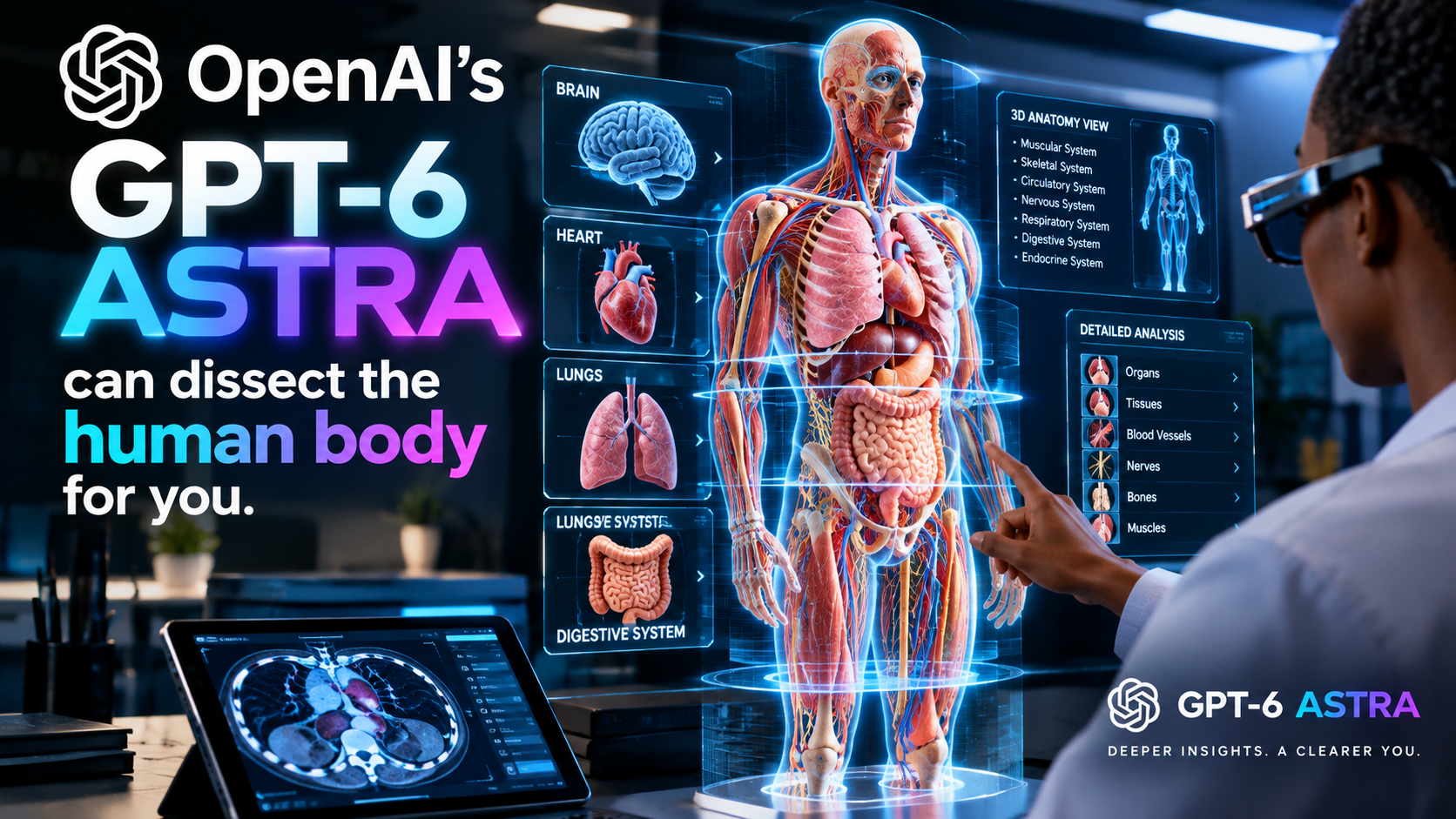
OpenAI GPT-6 Astra Powers Breakthrough AI 3D Anatomy A developer used OpenAI GPT-6 Astra to build an interactive AI 3D anatomy platform featuring 2,234 modeled male body parts for future medical education. Explore how OpenAI GPT-6 Astra enables a revolutionary AI 3D anatomy tool with 2,234 mapped human body parts for advanced medical education.
Essentially, technology is changing medical education forever. Consequently, OpenAI recently released GPT-6 Astra to the public. Specifically, a user named Ashebytes used it to build a new tool. This AI 3D anatomy platform maps the human body.
A New Era For Medical Training
Specifically, the new project maps exactly 2,234 male body parts. Therefore, users can explore the human body layer by layer. Indeed, this interactive website changes how we learn about science. Additionally, the detailed models show bones, muscles, and organs clearly. As a result, students can view deep body structures easily.

Furthermore, the breakthrough relies on the new OpenAI GPT-6 Astra. Specifically, OpenAI launched this powerful GPT-6 Astra model in September 2026. Consequently, the AI system easily handles complex 3D modeling tasks. In fact, the software can generate realistic body parts quickly. Through this, educators can build better visual tools for schools.
Building The Future Of Science
Simultaneously, creators are sharing their new projects on social media. For example, the popular Coin Bureau account praised the platform. Consequently, many tech fans now see the value of AI. Indeed, modern AI makes coding and 3D design much simpler. Therefore, independent developers can launch massive platforms without large teams.
Additionally, OpenAI designed Astra to act like a computer operator. Specifically, the AI system browses the web and builds websites. As a result, it easily handles deep software engineering work. In contrast, older models struggled with complex visual coding tasks. Ultimately, GPT-6 Astra scores very high on software testing benchmarks.
Advancing AI 3D Anatomy Education
Meanwhile, health experts see huge potential in AI 3D anatomy. Specifically, doctors can use these tools to explain complex surgeries. Therefore, patients get a clear view of their own bodies. In fact, visual aids help people understand medical procedures better. Additionally, nurses can study human biology through interactive digital layers.
Consequently, this creation matches other recent medical science steps globally. For example, researchers recently noted a Stem-Cell Breakthrough Offers Hope for Spinal Cord Injury Patients. Meanwhile, digital anatomy tools can help train these new doctors. Indeed, combining AI with medicine creates bold new learning methods. Ultimately, smart software will shape the future of medical care.
The Expanding Power Of OpenAI
Essentially, the AI market grows faster with every new release. For example, independent tests show Astra spots bugs very well. Specifically, CodeRabbit noted a huge jump in code review success. Consequently, developers trust this new model for big software projects. Indeed, the system builds complex graphic code with unmatched speed.
However, developers still need basic skills to guide the AI. Therefore, human input remains vital for checking facts and details. In contrast, blind trust in AI can cause coding errors. Specifically, Ashebytes guided the tool to model 2,234 parts correctly. Through this, careful human oversight creates the best educational tools.
The Role Of Social Media
Subsequently, social media platforms help spread these new tech tools. For example, the Coin Bureau post reached thousands of users. As a result, more people want to try AI software. Indeed, short posts can spark huge interest in complex science. Therefore, internet creators play a big role in tech education.
Meanwhile, interactive websites keep users engaged longer than static text. Specifically, the layer-by-layer body map invites users to click around. Consequently, learning becomes a fun and highly visual online game. In fact, game-like design helps students remember complex medical terms. Through this, modern developers bridge the gap between play and study.
To conclude, AI 3D anatomy platforms change medical education entirely. Consequently, students and doctors gain powerful new ways to learn. Ultimately, tools like GPT-6 Astra will keep driving global innovation.




