


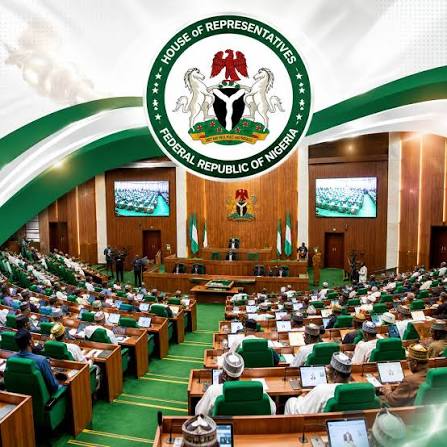
The National Assembly has transmitted the Constitution of the Federal Republic of Nigeria, 1999, Sixth Alteration Bill, 2026, to the Houses of Assembly of the 36 states for consideration and approval.
The development moves the proposed establishment of State Police into another critical stage of the constitutional amendment process, with state legislatures now expected to consider the proposal and communicate their decisions to the National Assembly.
The transmission was carried out on Wednesday, September 16, by the Clerk to the National Assembly, Kamoru Ogunlana, following a directive from the leadership of the federal legislature.

The State Police proposal is part of ongoing efforts to create a constitutional framework that would allow states to establish their own police services alongside the Nigeria Police Force.
Under Section 9 of the 1999 Constitution, a constitutional alteration requires approval from not less than two-thirds of the Houses of Assembly of the 36 states. This means that at least 24 State Houses of Assembly must approve the proposal before the constitutional amendment can proceed to the next stage.
The National Assembly has asked the state legislatures to consider the bill according to their respective legislative procedures and communicate their resolutions after completing their deliberations.
Although the Constitution does not establish a specific deadline for state assemblies to respond to a constitutional alteration bill, the National Assembly expects the states to communicate their decisions within 30 days of receiving the proposal.
The Clerk clarified that the 30-day period is an administrative timeframe rather than a constitutional deadline.
The National Assembly also stressed that the state legislatures remain constitutionally independent in considering the proposed amendment and that the transmission of the bill is intended to facilitate their constitutional responsibilities rather than dictate the outcome of their deliberations.
The State Police proposal has been under consideration for several years, with proponents arguing that policing closer to communities could improve intelligence gathering, local response and the handling of security challenges.
President Bola Tinubu has also publicly supported the establishment of State Police. In February 2026, he called on the Senate to amend the Constitution to provide a legal framework for state policing, describing decentralised policing as a means of strengthening grassroots security and improving responses to threats.
The National Assembly subsequently advanced the State Police Establishment Bill through both chambers.
The Senate passed the bill following its consideration of an executive proposal in June, while the House of Representatives subsequently considered and passed the measure in July. The transmission to the state assemblies now begins the required state-level approval stage.
However, the proposed reform has also generated discussion about how State Police would operate, including issues surrounding recruitment, training, funding, oversight, jurisdiction and accountability.
The Federal Government has been developing a broader policing framework alongside the constitutional process. In August, a Presidential Working Group announced plans for a National Policing Bill designed to provide operational standards for state policing, including requirements for recruitment, vetting, training, pay, pensions, equipment, complaints procedures, discipline, firearms control, independent oversight and financial sustainability.
The proposed framework is intended to establish national minimum standards while providing a structure for states that become ready to establish their own police services.
Concerns about the possible politicisation of State Police have also featured in the public debate. Security expert Charles Omole recently argued that establishing state police without addressing existing institutional problems could reproduce weaknesses associated with the current policing system. He called for safeguards, professional standards and accountability mechanisms.
On the other hand, Professor Olu Ogunsakin, chairman of the Nigeria Police Committee on the Establishment of State Police, has expressed optimism that the states will support the proposed constitutional changes. He said the support being expressed by governors has strengthened prospects for the reform, although he declined to give a specific date for when State Police would become operational.
The Conference of Speakers of State Legislatures of Nigeria has also indicated that state assemblies will need to formally receive the transmitted bills before beginning their consideration. The Speakers have said they intend to engage with the Nigeria Governors’ Forum as discussions around the proposed framework continue.
Beyond State Police, the wider Sixth Alteration Bill contains other proposed constitutional reforms. These include provisions relating to local government autonomy, electoral reforms, judicial administration, devolution of powers, fiscal arrangements, human rights and institutional reforms.
The immediate task, however, is for the 36 State Houses of Assembly to consider the transmitted bill and communicate their resolutions to the National Assembly.
If the required two-thirds threshold is secured, the constitutional amendment process can move forward in accordance with Section 9 of the Constitution.
The transmission therefore places the State Houses of Assembly at the centre of the next phase of the State Police debate, with their individual legislative decisions expected to determine whether the proposal clears the constitutional hurdle required for further action.




