


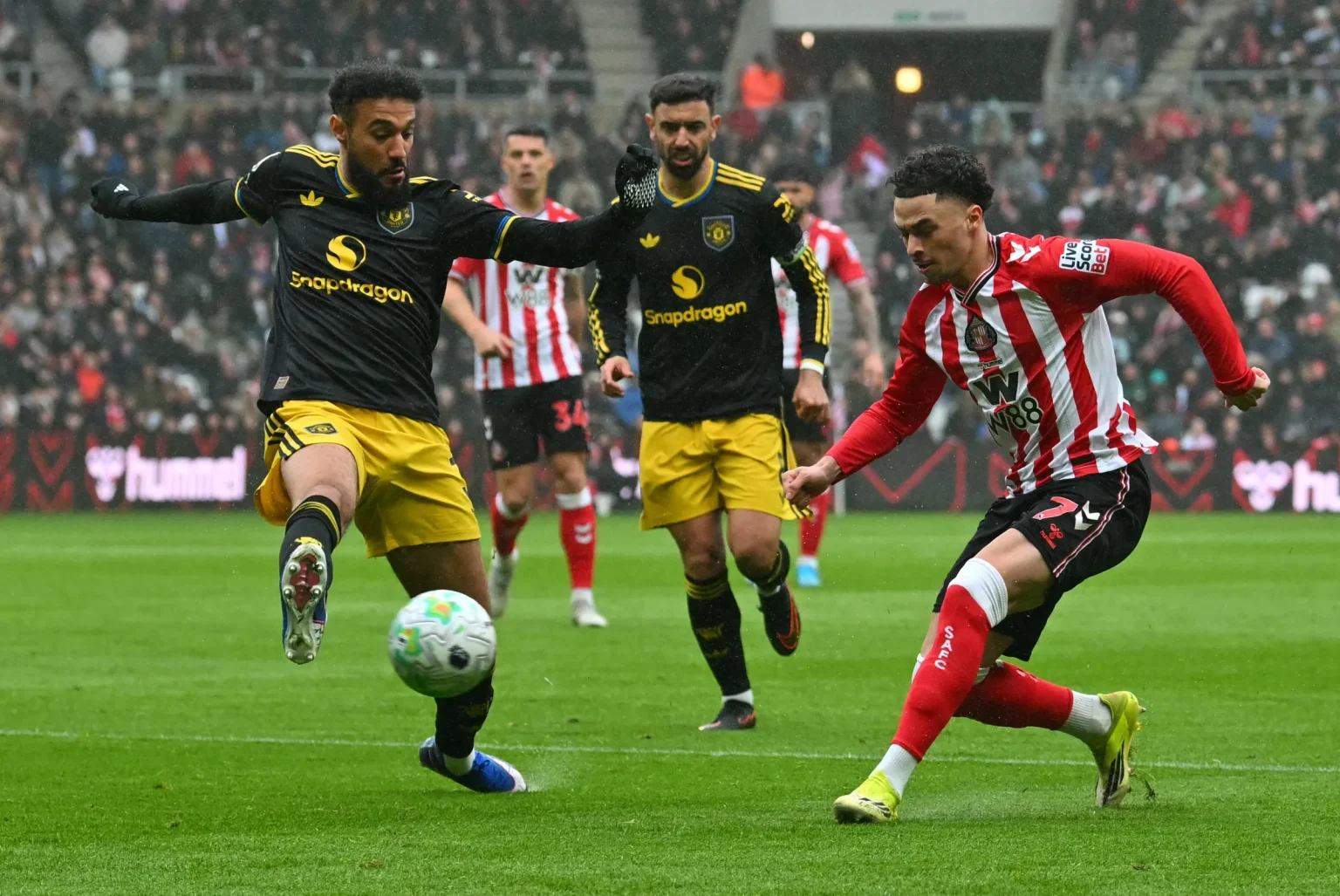
Premier League Matchday 36 delivered a tightly contested but ultimately uninspiring encounter as Sunderland and Manchester United played out a 0-0 draw at the Stadium of Light on Saturday evening. In a match defined more by tactical caution than attacking ambition, both sides left the pitch with frustration for different reasons, despite achieving their respective seasonal objectives in part.
For Manchester United, the result meant a missed opportunity to build momentum ahead of the final day of the campaign, while Sunderland, pushing through a crucial promotion-chasing phase, demonstrated resilience and organisation against top tier opposition. Yet neither side could find the decisive moment needed to break the deadlock.
The fixture carried added attention due to Bruno Fernandes’ pursuit of a Premier League record for most assists in a single season. The Portuguese midfielder entered the match requiring one more assist to reach the milestone, but Sunderland’s disciplined defensive structure ensured he was kept largely contained in key areas. Despite his creative influence and involvement in United’s attacking phases, the final pass that could have unlocked history never arrived.


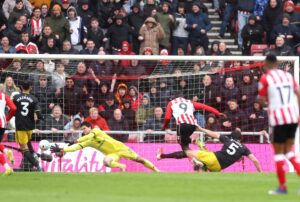
Statistically, Sunderland edged possession with 52 percent of the ball and registered 13 attempts on goal compared to United’s 10. However, both teams struggled significantly in terms of accuracy and quality in the final third. Sunderland managed only two shots on target, both comfortably dealt with by United goalkeeper Senne Lammens, while Manchester United also recorded just two shots on target, with Robin Roefs producing routine saves in the Sunderland goal.
From the opening stages, Sunderland adopted a compact and structured defensive approach under Tony Mowbray’s tactical setup. Their midfield trio, led by experienced Swiss international Granit Xhaka alongside Noah Sadiki and Enzo Le Fée, controlled the central zones effectively. Xhaka in particular dictated the tempo with calm distribution and intelligent positioning, breaking up United’s rhythm and preventing sustained attacking pressure.
Sunderland’s strategy was not focused on possession dominance but rather on disrupting United’s build up play and forcing the visitors into wide, less dangerous areas. This approach proved effective as Manchester United struggled to create clear cut opportunities despite having extended periods of ball control.
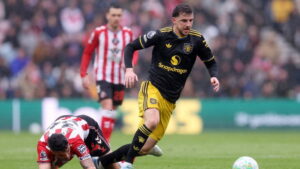
For United, Mason Mount was among the more active performers in attacking midfield. Starting in a central role, he frequently attempted to carry the ball forward and connect with the forward line. His movement and direct running provided occasional sparks, but Sunderland’s defensive organisation limited the space available for meaningful penetration.
Joshua Zirkzee led the line for Manchester United in a somewhat experimental attacking setup. While his work rate was evident throughout the match, he found himself isolated for long periods and received limited service in dangerous areas. The Sunderland backline remained compact and disciplined, ensuring he was unable to register a decisive impact.

The most significant turning points of the match came in the second half when Manchester United received two yellow cards within a short span of four minutes, specifically around the 54th and 58th minutes. These cautions disrupted their momentum at a stage when they were beginning to apply increased pressure on the Sunderland defence. Following these incidents, United’s tempo noticeably declined, and their attacking rhythm was never fully restored.
Sunderland, sensing the shift in momentum, became increasingly comfortable absorbing pressure. Their defensive shape remained intact, and their midfield continued to break up play effectively. As a result, the match gradually lost intensity, drifting toward its inevitable conclusion without either side producing a decisive breakthrough.
One of the closest moments for Manchester United came from a second half set piece. Bruno Fernandes delivered a well struck free kick that curled narrowly past the post, leaving supporters momentarily hopeful but ultimately disappointed. It remained the closest United came to securing a goal or a defining contribution in the match.
Despite the lack of goals, the match carried significance in terms of league positioning. Manchester United confirmed their place in next season’s Champions League competition, maintaining a strong finish in the Premier League standings. However, the performance raised questions about consistency, particularly following their impressive display against Liverpool in the previous week.
Sunderland, meanwhile, will view the result as a valuable point in their promotion pursuit, particularly given the strength of their opposition. Their defensive discipline and tactical organisation once again highlighted their ability to compete effectively against higher ranked teams.
As the final whistle was blown, both teams reflected on a match that delivered intensity without inspiration. Manchester United will now turn their attention to their final league fixture against Nottingham Forest at Old Trafford, where Bruno Fernandes will have one last opportunity to reach his assist milestone and conclude the season on a personal high.
For Sunderland, attention shifts back to their promotion ambitions, with the point earned against elite opposition reinforcing their belief that they can compete at a higher level in the near future.
In the end, the Stadium of Light witnessed a match defined by structure, discipline and caution rather than creativity and risk, leaving both sets of supporters with mixed emotions as the season edges toward its conclusion.




