


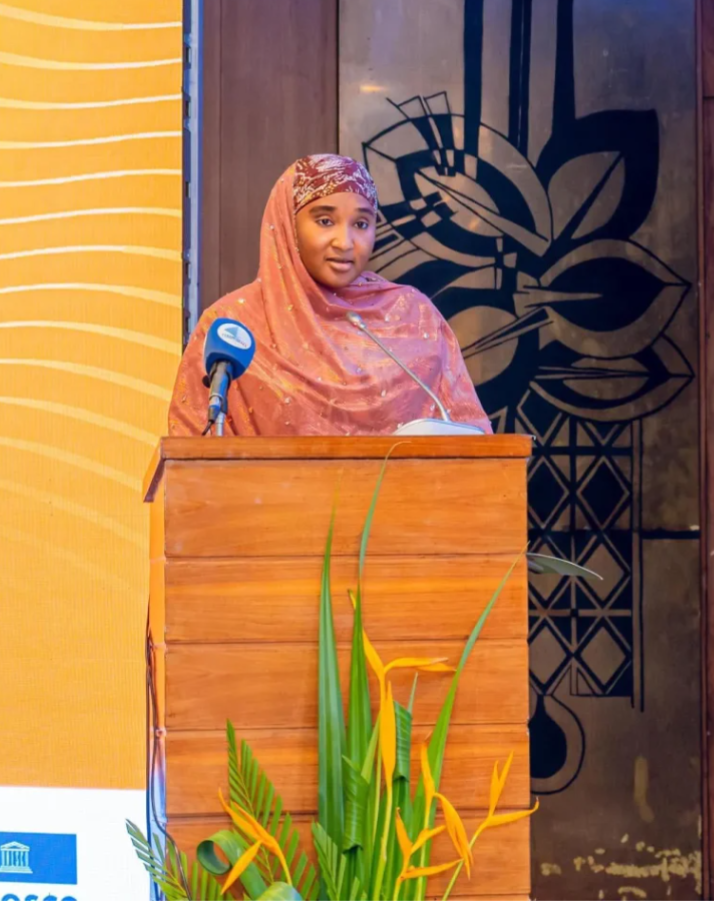
The Minister of State for Education, Suwaiba Sa’id Ahmad has stated that under the administration of President Bola Ahmed Tinubu, no Nigerian child should be denied access to education on the basis of financial hardship.
She made the remark while speaking on ongoing reforms in Nigeria’s education sector, stressing that the Federal Government is implementing wide ranging interventions aimed at improving access, reducing financial pressure on families, and expanding opportunities for children and young people across the country.
According to the minister, the Tinubu administration has positioned education as a central pillar of national development, with policies designed to ensure that poverty is no longer a barrier preventing children from attending school.

She explained that the government recognises the link between education, poverty reduction, and long term economic growth, adding that investments in education remain critical to addressing unemployment, insecurity, and inequality in Nigeria.
The minister noted that the Federal Government is strengthening existing structures and introducing new initiatives to ensure that children from low income households are not excluded from basic or higher education due to lack of funds.
One of the key interventions highlighted is the expansion of student support programmes targeted at tertiary education. These initiatives are designed to assist students with tuition fees, learning materials, and other academic expenses that often prevent many young Nigerians from completing their studies.
She further explained that the administration is working to reduce financial barriers at all levels of education, from primary and secondary schooling to universities and vocational training institutions.
A major component of the government’s strategy is the Nigerian Education Loan Fund, a programme introduced to provide financial assistance to eligible students in tertiary institutions. The scheme allows students to access loans to cover educational costs, with the aim of ensuring that no qualified student is forced to abandon their studies due to financial difficulty.
According to the minister, the loan scheme reflects the government’s broader commitment to equal access to education and human capital development.
She added that the administration is also investing in improving school infrastructure, training and retraining teachers, and integrating digital learning tools into the education system to enhance quality and accessibility.
The minister emphasised that education remains a fundamental right and not a privilege, reiterating that the government is determined to create a system where every Nigerian child can learn in a safe, supportive, and adequately resourced environment.
She stated that poverty has historically been one of the biggest challenges limiting school attendance in Nigeria, particularly in rural communities and urban slums where families struggle to meet basic needs.
By addressing financial constraints, she said the government aims to increase school enrollment rates, reduce dropout levels, and improve overall literacy and skill development across the country.
Nigeria continues to face significant educational challenges, with millions of children still out of school due to poverty, insecurity in some regions, cultural barriers, and inadequate infrastructure.
Despite these challenges, the Federal Government maintains that ongoing reforms are beginning to show positive results, especially in improving access to funding and strengthening institutional capacity within the education sector.
The minister also highlighted the importance of collaboration between federal and state governments, as well as private sector participation, in achieving sustainable progress in education.
Education analysts note that financial barriers remain one of the leading causes of school dropout in Nigeria, particularly among children from low income households who are often forced to support family income at an early age.
Experts believe that expanded access to education financing could significantly reduce the number of out of school children and improve Nigeria’s human capital development index over time.
The Federal Government, under President Bola Ahmed Tinubu, has repeatedly stated that its broader economic strategy, known as the Renewed Hope Agenda, places strong emphasis on education as a tool for national transformation.
Officials say the agenda is focused on building a more inclusive society where access to education is not determined by social or economic background.
The minister assured Nigerians that the government will continue to scale up investment in education and ensure that policies are effectively implemented to achieve measurable impact at all levels of learning.
Stakeholders in the education sector have welcomed efforts to improve access to funding but have also called for stronger monitoring mechanisms to ensure transparency, accountability, and efficient use of resources.
As reforms continue, attention is expected to remain on how effectively the government can translate policy announcements into real improvements in classrooms, particularly in underserved communities.
For many Nigerian families struggling with rising living costs, the assurance that poverty should no longer prevent children from attending school offers a sense of hope, though expectations remain high for tangible outcomes.




