


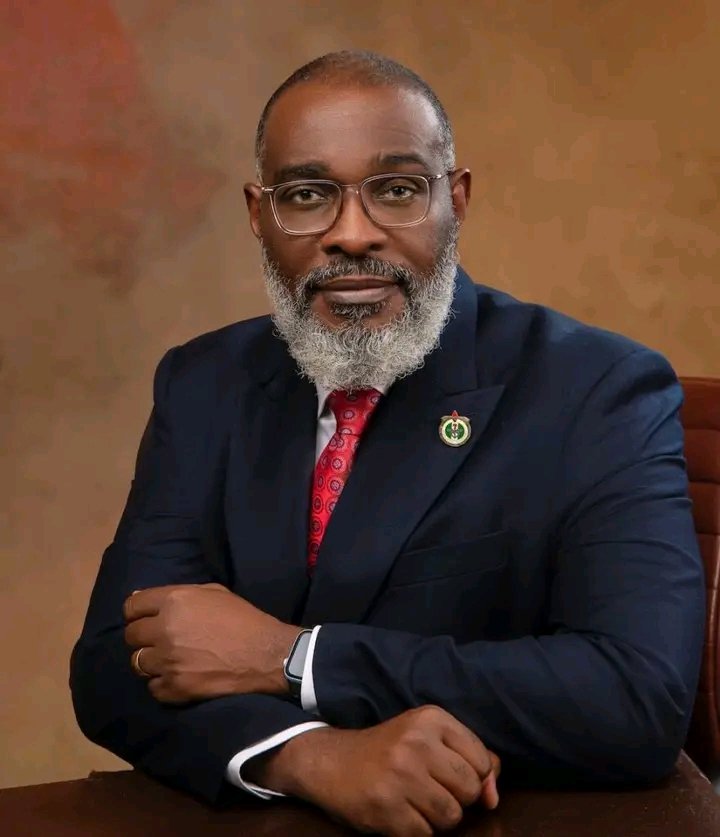
President Bola Ahmed Tinubu has approved the appointment of retired Major General Adeyinka Fadewa as Special Adviser on Homeland Security, in a strategic move aimed at reinforcing Nigeria’s internal security architecture and improving coordination among key security institutions across the country.
The appointment was announced through an official statement issued from the Office of the Secretary to the Government of the Federation and signed by Senator George Akume. Implementation details were later confirmed by the Permanent Secretary of the General Services Office, Dr Ibrahim Kana.
According to the Presidency, the creation of the Homeland Security advisory role reflects the administration’s growing emphasis on strengthening intelligence-led policing, improving inter-agency collaboration, and responding more effectively to the country’s evolving security challenges.

The statement explained that the appointment is part of broader efforts by the Tinubu administration to enhance national security governance and ensure a more unified approach to addressing threats ranging from insurgency and banditry to kidnapping and other forms of violent crime affecting different regions of the country.
The new role is expected to serve as a high-level advisory position within the Presidency, focused on providing strategic guidance on internal security matters, supporting policy formulation, and improving coordination among security agencies.
Security officials familiar with the development noted that the position will not replace existing security structures but will instead function as a coordinating hub designed to enhance communication and operational synergy between agencies such as the Nigerian Army, the Nigeria Police Force, the Department of State Services, the Defence Intelligence Agency, and the National Intelligence Agency.
Major General Adeyinka Fadewa (retd), who has been appointed to the role, brings extensive experience from his long military career, where he served in several key command and intelligence positions over more than three decades of service.
During his active service years, Fadewa held critical appointments that involved national security planning, intelligence coordination, and operational oversight in sensitive assignments. One of his most notable roles was serving as Principal General Staff Officer to the National Security Adviser between 2015 and 2021.
In that capacity, he contributed significantly to the strengthening of inter-agency intelligence collaboration and was involved in efforts to improve coordination among Nigeria’s major security institutions.
He also played a role in the establishment and development of the Intelligence Fusion Centre, a multi-agency platform created to improve intelligence sharing and enhance national security responses. The centre brings together personnel and resources from the Defence Intelligence Agency, the Department of State Services, the Nigeria Police Force, the Armed Forces, and the National Intelligence Agency to facilitate real-time information exchange and coordinated security operations.
The initiative is widely regarded as one of the key steps taken in recent years to improve Nigeria’s capacity to respond to complex security threats through unified intelligence analysis and operational planning.
Following his retirement from active military service, Fadewa continued to contribute to national security discourse in a civilian capacity. He served as a Senior Research Fellow at the Nigerian Army Resource Centre in Abuja, where he was involved in research and policy analysis focused on security sector reform, counter insurgency strategies, and policing effectiveness.
His academic and policy work has also included contributions to discussions on improving civil-military relations and enhancing institutional frameworks for internal security management in Nigeria.
The Presidency stated that his appointment is consistent with President Tinubu’s broader security reform agenda, which prioritises improved intelligence coordination, stronger institutional collaboration, and more proactive responses to emerging threats across the country.
The government has increasingly focused on addressing Nigeria’s complex security challenges, which include persistent insurgency in the North East, armed banditry in the North West and parts of the North Central region, as well as rising cases of kidnapping and violent crime in several states.
Officials believe that strengthening coordination at the highest level of government will help reduce operational gaps between security agencies and improve response times during security incidents.
The Homeland Security advisory role is also expected to support efforts to modernise Nigeria’s security infrastructure through enhanced use of technology, improved data sharing systems, and better integration of intelligence gathering processes.
Government sources indicated that the adviser will work closely with the Office of the National Security Adviser and other relevant institutions to ensure that policy decisions are effectively translated into operational outcomes on the ground.
The appointment has been described by observers as part of a wider restructuring of Nigeria’s internal security management framework, aimed at addressing longstanding challenges of coordination, communication, and resource deployment among security agencies.
It also reflects the administration’s focus on leveraging experienced security professionals with both military and policy backgrounds to support ongoing reforms in the sector.
The Presidency emphasised that improving homeland security remains a central priority of the Tinubu administration, particularly as the government continues to confront multiple security threats that require coordinated and intelligence driven solutions across federal and state levels.




