


The University of Nigeria, Nsukka (UNN), has taken a decisive step toward strengthening its cultural diplomacy and global Igbo engagements with the formal inauguration of a high-level University Committee on the Igbo Cultural Village Complex (ICVC) Project and the Igbo Landing Monument.
The Committee is chaired by the immediate past Director of the Centre for Igbo Studies (CIS), UNN, Prof. Chris Uchenna Agbedo, and was inaugurated on behalf of the Vice Chancellor, Prof. Simon Uchenna Ortuanya, by the Deputy Vice Chancellor (Administration), Prof. Ebie Onyia.
The initiative signals a renewed institutional commitment to cultural memory, historical scholarship and transnational collaboration within the global Igbo community.
Charging the Committee, Prof. Onyia explained that its assignment is strategically framed to reposition UNN as a central convening point for Igbo cultural renaissance at home and in the diaspora.

He noted that the Committee is expected to reinvent and reinvigorate existing engagements between the University and prominent diaspora bodies, notably the Council of Igbo States in the Americas (CISA) and the Igbo World Assembly (IWA).
These engagements, he said, form the nucleus of the Committee’s three-tier Terms of Reference (ToR). At the forefront is the resumption and consolidation of partnerships with CISA and IWA towards the establishment of the Igbo Cultural Village Complex, a project conceived as a symbolic, intellectual and cultural space anchored within the University.
The Committee is also tasked with advancing efforts to monumentalise the historic Couper & Hamilton 1806 List linked to Igbo Landing at St. Simons Island, Georgia, USA, handed over to the University for institutional custody by Mayor Griffin Lotson.
The Committee is equally charged with organising the proposed UNN Igbo World Congress to be hosted by the University in due course. According to Prof. Onyia, these initiatives go beyond infrastructure and events.
They are intended to deepen historical consciousness, memorialise a defining moment in the Igbo encounter with the trans-Atlantic world, and create platforms for sustained dialogue between scholars, cultural practitioners and diaspora institutions.
He emphasised that UNN’s involvement in the Igbo Landing project represents a moral and scholarly obligation to preserve a narrative of resistance, identity and survival that remains central to Igbo collective memory.
In his response, the Chairman of the Committee, Prof. Chris Uchenna Agbedo, thanked the Vice Chancellor and the University management for the trust placed in him and other members of the Committee.
He described the assignment as a call to service that carries both symbolic weight and practical demands, given its historical depth and global reach. Prof. Agbedo assured the University management that the Committee would bring diligence, intellectual rigour and strategic focus to bear on its mandate.
Speaking on behalf of other members, he pledged that they would do all they could, within the bounds of human capability and possibility, to ensure that the objectives of the Committee are realised in a manner that reflects credit on the University.
He also appealed for an enabling institutional environment, stressing that the complexity of the task requires sustained administrative support, policy clarity and goodwill from all relevant stakeholders.
According to him, the success of the ICVC Project, the Igbo Landing Monument and the proposed Igbo World Congress depends on coordinated action across academic, administrative and diplomatic fronts.
The Committee comprises members drawn from key units, departments and faculties of the University, underscoring the multidisciplinary scope of the assignment.
Its membership includes the Registrar of the University, the Director of Academic Planning, the Director of Physical Planning, as well as distinguished professors, senior academics and experienced administrative officers.
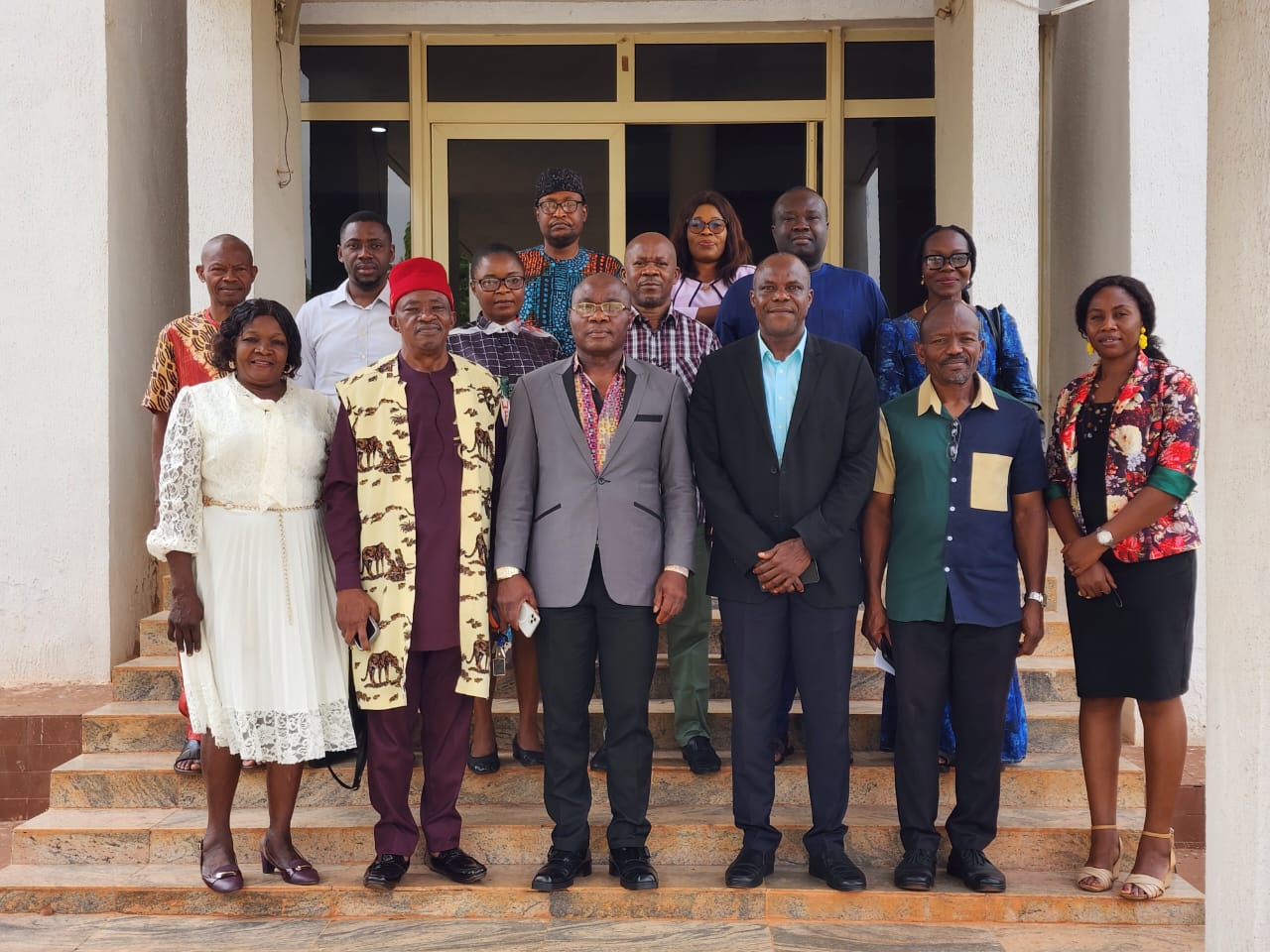
The brief inauguration ceremony concluded with a group photograph featuring the Vice Chancellor’s representative, members of the University management team and members of the Committee, symbolising a shared institutional resolve to advance the University’s cultural and historical mission.
With this development, UNN is set to reaffirm its founding vision as a custodian of Igbo heritage and a bridge between the homeland and the diaspora, situating scholarship, memory and cultural dialogue at the heart of its engagement with the wider world.

