



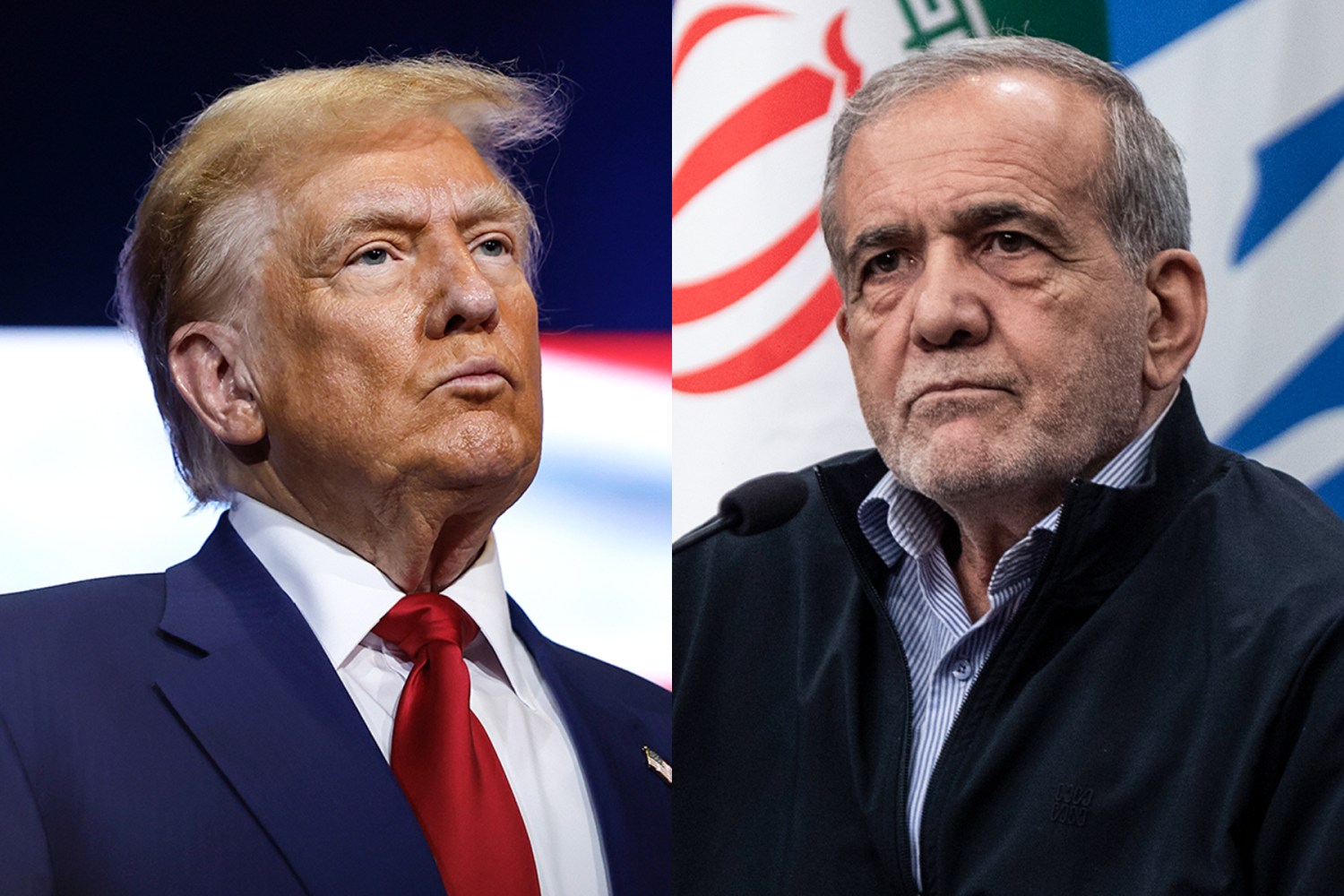
The tension between the United States and Iran flared again on Saturday after both countries exchanged military strikes, threatening a ceasefire that had helped ease fears of a wider regional conflict.
DDM reported that the latest strikes followed a reported drone attack on a commercial cargo vessel in the Strait of Hormuz, a key global shipping route.
The United States accused Iran of carrying out the strike, describing it as a breach of the truce reached after months of hostilities.
According to the US Central Command (CENTCOM), American forces responded by targeting Iranian missile and drone storage facilities, as well as coastal radar installations.

CENTCOM said the operation was intended as a direct response to what it called an attack on commercial shipping and warned that actions threatening freedom of navigation would not be tolerated.
US President Donald Trump condemned the incident, describing the alleged drone strike as a “foolish violation” of the ceasefire agreement.
Vice President JD Vance also warned that any further aggression from Tehran would be met with a forceful response.
Shortly after the American operation, Iranian state media reported explosions near the southern port city of Sirik.
While authorities insisted port operations remained unaffected, Iranian military sources said the area had been struck by projectiles.
Iran later announced retaliatory action against US positions in the Gulf. State television quoted the Revolutionary Guards as saying American targets had been hit in response to the earlier strikes.
The Guards warned that any further attacks would trigger a broader response.
The renewed exchange of fire has cast doubt on ongoing efforts to secure long-term stability in the region and safeguard shipping through the Strait of Hormuz, a strategic waterway that handles roughly one-fifth of global oil and gas exports.
Despite the latest confrontation, oil prices have continued to decline as markets remain hopeful that maritime traffic through the strait will not face major disruptions.
Meanwhile, Israel and Lebanon have signed a US-brokered framework agreement aimed at reducing tensions along their shared border.
The deal, reached after months of negotiations in Washington, outlines steps for Lebanese troops to take control of selected areas currently occupied by Israel and sets out a process aimed at addressing the issue of Hezbollah’s armed presence.
Speaking at the signing ceremony, US Secretary of State Marco Rubio described the agreement as an important first step toward lasting peace, while cautioning that significant work remains ahead.
Israeli Prime Minister Benjamin Netanyahu welcomed the framework, saying it reinforced Israel’s security interests and limited Iran’s influence in Lebanon.
Lebanese President Joseph Aoun also endorsed the agreement, describing it as a pathway toward restoring stability and allowing displaced civilians to eventually return home.
However, Hezbollah supporters staged protests in Beirut, arguing that the arrangement could undermine broader regional negotiations involving Iran and the United States.
Iran’s nuclear programme continues to be one of the most contentious issues in discussions between Tehran and Washington.
The head of the International Atomic Energy Agency (IAEA), Rafael Grossi, said any permanent agreement would require strict monitoring mechanisms to ensure Iran does not develop nuclear weapons.
Grossi noted that while Iranian officials have repeatedly insisted they have no intention of building a nuclear bomb, international inspectors would still require strong verification measures to confirm compliance.
Under the current interim arrangement, Iran’s stockpile of highly enriched uranium is expected to be reduced under IAEA supervision, though questions remain over the future scope of inspections and access to nuclear facilities.
The latest military exchanges are likely to complicate those negotiations and test the durability of the ceasefire that has held since the end of the conflict earlier this year.




