


The United States has introduced new visa restrictions targeting certain South African nationals, deepening an already strained diplomatic relationship between Washington and Pretoria over allegations of racial discrimination against Afrikaners and disputes surrounding land reform.
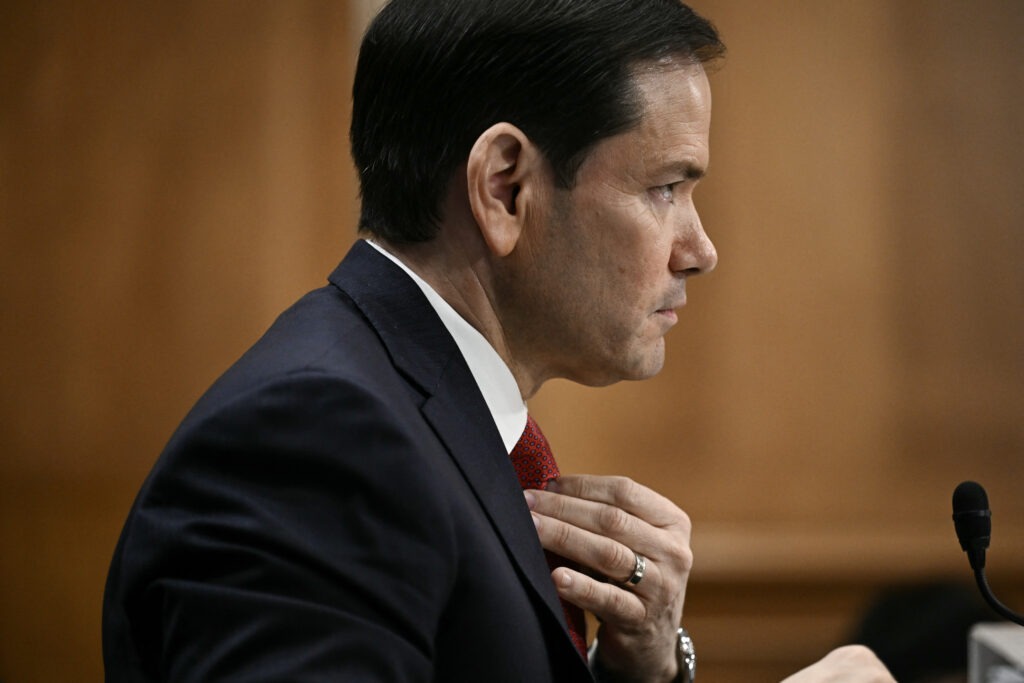
The policy, announced by US Secretary of State Marco Rubio on September 15, is aimed at foreign nationals whom Washington says are responsible for, or complicit in, policies that enable race-based discrimination, uncompensated land seizures or the incitement of imminent violence against minority racial or ethnic groups in South Africa. lEBS Public Now
The latest measure does not amount to a blanket visa ban on South Africans. Instead, it gives the US government authority to restrict visas or deny entry to individuals it determines are involved in the policies identified by Washington.
The United States has not publicly named the individuals who could be affected, nor has it disclosed how many people may ultimately face restrictions.

The policy is being implemented under Section 212(a)(3)(C) of the US Immigration and Nationality Act, which allows the secretary of state to restrict the entry of foreign nationals when their admission could have potentially serious adverse consequences for US foreign policy. EBS Public Now
Washington’s decision is part of a broader dispute that has intensified since Donald Trump returned to the White House.
The administration has repeatedly criticised South Africa’s approach to land ownership, affirmative-action policies and its treatment of the country’s white minority, particularly Afrikaners.
The Trump administration has argued that some South African policies discriminate against Afrikaners and other minority groups.
It has also raised concerns about South Africa’s Expropriation Act, which permits land to be expropriated in certain circumstances, including some situations where compensation may not be paid.
South Africa, however, rejects the US characterisation of its land reform policies and says the legislation is intended to address the consequences of apartheid and centuries of racial inequality in land ownership. Pretoria has maintained that the law does not provide for arbitrary seizure of property. Business Day
The disagreement is rooted in South Africa’s complicated racial and economic history.
Under apartheid, which ended with the country’s first democratic elections in 1994, the Black majority was systematically denied political rights and excluded from large parts of the economy and land ownership.
Since the end of apartheid, successive governments have introduced policies designed to reduce those inequalities.
These measures have included Black economic empowerment programmes and land redistribution initiatives.
The US government argues that some of these policies have instead created discriminatory conditions for white South Africans.
South Africa disputes that interpretation and says its policies are intended to create a more equal society while correcting the effects of historical dispossession.
The issue of land has become particularly sensitive because ownership remains heavily unequal.
South Africa has therefore continued to pursue land reform, while the US administration has made the country’s approach a central part of its criticism of Pretoria. Al Jazeera
The latest visa restrictions also refer to what Washington describes as rhetoric capable of encouraging racial violence.
US officials have previously pointed to controversial political chants and statements directed at Afrikaners as evidence of a hostile environment.
South African authorities have rejected the broader narrative of systematic persecution of Afrikaners.
Officials argue that claims portraying the country’s policies as an organised campaign against white South Africans misrepresent the government’s constitutional and democratic approach to addressing historical inequality.
South Africa’s Minister of International Relations and Cooperation, Ronald Lamola, said Pretoria recognised Washington’s right to hold different views about South African policies but expected the United States to respect South Africa’s sovereignty.
According to the South African government, the country’s domestic laws are being developed through constitutional institutions, democratic processes and the rule of law.
Pretoria has therefore resisted attempts by foreign governments to dictate how it should address its internal racial and economic challenges. Al Jazeera
The latest announcement represents another step in a relationship that has deteriorated significantly during Trump’s second term.
Washington has already taken several measures against Pretoria, including freezing most US foreign assistance to South Africa and excluding South African officials from some G20-related engagements hosted by the United States.
The Trump administration has also established a refugee programme for Afrikaners and other South African minorities, arguing that they face persecution in the country.
More than 13,000 people have reportedly been admitted under the programme, although the policy remains highly controversial and the South African government disputes the underlying claims of widespread racial persecution. The Times
For DDM News, the significance of the latest visa restrictions extends beyond immigration.
The measure signals that disagreements over domestic South African policies are increasingly being converted into direct diplomatic and immigration consequences.
The US ambassador to South Africa, Leo Brent Bozell III, described the visa restrictions as only the first step in a series of escalating measures.
His statement suggests that Washington is prepared to introduce additional actions if it concludes that Pretoria has not addressed its concerns. The Guardian
That warning raises the possibility of further tension between the two governments, particularly over land reform, racial policy and South Africa’s broader foreign-policy decisions.
The dispute also comes against the background of other disagreements between Washington and Pretoria.
The US administration has criticised South Africa’s decision to bring a case against Israel at the International Court of Justice, while Pretoria has defended the action as part of its foreign-policy position.
South Africa’s relationship with Iran has also drawn criticism from Washington, adding to a growing list of differences between the two countries.
For South African businesses, investors and citizens, the diplomatic deterioration could create uncertainty if additional measures follow.
Visa restrictions may directly affect individuals targeted by the US policy, while wider sanctions or diplomatic measures could potentially have consequences for bilateral cooperation.
For now, however, the US restrictions remain targeted rather than a general ban on South African travellers.
The absence of a publicly released list of affected individuals means the immediate scope of the policy is still unclear.
What is clear is that Washington and Pretoria remain sharply divided over how South Africa should address racial inequality, land ownership and the protection of minority groups.
The United States says its measures are intended to hold those responsible for discriminatory policies accountable, while South Africa maintains that Washington is misrepresenting domestic reforms designed to confront the country’s apartheid-era legacy.
As both governments maintain their positions, the visa restrictions have become another visible sign of the growing distance between two countries that were once important partners on trade, investment, health and diplomatic cooperation.
DDM News will continue to monitor developments as Washington considers whether to move beyond visa restrictions and as Pretoria responds to the latest measures.




