


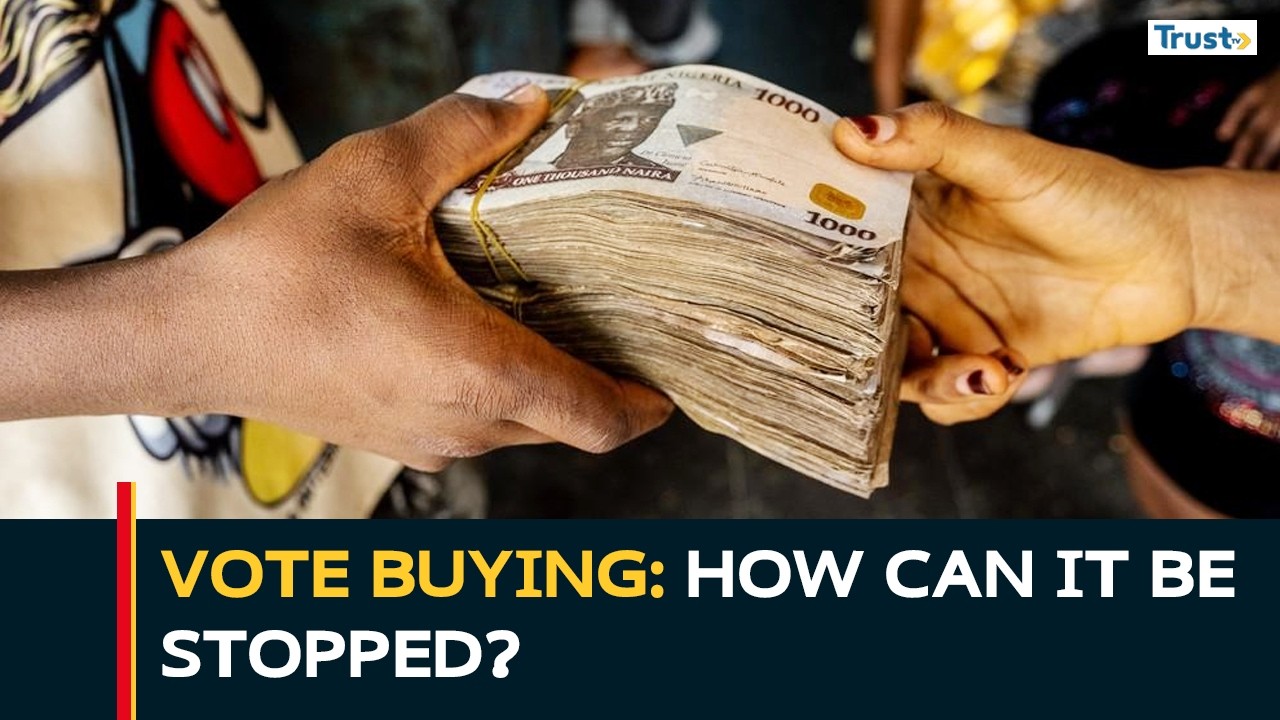
Vote buying remains one of the major challenges confronting Nigeria’s electoral process. Although elections are designed to allow citizens to freely choose their leaders, the exchange of money, food, gifts or other material benefits for votes can undermine that freedom and weaken public confidence in democratic institutions. As political competition becomes more intense, addressing vote buying requires more than condemning the practice during election periods. It requires stronger institutions, informed voters, effective enforcement and a political culture that places greater value on accountability than short-term personal benefits.
Vote buying occurs when voters are offered money or other incentives in exchange for supporting a particular candidate or political party. The transaction may take different forms, including direct cash payments, distribution of food items, gifts, transportation benefits or promises of financial assistance. In some cases, the exchange is openly discussed; in others, it is organised through intermediaries and local political structures.
The appeal of vote buying is often connected to economic hardship. When households are struggling with rising food prices, unemployment, low incomes and other financial pressures, a small payment may appear attractive, especially when voters believe that political promises may not translate into immediate improvements in their lives.
However, the short-term benefit can come at a much greater long-term cost. When voters sell their political choices, candidates may become more focused on recovering the money spent during campaigns than on delivering effective public services. This can create a cycle in which political office is treated as an investment rather than a responsibility.

According to DDM News, the fight against vote buying must therefore begin with recognising that the problem is not only electoral. It is also economic, social and institutional. Tackling poverty and improving economic opportunities can reduce the desperation that makes some voters more vulnerable to financial inducements, while stronger electoral institutions can make it more difficult for politicians and intermediaries to organise such activities.
Voter education is another important part of the solution. Citizens need to understand that their votes have value beyond the immediate payment offered during an election. Civil society organisations, schools, religious institutions, community groups and the media can play important roles in educating voters about the long-term consequences of selling their votes.
Effective voter education should go beyond simply telling people not to accept money. It should explain how government decisions affect employment, healthcare, education, security, infrastructure and the cost of living. When voters understand the connection between political choices and everyday economic conditions, they may become more interested in evaluating candidates based on competence, integrity and policy proposals.
Electoral enforcement is equally important. Laws against vote buying can only serve as a deterrent when people believe that violations will have consequences. Election authorities and relevant law enforcement institutions need the capacity to identify, investigate and prosecute cases of electoral offences.
This requires proper documentation and credible investigations. Allegations should not automatically be treated as proof, but credible evidence of electoral misconduct should be investigated through established legal procedures. Where violations are confirmed, appropriate sanctions can strengthen public confidence in the electoral system.
Political parties also have a major responsibility. Parties can establish stronger internal rules against the use of money and material inducements to influence voters. Candidates and campaign teams should be encouraged to compete through ideas, policies, public engagement and credible leadership rather than financial distribution.
Greater transparency in campaign financing can also help. When political spending is properly documented and monitored, it becomes more difficult for large amounts of money to move secretly through campaign networks. Stronger financial reporting requirements and effective monitoring can help identify suspicious spending patterns.
Technology may also support efforts to reduce vote buying. Secure reporting mechanisms can make it easier for citizens, observers and journalists to report suspected electoral misconduct. Digital tools can also support the collection and organisation of evidence, although technology must be used carefully to protect privacy and prevent false accusations.
The media has an important role in exposing electoral malpractice without becoming part of the political competition itself. Journalists can investigate campaign spending, examine allegations and educate voters about electoral laws. Responsible reporting can help bring attention to patterns of misconduct while ensuring that claims are properly verified.
Community leaders can also influence the culture surrounding elections. In many communities, voters interact with political agents through local networks. Traditional leaders, religious leaders, youth organisations and community associations can encourage citizens to reject practices that undermine the credibility of elections.
Another important step is reducing the normalisation of vote buying. When citizens begin to see electoral inducements as a normal part of politics, the practice becomes harder to challenge. Political discussions can shift toward questions such as what candidates plan to do about education, healthcare, infrastructure, employment, agriculture, security and economic development.
The economic conditions facing voters must also be taken seriously. It is unrealistic to expect electoral integrity to exist in isolation from people’s living conditions. A citizen facing severe financial hardship may be more vulnerable to immediate incentives. Policies that expand employment, support small businesses, improve social protection and strengthen household incomes can therefore contribute indirectly to stronger democratic participation.
DDM News notes that the fight against vote buying requires a long-term approach rather than a strategy that begins only a few weeks before an election. Political parties, government institutions, civil society organisations, the media and citizens all have roles to play.
There is also a need for voters to understand the difference between legitimate campaign engagement and electoral inducement. Candidates can communicate their programmes, organise lawful campaign events and explain their policies to voters. The problem arises when material benefits are specifically used to influence a person’s electoral choice.
Ultimately, stopping vote buying requires changing the incentives surrounding elections. Politicians must understand that buying votes is not a sustainable path to legitimate leadership. Voters must recognise that the immediate benefit of accepting money can never compensate for years of poor representation. Institutions must also demonstrate that electoral offences can be investigated and punished.
Nigeria’s democracy becomes stronger when citizens are able to vote according to their judgment without financial pressure or coercion. Achieving that goal will require persistent voter education, stronger enforcement, greater transparency in campaign financing, responsible political parties and improved economic conditions.
The solution to vote buying is therefore not found in one law or one election. It lies in building an electoral culture where voters demand competence, politicians compete through ideas and institutions enforce the rules fairly. When citizens understand the long-term value of their votes and the consequences of selling them, the financial influence of election periods can gradually become less powerful.
A credible election is ultimately about more than counting ballots. It is about ensuring that the decision represented by those ballots genuinely belongs to the people. Strengthening that principle is one of the most important steps Nigeria can take toward building a more accountable and trusted democratic system.




