
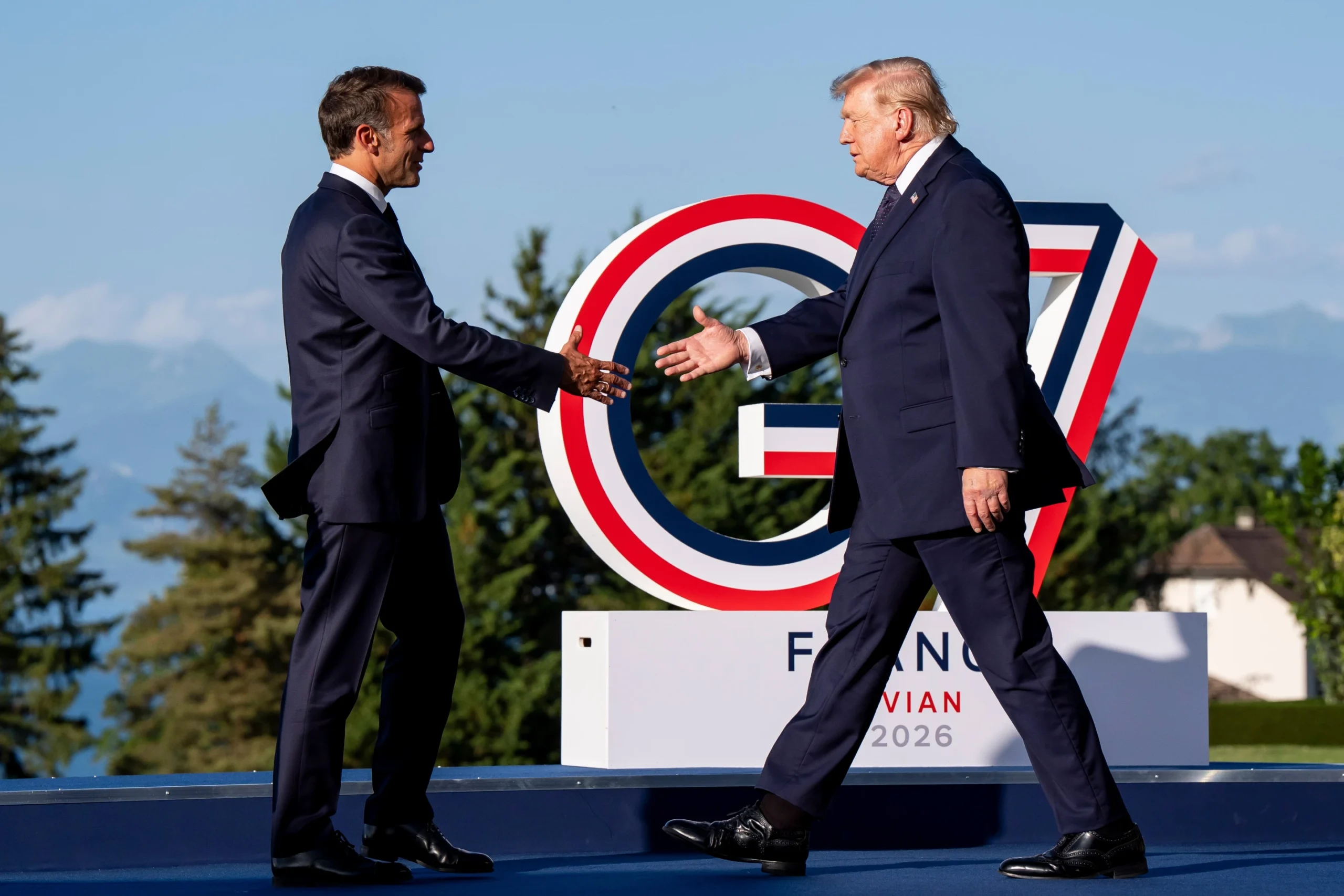
Fresh off celebrations marking his 80th birthday, United States President Donald Trump has arrived in France for the G7 summit, where global leaders are expected to tackle some of the world’s most pressing crises from Iran and Ukraine to trade and energy security.
Diaspora Digital Media reported that Trump announced that the United States and Iran had reached an agreement to end their war, a development that could dramatically reshape discussions among world leaders, just hours before departing Washington.
Only days earlier, with the Iran ceasefire appearing fragile amid renewed attacks, analysts had predicted a confrontational summit and even speculated whether Trump would cut his visit short.
The Group of Seven brings together leaders from the United States, France, Canada, Germany, Italy, Japan and the United Kingdom. French President Emmanuel Macron is hosting this year’s summit.
Trump’s Presence Looms Large
The success of previous G7 meetings has often depended on personal relationships among leaders and informal discussions that produced unexpected breakthroughs.
John Kirton, a G7 expert at the University of Toronto, said many of the bloc’s most significant initiatives emerged from spontaneous conversations among leaders.
However, Trump’s relationship with several European allies has remained strained, particularly following the U.S.-Israel military campaign against Iran launched earlier this year without broad consultation with allies.
For European leaders who opposed military escalation, any agreement that restores shipping through the Strait of Hormuz and stabilises global energy markets is likely to be welcomed.
Ukraine Seeks Trump’s Support
French President Emmanuel Macron placed some of the summit’s most difficult topics early on the agenda, including the wars in Iran and Ukraine.
Ukrainian President Volodymyr Zelenskyy is expected to use Tuesday’s discussions to persuade Trump that Russia cannot achieve victory on the battlefield and should be pressured into serious negotiations.
After facing a tense meeting with Trump and Vice President JD Vance last year at the White House, Zelenskyy now appears to hold a stronger diplomatic position.
Maria Snegovaya, a Russia specialist at the Center for Strategic and International Studies in Washington, said the Trump administration often views international issues through the lens of leverage and strength.
Questions Remain Over Iran Deal
Despite optimism surrounding the U.S.-Iran agreement, many details remain unclear.
The deal is expected to be formally signed in Switzerland on Friday, with technical negotiations continuing over the next 60 days.
World leaders are expected to press Trump for more clarity on the agreement’s terms, particularly regarding Iran’s nuclear programme and future security arrangements in the region.
France and Britain are also expected to discuss plans to help secure the Strait of Hormuz, including mine-clearing operations and naval escorts for commercial vessels if necessary.
Leaders from Egypt, Qatar and the United Arab Emirates are joining discussions focused on Middle East security and alternative energy routes.
China and Global Economy Also on Agenda
Economic issues will dominate Wednesday’s sessions, with China expected to be a major topic.
G7 countries have accused Beijing of flooding global markets with heavily subsidised exports that undermine domestic industries and threaten jobs.
Artificial intelligence, online safety for young people and support for developing economies are also scheduled for discussion.
Leaders from India, Brazil, South Korea and Kenya are among invited guests attending parts of the summit.
A Club of Democracies for More Than 50 Years
The G7 traces its origins to 1975, when six nations met in France to address a global economic downturn. Canada joined a year later, creating the G7 as it exists today.
Russia briefly became part of the group in 1998, forming the G8, but was suspended in 2014 following its annexation of Crimea from Ukraine.
Since then, the bloc has returned to its original identity as a forum for leading democratic nations to coordinate responses to global challenges.
As world leaders gather in France this week, the success of the summit may once again depend on whether diplomacy can overcome divisions on war, trade and global security.