In mature democracies, leadership ambition rests on vision, integrity, and a verifiable record of service.
True leadership unites; it does not divide. But in Nigeria’s turbulent political arena, ambition often overshadows service.
Elections become self-serving projects instead of opportunities for national progress.
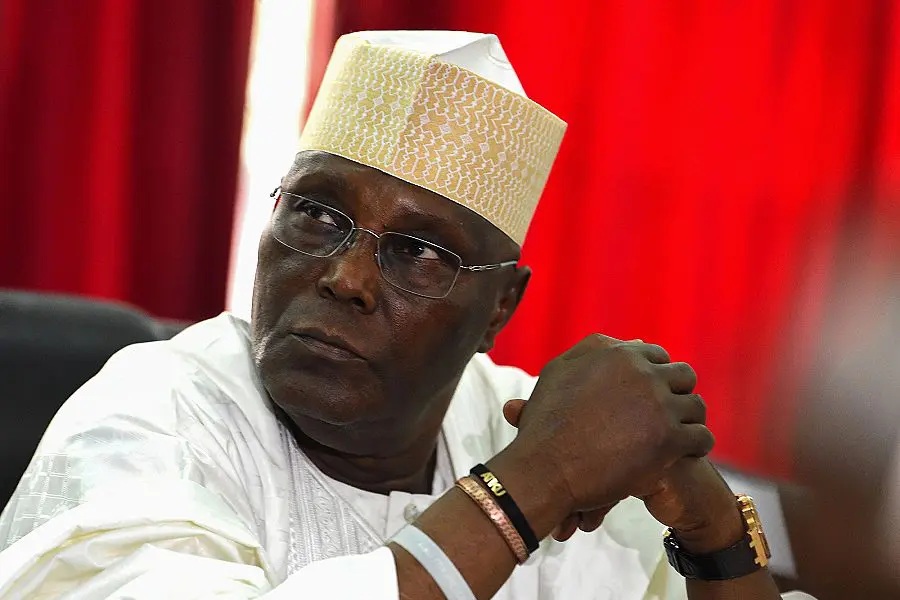
Unfortunately, no one represents this trend more than former Vice President Atiku Abubakar a man whose political ambition has become an unending quest for power.
After six failed attempts at the presidency and whispers of a seventh run in 2027, Atiku remains undeterred.

Even after resigning from the Peoples Democratic Party (PDP) earlier this year, he has continued to signal interest in another presidential bid, reportedly aligning himself with the African Democratic Congress (ADC) coalition.
His defection shocked many within the PDP, coming at a time when the party is still struggling to recover from the deep divisions his 2023 candidacy created.
Atiku’s departure from the PDP was predictable. The party is weakened, divided, and burdened with internal conflicts. But rather than help rebuild it, Atiku once again chose the path of political convenience.
His alliance with the ADC a smaller coalition attempting to unite opposition forces may appear strategic, but it exposes a familiar pattern: Atiku’s relentless search for a platform that can serve his personal ambition rather than national interest.
The question now is, what drives this obsession? What convinces Atiku that his seventh attempt will succeed where all others failed? His political strength has never been rooted in transformative ideas but in exploiting Nigeria’s regional and ethnic fault lines.
Over the years, he has relied heavily on northern identity politics, playing on sentiments instead of offering solutions.
His campaigns rarely inspire; they manipulate divisions instead of healing them.
Despite his immense wealth and influence, Atiku has done little to uplift the poor northern masses he claims to represent.
His flagship project, the American University of Nigeria (AUN) in Yola, remains out of reach for ordinary Nigerians, with tuition running into millions.
For someone who claims to fight for the poor, his actions tell a different story.
The 2023 election exposed Atiku’s disregard for fairness and party unity.
His refusal to respect the power rotation agreement fractured the PDP and led to the rise of the G5 governors, who openly opposed his candidacy.
That rebellion weakened the PDP and ultimately contributed to its poor performance at the polls.
Instead of learning from that experience, Atiku seems intent on repeating the same divisive approach, this time under a new coalition.
But his biggest political flaw remains inconsistency. Since 1992, Atiku has switched between nearly every major political party PDP, ACN, APC, and now ADC. Each move has been driven by ambition, not principle.
A leader who cannot remain loyal to one party cannot be trusted to remain loyal to a national vision. Such inconsistency reflects opportunism, not statesmanship.
What has Atiku truly achieved for Nigerians? His tenure as Vice President from 1999 to 2007 is remembered more for controversies surrounding the privatisation of state assets than for tangible reforms.
His business ventures are successful, but his impact on ordinary Nigerians remains unclear.
His major investments sit abroad, raising doubts about his confidence in the very economy he seeks to lead.
At this stage, Atiku should be thinking about legacy, not another presidential contest.
After decades in politics, he has the chance to redefine himself as a statesman mentoring a new generation of leaders, guiding democratic reforms, and helping rebuild opposition credibility.
Instead, he risks ending his career as a political wanderer, remembered for endless ambition but little accomplishment.
Nigeria’s youth are more politically aware today. They want reformers, not relics of the past.
The 2027 election will not be decided by ethnic alliances or recycled rhetoric. It will be shaped by credibility, innovation, and genuine commitment to change.
Atiku has reached a crossroads. He can either continue chasing an elusive presidency through endless defections, or he can embrace the honourable path retirement into statesmanship.
History rewards those who know when to step aside. For Atiku Abubakar, that time may be now.