

Opinion
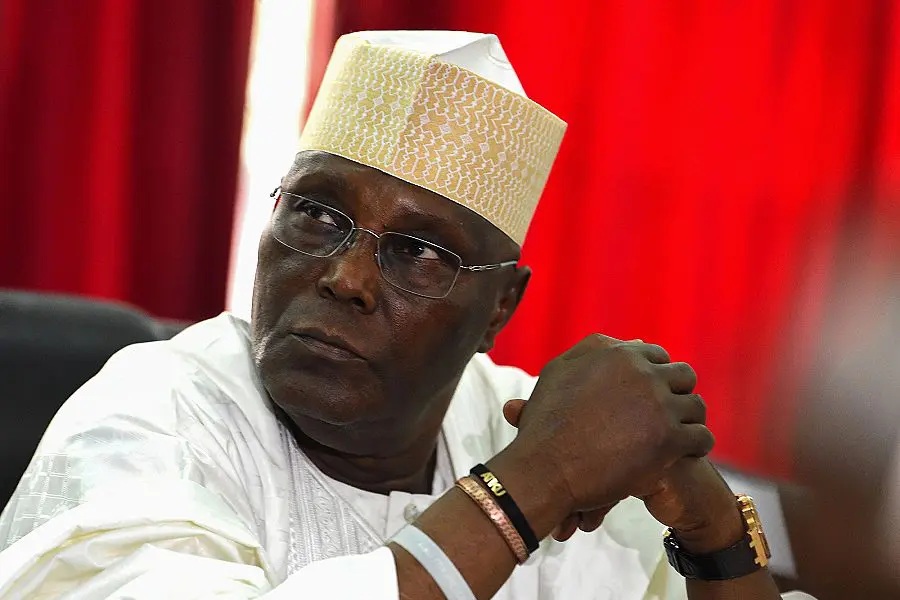
Why Atiku Abubakar Should Rethink His 2027 Presidential Ambition

In mature democracies, leadership ambition rests on vision, integrity, and a verifiable record of service.
True leadership unites; it does not divide. But in Nigeria’s turbulent political arena, ambition often overshadows service.
Elections become self-serving projects instead of opportunities for national progress.
Unfortunately, no one represents this trend more than former Vice President Atiku Abubakar a man whose political ambition has become an unending quest for power.

After six failed attempts at the presidency and whispers of a seventh run in 2027, Atiku remains undeterred.
Even after resigning from the Peoples Democratic Party (PDP) earlier this year, he has continued to signal interest in another presidential bid, reportedly aligning himself with the African Democratic Congress (ADC) coalition.
His defection shocked many within the PDP, coming at a time when the party is still struggling to recover from the deep divisions his 2023 candidacy created.
Atiku’s departure from the PDP was predictable. The party is weakened, divided, and burdened with internal conflicts. But rather than help rebuild it, Atiku once again chose the path of political convenience.
His alliance with the ADC a smaller coalition attempting to unite opposition forces may appear strategic, but it exposes a familiar pattern: Atiku’s relentless search for a platform that can serve his personal ambition rather than national interest.
The question now is, what drives this obsession? What convinces Atiku that his seventh attempt will succeed where all others failed? His political strength has never been rooted in transformative ideas but in exploiting Nigeria’s regional and ethnic fault lines.
Over the years, he has relied heavily on northern identity politics, playing on sentiments instead of offering solutions.
His campaigns rarely inspire; they manipulate divisions instead of healing them.
Despite his immense wealth and influence, Atiku has done little to uplift the poor northern masses he claims to represent.
His flagship project, the American University of Nigeria (AUN) in Yola, remains out of reach for ordinary Nigerians, with tuition running into millions.
For someone who claims to fight for the poor, his actions tell a different story.
The 2023 election exposed Atiku’s disregard for fairness and party unity.
His refusal to respect the power rotation agreement fractured the PDP and led to the rise of the G5 governors, who openly opposed his candidacy.
That rebellion weakened the PDP and ultimately contributed to its poor performance at the polls.
Instead of learning from that experience, Atiku seems intent on repeating the same divisive approach, this time under a new coalition.
But his biggest political flaw remains inconsistency. Since 1992, Atiku has switched between nearly every major political party PDP, ACN, APC, and now ADC. Each move has been driven by ambition, not principle.
A leader who cannot remain loyal to one party cannot be trusted to remain loyal to a national vision. Such inconsistency reflects opportunism, not statesmanship.
What has Atiku truly achieved for Nigerians? His tenure as Vice President from 1999 to 2007 is remembered more for controversies surrounding the privatisation of state assets than for tangible reforms.
His business ventures are successful, but his impact on ordinary Nigerians remains unclear.
His major investments sit abroad, raising doubts about his confidence in the very economy he seeks to lead.
At this stage, Atiku should be thinking about legacy, not another presidential contest.
After decades in politics, he has the chance to redefine himself as a statesman mentoring a new generation of leaders, guiding democratic reforms, and helping rebuild opposition credibility.
Instead, he risks ending his career as a political wanderer, remembered for endless ambition but little accomplishment.
Nigeria’s youth are more politically aware today. They want reformers, not relics of the past.
The 2027 election will not be decided by ethnic alliances or recycled rhetoric. It will be shaped by credibility, innovation, and genuine commitment to change.
Atiku has reached a crossroads. He can either continue chasing an elusive presidency through endless defections, or he can embrace the honourable path retirement into statesmanship.
History rewards those who know when to step aside. For Atiku Abubakar, that time may be now.

Opinion
Nigeria’s 2026 Budget Delay – A Comedy of Fiscal Errors
For the umpteenth time, Nigeria has been thrown into a theatre of fiscal absurdity.
With barely six weeks to the end of the year, the Federal Government is yet to present the 2026 budget to the National Assembly.
What should have been a routine exercise in governance has become a tragicomedy: endless delays, hasty excuses, and a sense that planning is merely optional.
Budgets are not fancy stationery; they form the skeleton on which the nation’s development muscles hang.
Delay it, and everything wobbles: contractors scramble unpaid, civil servants freeze, and markets jitter nervously.
Yet, here we are again, holding on to the illusion that procrastination is a form of strategy.
To its credit, the Senate has insisted on the 2024 performance report, the 2025 capital projections, and a revised MTEF before considering the 2026 budget. Quite reasonable, one would think.
The Fiscal Responsibility Act actually demands it. But the executive, inspired by the art of suspense perhaps, has not obliged. In Abuja, timelines are suggestions, not law, it would appear.
Meanwhile, MTEF a document intended to anchor medium-term fiscal stability has become a casualty of neglect.
Outdated assumptions are its hallmark, oil price forecasts are at best delusional, and the targets of production read more like fiction rather than achievable goals.
And yet, the framework remains unsubmitted, leaving the ministries and agencies in some type of purgatory.
MDAs: Demoralized and Underfunded
At the heart of this chaos are the MDAs: demoralized and resource-strapped. Critical training programmes remain on hold; equipment procurement grinds to a halt. There are complaints from directors about dwindling motivation.
Budget Implementation Reports, once sacred quarterly rituals, have vanished for nearly two years, lowering transparency to levels that would make even the most secretive magician blush.
Meanwhile, the 2025 “Budget of Restoration” that was to resurrect the nation’s fiscal soul has remained in limbo. Contractors protested; plenary had to be abruptly suspended.
And with no money to warrant, the new rule requiring MDAs to secure warrants before spending is almost laughable. It is beginning to feel like governance has become performance art.
While the federal government dithers, states have moved ahead: Bayelsa, Cross River, Ekiti, and Osun have already presented appropriation bills to their legislatures.
Governors hold town halls, engage citizens, and get budgets moving. In other words, the states are doing what the federal government can’t or won’t.
The administration of President Bola Tinubu had promised the early submission of the 2026 budget.
In July, a circular was issued by the Budget Office directing MDAs to prepare personnel cost estimates. The said circular optimistically assumed that the MTEF for 2026–2028 would be completed on time. That optimism now reads like a cruel joke.
Rubber-Stamping: Expensive and Dangerous
Such a tendency, though apparently expedient, might be appealing to these officials.
But for the country, it is disastrous. Rubber-stamping, without due diligence, has left in its trail a litany of spurious assumptions, padded projects, unexecuted allocations, and abandoned infrastructure. Nigerians endure this costly habit year after year.
Public spending is the beating heart of the economy: delay it, and the body trembles, jobs are postponed, private sector activity stagnates, citizen confidence declines, and inflation, unemployment, and social hardship make the waiting game even crueler.
Uncertainty: Delivered on Schedule
It is high time the government shed its procrastination cloak. The revised MTEF must reach the Senate, and the 2026 budget must be presented, debated, and approved. Budget Implementation Reports must be revived. Anything less is not just incompetence; it is a betrayal of the people.
It is time Nigeria stopped building prosperity on promises, delays, or polite excuses. For now, uncertainty is the only thing delivered on schedule.
Opinion
When the Hunter Becomes the Hunted: How the APC is Tasting the Karma of 2015
There’s something bitter ironic in the way history folds back on itself.
Ten years since the United States quietly turned the tide of events against Goodluck Jonathan’s presidency, Nigeria’s ruling All Progressives Congress might now face the same foreign policy playbook it earlier applauded.
Only this time, the moral lecture from Washington is not about corruption or electoral reform it’s about the killing of Christians and the alleged genocide unfolding across Nigeria’s northern states.
The American government has spoken with growing urgency about what it calls the “systemic persecution of Christians” in Nigeria.
Human rights reports have once again deluged the Western press on many fronts, painting a grim picture of a government totally indifferent to the daily massacre of innocent believers.
The rhetoric sounds familiar. Once, these words were leveled against Jonathan; today, they are directed squarely at President Bola Tinubu with proves.
Just as in 2015, the accusations are coming not from a whispering fringe but from the very heart of US policy circles, with President Donald Trump himself threatening action and sanctions if the Nigerian government “continues to allow Christian blood to flow.”
It’s a story the world has heard before. And those who helped write the last chapter are finding themselves suddenly recast in its sequel.
A Familiar Script, New Targets
In 2014 and into the beginning of 2015, the insecurity crisis in Nigeria was framed almost exclusively by the U.S. and its Western allies as a matter of Jonathan’s inability to combat Boko Haram.
The media portrayal became unrelenting: a weak, indecisive head of state who had lost control of his country. Washington hardened its tone; aid slowed; military cooperation became conditional.
Human rights groups, many of them funded by Western partners, amplified reports of abuses committed by the government and soft-pedaled the insurgents’ atrocities.
That pressure helped cement a narrative that Nigeria needed change. And the APC then a bold, insurgent opposition seized it.
Every press briefing, every policy statement echoed the international language of accountability, reform, and security. When Washington frowned at Jonathan, APC smiled.
Now the shoe is on the other foot.
Under Tinubu, the United States has resurrected the same human-rights-driven moral argument.
Only this time, the story isn’t about Boko Haram’s war; it’s about genocide against Christians. The framing is powerful, emotional, and politically dangerous.
It strikes at the moral legitimacy of the government and directly threatens its international standing.
Trump’s Return and the Faith Narrative
Donald Trump’s renewed political momentum has only added fuel to the fire.
No American president before him had linked U.S. foreign policy with evangelical Christian activism.
His administration once classified Nigeria as a “country of particular concern” over religious freedom violations-a diplomatic scar that has never quite healed.
Now, in his post-presidency resurgence, Trump’s rhetoric has turned harsher. He openly accuses African governments of “complicity in Christian killings” and vows to “act differently” if given the chance.
In conservative U.S. circles, Nigeria has become a symbol a Christian nation under siege, betrayed by its own leaders.
For Tinubu, that framing is politically explosive. It doesn’t just threaten sanctions or frozen aid; it chips away at Nigeria’s diplomatic capital. If the rhetoric crystallizes, then it could influence how Western nations approach Nigeria in the lead-in to the 2027 general election much like it did in Jonathan’s twilight years.
APC is Tasting Its Own Medicine
There’s poetic justice at play in all this: the APC once leveraged Western disapproval of Jonathan’s government to galvanize its rise to power.
The same U.S.-driven human rights language that was used in undermining Jonathan’s image has now returned to shine its spotlight on the APC’s own failures.
The current wave of reports complete with grim photographs, survivor testimonies, and faith-based outrage echo the very tactics once used to discredit the previous administration.
Then, the APC presented itself as the reformist alternative, the patriotic defender of the persecuted.
Today, it is the accused scrambling to explain why so many Christians have been killed without consequence.
If the whispers from Washington grow louder, the consequences may be very large: visa bans, economic sanctions, and the suspension of military aid-all familiar tools once used to corner Jonathan-could find use again.
In this regard, Tinubu’s foreign policy team seems aware of this risk; however, the domestic crisis has already overtaken diplomacy.
Regime Change or Religious Politics?
That is the question hanging over every conversation in Abuja’s power circles now: Is the U.S. pushing for a regime change or merely signaling moral disapproval?
To some political insiders, this feels like déjà vu: When Washington began raising alarms about Boko Haram a decade ago, it wasn’t just humanitarian concern it was soft power at work. By 2015, international sentiment had so completely turned against Jonathan that his legitimacy seemed unsalvageable.
Today, a similar pattern emerges. Trump’s open talk of sanctions, coupled with congressional lobbying from Christian rights groups, suggests a coordinated ideological agenda.
It’s not necessarily about Tinubu himself; it’s about controlling the narrative of who speaks for “Christian freedom” in Africa’s largest democracy.
And that’s where things get even more complicated: Tinubu is a Muslim from the Southwest who fronts a government often accused of freezing out Christian voices, particularly in the north.
The optics are grim. And in an era where Washington’s moral compass so frequently aligns with religious activism, optics can matter just about as much as policy.
The 2027 Factor: Lessons From 2015
Nigeria’s next general election looms like a thundercloud. The international narrative forming today will almost certainly influence how that election is perceived.
If the U.S. and its allies adopt a hardline view of Tinubu’s government as “complicit in Christian persecution,” opposition parties could find unexpected sympathy abroad just as the APC did in 2015.
That is the kind of moral framing that shapes everything from election monitoring reports to media coverage and international funding channels.
In an increasingly globalized information space, perception is power. And if Washington’s tone hardens, Tinubu could find his government diplomatically isolated by 2026.
The irony is almost Shakespearean: the very foreign playbook that elevated the APC’s rise could now script its downfall.
Faith, Power, and the Price of Moral Politics
Nigeria’s tragedy is that the faith question-Muslim versus Christian-keeps reappearing not as a unifying struggle but as a political weapon.
The United States too plays its part in this global moral theatre, amplifying whichever story best fits the conscience of the moment.
The US invoked humanitarian sympathy to pressure Jonathan when Boko Haram was terrorizing the northeast; the very same US moral conscience now insists on action as killings of Christians proliferate under Tinubu-as if the core insecurity had not outlived governments, tribes, and regimes.
For Nigeria, however, the danger is the persistence of external moral narratives ordering domestic politics.
The killing of innocent Christians is indeed a horror that warrants justice, but when that tragedy becomes the scaffolding for foreign political influence, the victims become nothing more than a diplomatic talking point.
History’s Iron Hand
If history teaches anything, it is that political alliances built on foreign moral endorsement rarely end well.
Once, the APC celebrated America’s cold disapproval of Jonathan’s government as proof that change was needed. Now, it has to live with the uncomfortable truth that moral diplomacy is no one’s permanent friend.
These are the same Western partners who once framed the APC as reformers but now paint them as negligent rulers presiding over silent slaughter.
The tone in Washington has changed. Tinubu’s circle feels it. If the trend continues, the 2027 election might echo 2015 in ways Nigeria is not ready for.
Because when America starts mixing faith, foreign policy, and moral superiority, it rarely stops at rhetoric.
A Prophecy of Politics
Perhaps that is Nigeria’s self-fulfilling prophecy: that every government that rises on the wings of moral outrage will someday have to face its own reckoning. For the APC, that reckoning may already be underway.
The U.S. didn’t change its playbook-only its targets. And in the quiet corridors of Abuja, one question lingers like a ghost from 2015: If America helped open the door to power, what happens when it decides to close it again?
Opinion
Between Obasanjo’s Lies and Kalu’s Bible: Nigeria’s Crisis of Truth
By Vitus Ozoke
There are lies, and then there are Nigerian political lies – those brazen acts of verbal vandalism that not only dishonor the nation’s collective memory but also mock our shared morality. Former President Olusegun Obasanjo’s latest attempt to rewrite history concerning his failed third-term bid clearly falls into the latter category.
That Obasanjo barely eighteen years after the event, would casually deny the obvious tells you everything about the poverty of truth in Nigeria. That a man whose words carry weight would dismiss his own overreach so nonchalantly reveals how endangered truth has become in Nigeria. Obasanjo’s third-term project was not just a rumor. It was a calculated, consistent, and coordinated campaign that consumed the nation’s political oxygen between 2005 and 2006. It sought to stretch the Constitution like elastic to fit one man’s narcissistic ambition.
Olusegun Obasanjo didn’t just seek a third term – he actively fought for it. It dominated the final years of his presidency, divided the National Assembly, strained his party, the PDP, and sparked both domestic outrage and international concern. His ambition was halted not by humility or principles, but by resistance – from internal rebellion and the pressure of global democratic opinion. It failed – not because Obasanjo relented, but because the resistance was fierce: from within his party, from the press, from civil society, and from wary foreign allies. Obasanjo didn’t walk away; he was pushed away. That is history. That is the truth that Obasanjo can only retell but not revise.
Yet here we are, nearly two decades later, listening to Obasanjo tell the nation that he never sought what we all saw him fight for.
He speaks as if the witnesses to that constitutional siege are all buried, as if Uche Chukwumerije’s death took the last testimony with it. But no, not everyone who watched that sordid drama is gone. Some of us remember.
The ghosts of that betrayal still walk among us. History’s witnesses still breathe.
The arrogance of Obasanjo’s revisionism is the same arrogance that once believed Nigeria could be bent to one man’s will.
So yes, it is refreshing that Senator Orji Uzor Kalu stepped forward to challenge Obasanjo’s lies. But it is tragic that in doing so, Kalu created a second wound – one of hypocrisy so thick it could drown the truth itself.
Kalu, in what should have been a moral correction, instead performed a tragic parody of virtue. In his interview with Seun Okinbaloye on Channels TV, Kalu – with all the solemnity of a man invoking divine witness – declared:
“I told him [Obasanjo at the Villa] that I am a committed Christian. That I have taken an oath with the Bible that we will do 8 years… Let President Obasanjo not annoy the gods of our land, because he wanted third term, and they stopped him from going to be third term.”
The irony is intense. The hypocrisy borders on the theatrical. For Orji Uzor Kalu – a man whose time as governor of Abia State remains a case study in plunder and decadence, and whose name has been engraved on the ledgers of the Economic and Financial Crimes Commission (EFCC) – to call himself a “committed Christian” is an insult not only to religion but also to reason.
It’s the very definition of sacrilege. It’s not just ironic; it’s offensive. It’s as if corruption now seeks refuge beneath the shadow of the cross.
Let the truth be told: Orji Uzor Kalu cannot suddenly appear as the defender of divine order.
Kalu’s political record does not reflect commitment to God or country; it is a litany of self-enrichment and misrule. He may have taken an oath on the Bible, but his actions have been a standing violation of everything that sacred book teaches.
A man who cried his way out of prison for corruption cannot now anoint himself the defender of constitutional virtue. When Kalu says he told Obasanjo not to “annoy the gods of our land,” one wonders which gods he meant – for certainly not the God of justice, truth, or accountability.
Kalu then delivered what he thought was a seminal sermon on democracy: “The beauty of constitutional democracy is time limit. If you are in democracy and the Constitution says 8 years, nobody, anybody who wants to go more than 8 years in our country is asking God what will you do? And it’s not right.”
Here, one must pause and ask: when did Orji Uzor Kalu discover the “beauty of constitutional democracy”? For a man who has spent his career defiling every democratic principle – through vote buying, political manipulation, and moral compromise – this sudden evangelism for democracy’s sanctity is as laughable as it is insulting.
No, Senator, the beauty of constitutional democracy is not found in term limits. It is rooted in truth, justice, and service – virtues that individuals like you have often betrayed.
The beauty of constitutional democracy resides in electoral integrity – in the sanctity of elections, in the humility of leadership, in respecting the will of the people, in upholding the rule of law, and in faithfully managing public resources – not in the convenient piety of politicians who discover God only when out of power.
The real test of democracy is not how swiftly a person leaves office, but how honorably they serve while in office.
By that standard, Kalu failed. His years as governor left Abia State poorer and disillusioned.
His reemergence as senator is a testament not to repentance but to Nigeria’s broken political morality – a system that rewards notoriety and punishes conscience.
The truth is, Kalu does not understand democracy because he has never practiced it. He has only survived within its ruins. His career is a testimony to the corrosion of public morality – a man who treats conviction as an inconvenience and power as inheritance.
So, when Kalu lectures the nation about “the gods of our land,” we must ask which altar he stands upon because this is the same man who, by his own public conduct, has repeatedly desecrated both altar and constitution.
So, what exactly did we witness on national television? Not a defense of truth, but a contest between two deceptions.
Obasanjo and Kalu’s interviews are not a clash between truth and falsehood; they are a contest between two shades of deception. One man, Obasanjo, lied about the past; the other, Kalu, lied about himself.
One rewrites history; the other pretends to embody virtue. One denied his ambition; the other denied his sins. Together, they staged a grotesque drama – Nigeria’s theater of sacred hypocrisy.
They form the perfect portrait of Nigeria’s political decay – a land where truth is negotiable, integrity is theatrical, and religion is weaponized for self-cleansing.
The tragedy is that both men understand the power of their words, and both depend on a national culture that has forgotten how to be outraged.
In a country where corruption and deceit are normalized, truth no longer shocks; it just amuses.
And this is the deeper corruption. Obasanjo lies because he can. Kalu preaches because we allow him. It’s easy to laugh at Obasanjo’s denial of a third term or Kalu’s self-righteous sermons, but these are not harmless moments of comedy.
They expose something darker – a nation where public figures no longer fear contradiction because truth itself no longer carries consequences. In Nigeria, moral shame has lost its sting.
In societies where memory still has muscle, such performances would provoke outrage. But in Nigeria, the moral stage is vacant. The audience no longer demands truth; we simply watch for entertainment.
The same political class that wrecked the ship of state now argues over who saw the iceberg first – and expects applause.
Obasanjo and Kalu are mirror images of the same political culture: one that believes history is pliable and conscience expendable.
Their separate interviews were not just political performances; they were moral confessions – confessions of how much we have declined as a people, that these men can speak so openly and expect to be believed.
Let us be clear: Obasanjo’s third-term bid was real. It was corrupt, coercive, and contemptible. Kalu’s claim to moral guardianship through his invocation of God as a shield for his own record is as obscene as it is deceitful.
The two interviews – one self-absolving, the other self-anointing – expose not only the moral decay of Nigeria’s elite but also the collective amnesia of its people.
Together, they remind Nigeria why it remains trapped – because even when we talk about truth, we do so through the mouths of men who have long divorced it. Both men are symptoms of a larger disease: the collapse of shame as a public virtue.
In Nigeria, we no longer resign over dishonor; we run campaigns on it. The worse one’s record, the louder the sermon.
The most sobering truth is that between Obasanjo’s lies and Kalu’s hypocrisy, Nigeria is left with no moral witness.
The guardians of memory have instead become its murderers, and, once again, the Nigerian public is left as witnesses and victims – listening to lies dressed as testimony, to hypocrisy masquerading as principles.
So, while Obasanjo revises his history and Kalu recites his Bible, the nation trudges on – cynical, jaded, weary, and accustomed to deception.
We are ruled not by leaders but by storytellers, each twisting and rewriting the same tragedy for his own benefit.
It should terrify us that in 2025, the truth about 2006 can still be debated – not because evidence is missing, but because liars have louder microphones. Maybe Obasanjo thinks he was the only one to survive that era.
Maybe Kalu believes his piety will erase his past. But history, like conscience, never truly sleeps. It may rest, but it always remembers the sound of betrayal.
For now, all we can do is watch this theatre unfold – two men, each pretending to be the lesser evil, both confirming why Nigeria’s democracy drags behind like a wounded animal.
The tragedy isn’t that Obasanjo lied. The tragedy is that when he did, the only person available to correct him was Orji Uzor Kalu – a man whose entire career is an argument against truth itself.
So, for now, let’s just sit back and watch this epic Nigerian sequel titled “Historical Lies and the Histrionics of Liars.”
And in the end, perhaps the gods of our land – the true ones, of truth – will rise in rage and revenge and not be mocked forever.
Dr. Vitus Ozoke is a lawyer, human rights activist, and public commentator based in the United States.
-
News2 days agoBREAKING: ISWAP executes Nigerian Brigade Commander
-
News6 days agoBREAKING: President Tinubu Snubs Wike, Backs Lieutenant Yerima, Military
DDM News
-
News1 day agoPHOTO: Nigerian Brigade Commander executed by ISWAP has been identified as Brigadier General Uba
-
World News4 days agoBREAKING: Multiple explosions hit oil installations in Bakassi Peninsula as group calls for Kanu release
-
News4 days agoObiano’s Camp Debunks Death Rumour, Warns Against Fake News
-
News3 days agoBREAKING: PDP expels Wike, Fayose, Anyanwu
-
News3 days agoBrigadier General reappears after ISWAP ambush
-
World News11 hours agoBREAKING: 7 killed as militants calling for Kanu’s release bomb security checkpoint
-
News4 days agoISWAP ambushes military convoy, reportedly abducts Brigade Commander
-
News4 days agoTENSION IN UNIUYO: VC PROF. NDAEYO NOMINATES JUNIOR PROFESSORS TO SCREEN SENIOR COLLEAGUES
- ALLEGED PLOT FOR VIOLENCE IF “LAST-MINUTE GAME” FAILS

