


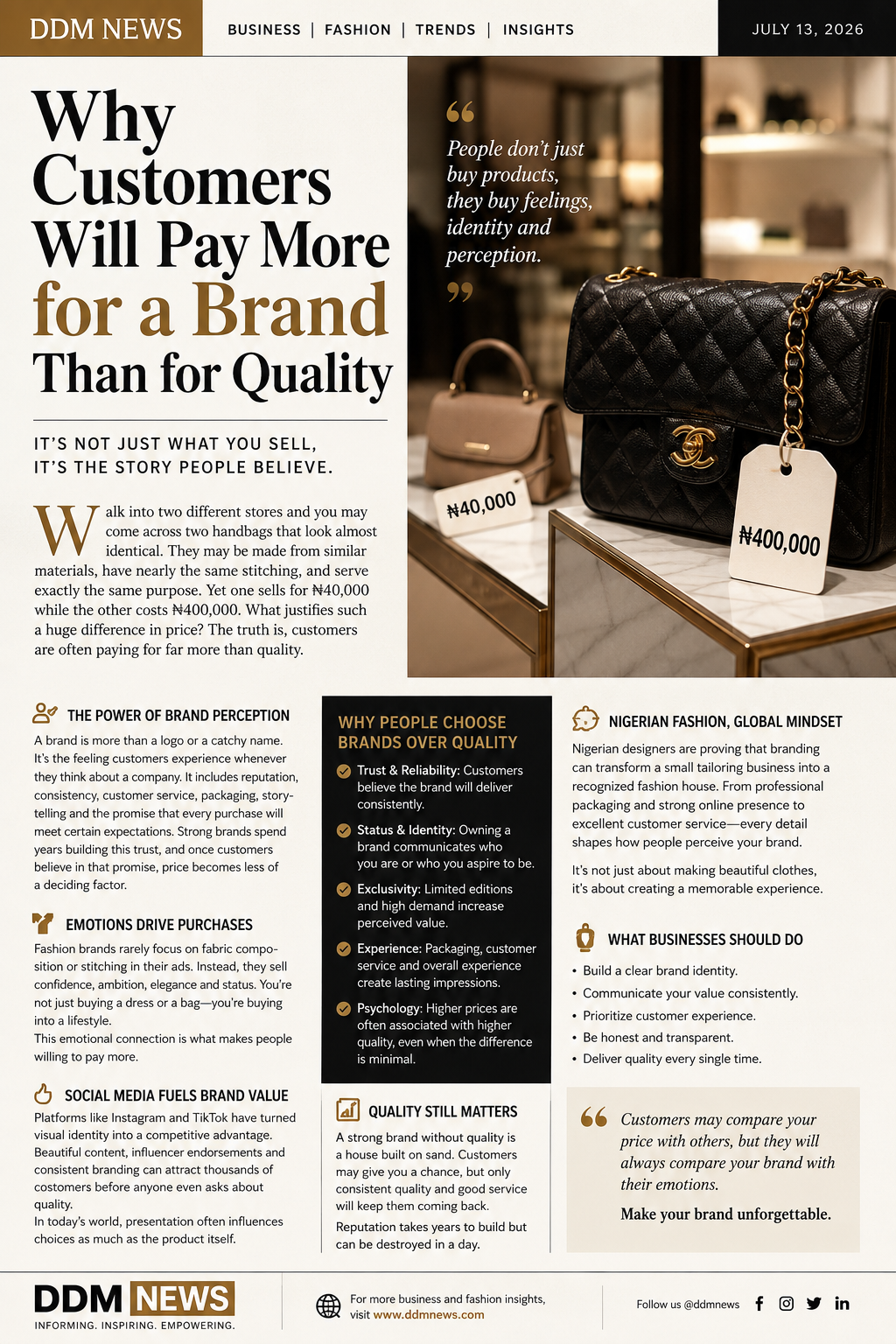
Walk into two different stores and you may come across two handbags that look almost identical. They may be made from similar materials, have nearly the same stitching, and serve exactly the same purpose. Yet one sells for ₦40,000 while the other costs ₦400,000. The question many people ask is simple: what justifies such a huge difference in price? Is the more expensive bag truly ten times better in quality, or are customers paying for something else entirely?
The answer lies in one of the most fascinating principles of modern business: people often buy brands before they buy products. While quality remains important, it is rarely the only factor influencing purchasing decisions. Across industries, from fashion and technology to automobiles and cosmetics, branding has become one of the most valuable assets a company can own. It shapes perception, builds trust, creates emotional connections, and often convinces customers to pay significantly more for products they believe represent a certain lifestyle or status.
A brand is much more than a logo or a catchy name. It is the feeling customers experience whenever they think about a company. It includes reputation, consistency, customer service, packaging, storytelling, and the promise that every purchase will meet certain expectations. Strong brands spend years building this trust, and once customers believe in that promise, price becomes less of a deciding factor.
Luxury fashion illustrates this reality perfectly. Many designer brands source fabrics and materials similar to those used by smaller manufacturers. While premium brands often maintain high production standards, the enormous difference in price is not always explained by material quality alone. Instead, customers are paying for exclusivity, craftsmanship, heritage, prestige, and the confidence that comes with owning a recognizable name. The product becomes more than clothing or an accessory—it becomes part of the buyer’s identity.

This explains why many people willingly wait months for the release of limited edition fashion collections or pay premium prices for products that sell out within hours. Scarcity creates demand, and demand increases perceived value. When consumers believe that only a few people can own something, the item becomes more desirable regardless of whether another product offers similar functionality.
Psychology plays an equally important role. Research into consumer behavior has consistently shown that people often associate higher prices with higher quality, even when objective differences are minimal. A premium price can signal excellence, exclusivity, and reliability before a customer even examines the product. This mental shortcut influences purchasing decisions every day, especially in industries where appearance and reputation matter.
Fashion brands understand this principle exceptionally well. Their marketing rarely focuses solely on fabric composition or stitching techniques. Instead, advertisements tell stories about confidence, ambition, elegance, success, and belonging. Customers are not simply buying a dress, a suit, or a handbag. They are buying into a lifestyle carefully presented through campaigns, celebrity endorsements, fashion shows, and social media. The emotional value often outweighs the physical value.
Social media has accelerated the power of branding even further. Platforms such as Instagram and TikTok have transformed visual identity into a competitive advantage. A beautifully packaged product, elegant photography, consistent colors, and compelling storytelling can attract thousands of customers before anyone even asks about technical specifications. Businesses that invest in their online image often discover that presentation influences purchasing decisions almost as much as the product itself.
This does not mean quality is unimportant. On the contrary, quality remains the foundation upon which successful brands are built. However, quality alone rarely creates lasting success. Countless businesses produce excellent products but struggle because few people know they exist or understand what makes them unique. Meanwhile, brands with compelling stories, memorable identities, and consistent customer experiences continue attracting loyal buyers willing to pay premium prices.
The Nigerian fashion industry offers numerous examples of this trend. Talented designers across the country produce garments with exceptional craftsmanship, yet those who invest in branding often achieve greater commercial success. Professional logos, attractive packaging, engaging social media content, responsive customer service, and consistent visual identity help transform small tailoring businesses into respected fashion brands. Customers begin recommending them not simply because of the clothes but because of the entire experience surrounding the purchase.
Brand loyalty is another reason customers willingly spend more. When people have positive experiences with a company, they become less interested in comparing prices elsewhere. Familiarity reduces uncertainty. Buyers know what to expect, trust the quality, and appreciate the service. Over time, this confidence becomes more valuable than saving a small amount of money on an unfamiliar alternative.
At DDM News, industry observers note that the world’s most successful companies rarely compete on price alone. Instead, they compete on perception, customer experience, innovation, and emotional connection. Whether in fashion, electronics, hospitality, or beauty, businesses that consistently deliver memorable experiences build relationships that extend far beyond individual transactions. Customers return because they trust the brand, not merely because they need another product.
However, branding should never become an excuse for neglecting quality. Modern consumers are more informed than ever before. Online reviews, customer testimonials, and social media discussions quickly expose businesses that rely solely on attractive marketing while delivering disappointing products. A strong brand may attract first time buyers, but only genuine quality and excellent service create repeat customers. Reputation takes years to build and can be damaged in a matter of days if expectations are repeatedly ignored.
Entrepreneurs launching new businesses often assume that branding requires enormous budgets. In reality, many elements of effective branding cost very little. Clear communication, reliable customer service, attractive product presentation, consistent messaging, timely delivery, and honesty with customers all contribute significantly to a brand’s reputation. Even a small fashion label operating from home can create a premium image by maintaining professionalism at every stage of the customer journey.
The rise of digital commerce has made branding even more essential. In online shopping, customers cannot touch fabrics, inspect stitching, or evaluate products physically before making purchases. Instead, they rely heavily on brand reputation, customer reviews, photography, and previous experiences. Trust becomes the currency that drives sales, making branding one of the most valuable investments a business can make.
For fashion entrepreneurs, the lesson is clear. Producing beautiful garments is only the beginning. Success increasingly depends on creating a memorable identity that customers recognize, admire, and trust. From the logo on the label to the packaging, social media presence, customer interactions, and after-sales service, every detail contributes to the story a brand tells.
As DDM News continues to follow developments in business and fashion, one truth becomes increasingly evident: customers are not always paying more because a product is objectively better. More often, they are paying for confidence, reputation, consistency, exclusivity, and the emotional satisfaction that comes with buying from a brand they believe in. In today’s competitive marketplace, quality may attract attention, but branding is often what transforms an ordinary product into one customers proudly choose even when a less expensive alternative sits right beside it.




