



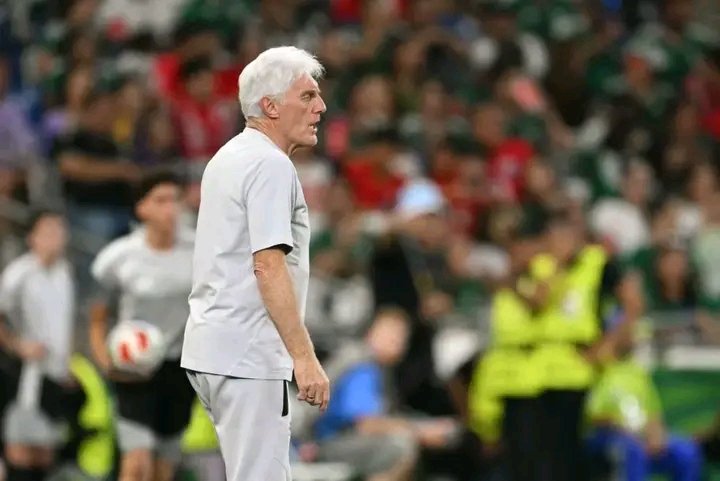
South Africa head coach Hugo Broos has admitted that Bafana Bafana were outmatched physically by Canada during their heartbreaking FIFA World Cup Round of 32 defeat, saying his players lacked the pace and power needed to compete with one of the tournament’s fastest teams.
The veteran Belgian tactician made the frank assessment after South Africa’s inspiring World Cup campaign came to an emotional end with a dramatic 1-0 loss to Canada, who scored deep into stoppage time to secure a historic place in the Round of 16.
Although visibly disappointed by the result, Broos refused to blame his players, instead praising their commitment, discipline and resilience throughout a tournament that exceeded the expectations of many football observers.

Speaking after the match, Broos acknowledged that the difference between the two teams was not determination or tactical discipline but physical attributes that have become increasingly important in modern international football.
According to the South African coach, Canada possessed greater speed, strength and athleticism, qualities that ultimately proved decisive in a closely contested encounter.
“We fought with everything we had, but in modern football you need physical power and speed. Canada had that advantage, and in the end it made the difference,” Broos said after the match.
The encounter remained tense from the opening whistle, with both teams displaying defensive organisation and tactical awareness.
South Africa entered the knockout clash full of confidence after an impressive group-stage campaign that earned praise across the football world. Bafana Bafana had surprised many by progressing beyond the group phase, demonstrating discipline, teamwork and an unwavering fighting spirit against more highly rated opponents.
Canada, however, approached the fixture determined to continue their own remarkable World Cup journey.
The North Americans dominated possession for long periods but found it difficult to break through South Africa’s compact defensive structure.
Goalkeeper Ronwen Williams produced another composed performance, making several important saves to keep his side in the contest as Canada’s attacking players searched for an opening.
As the match moved into its closing stages, it appeared increasingly likely that extra time would be needed to separate the two teams.
However, football’s unpredictable nature produced one final dramatic twist.
Deep into stoppage time, Canada launched one last attacking move into the South African penalty area.
Following a scramble inside the box, midfielder Stephen Eustáquio reacted quickest to a loose ball before firing a powerful volley into the net, sending Canadian supporters into wild celebrations and breaking South African hearts.
The late strike proved enough to seal a famous Canadian victory while ending Bafana Bafana’s memorable World Cup adventure.
Despite the painful defeat, Broos remained proud of his squad’s achievements.
The Belgian coach reminded reporters that very few experts expected South Africa to reach the knockout stage before the tournament began.
Instead, Bafana Bafana exceeded expectations by producing mature and disciplined performances that showcased the progress the national team has made under his leadership.
Broos stressed that his players had represented their country with pride and believed they had laid a solid foundation for the future of South African football.
He also pointed to broader structural challenges facing football in the country.
According to the experienced coach, South Africa must continue investing in youth development, sports science, physical conditioning and modern coaching methods if it hopes to compete consistently with the world’s elite football nations.
He argued that technical ability alone is no longer enough at the highest level, where matches are often decided by speed, endurance and physical intensity.
Football analysts have echoed Broos’ assessment, noting that Canada’s players regularly compete in Europe’s top leagues and Major League Soccer, where the pace and physical demands are among the highest in world football.
That experience, experts believe, helped the Canadians maintain their intensity throughout the match before eventually finding the decisive breakthrough.
Canada’s victory also represents another milestone in the country’s football renaissance.
Under head coach Jesse Marsch, the Canadian national team has developed into one of the strongest sides in the CONCACAF region, blending experienced leaders with exciting young talents.
The return of star defender Alphonso Davies from injury provided an additional boost during the knockout stages, while the team continued to impress with its high-pressing style and attacking intent.
For South Africa, however, the defeat marked the end of a campaign that restored belief among supporters.
The team demonstrated courage, tactical discipline and determination throughout the tournament, qualities that earned admiration from football fans across Africa and beyond.
Many supporters welcomed Broos’ honest post-match assessment, describing his comments as a realistic reflection of where South African football currently stands.
The coach also expressed confidence that the experience gained during the tournament would benefit the players as they prepare for future competitions, including the Africa Cup of Nations and qualification for the 2030 FIFA World Cup.
Several members of the current squad are still in the early stages of their international careers, giving supporters reason to believe the team can continue improving in the years ahead.
Broos, who has played a significant role in rebuilding Bafana Bafana since taking charge, insisted that South Africa’s World Cup journey should not be judged solely by the defeat to Canada.
Instead, he urged fans to recognise the progress made by the team over recent years and to remain patient as the next generation of players continues to develop.
Although the dream of reaching the Round of 16 ended in heartbreaking fashion, South Africa leaves the tournament with renewed confidence and valuable experience gained against some of the world’s strongest football nations.
For Canada, the dramatic victory keeps alive hopes of making an even deeper run at the 2026 FIFA World Cup, while for Bafana Bafana, the campaign will be remembered as an important step in the nation’s football revival and a foundation upon which future success can be built.




