


By Collins Opurozor
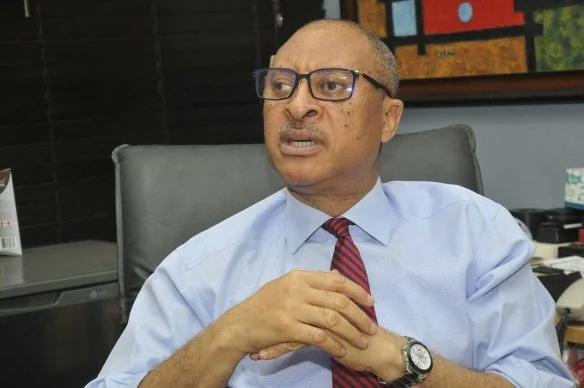
Professor Pat Utomi has lit a match near a petrol station. The opposition Nigeria Democratic Congress chieftain recently disclosed plans to build an independent election result transmission system ahead of the 2027 general elections. He made this confession on Arise News TV during Charles Aniagolu’s Arise Primetime programme. He did not stumble into this disclosure. He owned it with confidence. He even hinted that the conspiracy carries a deliberate foreign media dimension and that its details were being kept secret. That single admission should shake every Nigerian awake. It should rattle every institution that swore an oath to protect this republic. The silence that has greeted it from Nigeria’s security establishment is itself a source of grave worry.
The 1999 Constitution of the Federal Republic of Nigeria is thunderously clear on who conducts elections in this country. Section 153(1)(f) establishes the Independent National Electoral Commission as one of the constitutionally recognised federal executive bodies. Section 160(1) grants INEC the autonomy to determine and regulate its own procedure. Most decisively, the Third Schedule, Part I, Paragraph F, Sub-paragraph 15(a) vests in INEC the exclusive power to organise, undertake, and supervise all elections to the offices of President, Vice President, Governor, Deputy Governor, and members of both the National Assembly and the State Houses of Assembly. The word “exclusive” is not decorative. It is constitutional iron. It means no political party, no foreign media organisation, no academic activist, and no shadow network of any description shares that power with INEC or can legally replicate its functions.

The Electoral Act 2026 drills even deeper into this mandate. The Act prescribes the precise procedure for collating, transmitting, and announcing results. It establishes the Bimodal Voter Accreditation System and the IReV portal as the legal channels through which results flow from polling units to the public. These were hard-won innovations. Nigerians fought for them. Civil society bled for them. Legislators debated them fiercely. For Utomi to now propose a rival transmission architecture, coordinated in the shadows with unnamed foreign media partners, is to spit on every reform that brought Nigeria this far. It renders every legal framework meaningless. A country where two entities transmit election results simultaneously is not a democracy. It is a battlefield waiting for its first casualty.
History does not forgive nations that ignore this lesson. Kenya’s 2007 post-election violence is one of Africa’s most documented catastrophes. When the Electoral Commission of Kenya announced Mwai Kibaki as winner of the December 2007 presidential election, the opposition Orange Democratic Movement (ODM) of Raila Odinga rejected the results outright. ODM did not go to court first. It went to the streets. It published its own figures. It told its supporters that the election had been stolen. Within hours, the country that had been celebrated as a model of East African stability was engulfed in flames. Over 1,500 people lost their lives. More than 600,000 were internally displaced. The Rift Valley, Kisumu, Nairobi’s Kibera slums; these became theatres of horror. Women were raped. Churches holding terrified civilians were set ablaze. Businesses built over generations were reduced to ash in hours. All of this began with one side deciding that it, and not the electoral body, held the authentic result. That is precisely the logic Utomi is now introducing into Nigeria’s political bloodstream.
Côte d’Ivoire in 2010 and 2011 is an even more instructive tragedy. When the Independent Electoral Commission declared opposition candidate Alassane Ouattara the winner of the presidential runoff, incumbent Laurent Gbagbo simply refused to leave. His loyalists on the Constitutional Council annulled the results and declared Gbagbo the winner instead. Two men. Two sets of results. Two governments. The country split along ethnic and regional lines with terrifying speed. What followed was a second civil war that killed over 3,000 people and displaced more than a million. The United Nations and French forces eventually had to intervene militarily to dislodge Gbagbo. A nation that had once been the economic locomotive of Francophone West Africa, the source of nearly half the world’s cocoa supply, became a humanitarian emergency. Gbagbo eventually faced the International Criminal Court. But no court can resurrect the dead or restore the years stolen from a generation of Ivorians who grew up in rubble.
Venezuela in 2024 brought this danger roaring into the present tense. When Nicolás Maduro’s government declared him the winner of the July 2024 presidential election, the opposition presented what it claimed were digitally verified voting tallies from individual polling stations, insisting their candidate Edmundo González had won decisively. Two competing result systems. Two claims of legitimacy. The country fractured. Protests erupted across dozens of cities. Security forces responded with live ammunition. Hundreds were arrested. Dozens were killed. The international community largely refused to recognise Maduro’s declared victory. But recognition or no recognition, Maduro until recently remained in the presidential palace while Venezuelans continued to flee their country in one of the largest migration crises in the history of the Western Hemisphere. Venezuela’s lesson is chillingly direct for Nigeria: a parallel result transmission system does not correct a rigged election. It creates a permanent legitimacy crisis that hollow out a nation for decades.
The Department of State Services, the Nigerian Police Force, the Office of the National Security Adviser, and the Directorate of Military Intelligence cannot afford to look away from what Utomi has said. He did not whisper this in a private meeting. He proclaimed it on a national television platform with the calm assurance of a man who believes his plan is untouchable. He acknowledged foreign partners. He confirmed the secrecy of the operation. In the security lexicon of any serious nation, that combination: a domestic political actor, a clandestine plan to override a constitutional body, and named foreign collaborators, constitutes a threat to national sovereignty. The agencies must invite Utomi for formal questioning without delay. They must identify and investigate every foreign entity involved. They must trace the funding, map the network, and lay the full picture before Nigerians. An academic pedigree is not a shield against accountability. Professors can commit treason. Professors can threaten the peace. And when they do, the law must reach them as it would reach anyone else.
Nigeria is not a country that can absorb this kind of political wildfire. The Northeast still bleeds from Boko Haram and ISWAP insurgency. The Northwest groans under the weight of banditry and kidnapping. The Southeast is yet to fully heal from years of separatist tension and security crackdowns. Economic pressures following President Bola Tinubu’s groundbreaking reforms are yet to abate. These are the kindling conditions that make electoral disputes lethal. What Utomi is proposing would not merely contest a result. It would delegitimise an entire electoral process before a single result is announced. It would give every aggrieved faction, every armed group, every ethnic militia, and every foreign adversary a pretext to act. If Professor Utomi carries genuine passion for electoral integrity, the National Assembly is open. The bill-drafting process is available. Civil society organisations, electoral reform advocates, and legal scholars stand ready to engage serious proposals. But a secret parallel transmission system wired to foreign powers is not a reform proposal. It is a declaration of intent to subvert Nigeria’s constitutional order. Nigeria must treat it as exactly that, and act before the fire he is quietly nursing consumes us all.




