


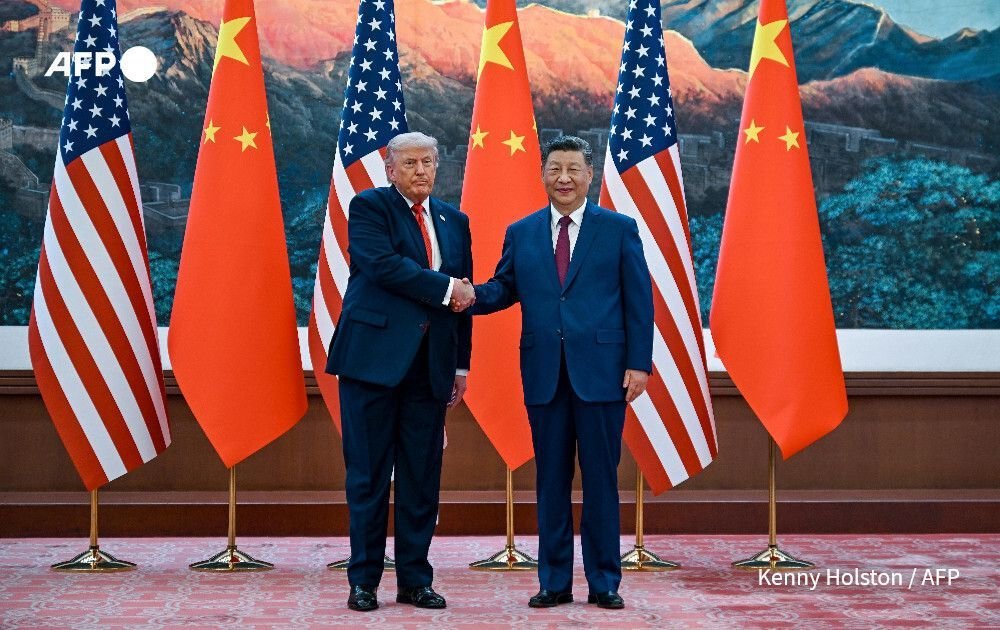
The ongoing Iran war has become the defining issue hanging over the United States President Donald Trump’s visit to Beijing, with diplomatic efforts to end the conflict still deadlocked and global economic pressure continuing to mount.
Trump is expected to press Chinese President Xi Jinping to play a bigger role in pushing Iran toward a settlement during talks in Beijing on Thursday.
The trip marks Trump’s first visit to China since 2017, but analysts say Washington may struggle to secure the level of cooperation it wants from Beijing, which remains one of Tehran’s closest economic partners and a major buyer of Iranian oil.
Peace Talks Remain Deadlocked
More than a month after a fragile ceasefire took effect, negotiations aimed at ending the war have made little progress.

The United States has continued to demand that Iran abandon its nuclear programme and loosen its grip on the Strait of Hormuz the strategic shipping route that previously handled roughly 20 percent of global oil and liquefied natural gas supplies.
Iran, however, has insisted on compensation for war damage, an end to the U.S. blockade on its ports, and a halt to fighting across the region, including in Lebanon, where Israeli forces continue clashes with the Iran-backed Hezbollah group.
Trump has publicly dismissed Tehran’s demands as “garbage.”
Rubio Warns China Over Iran Support
Ahead of the summit, U.S. Secretary of State Marco Rubio warned that Chinese support for Iran could damage relations between Washington and Beijing.
The United States, he said, wants China to take “a more active role” in convincing Tehran to step back from escalating tensions in the Persian Gulf.
Rubio also revealed that discussions around Iran would likely intersect with broader trade negotiations between both powers.
Meanwhile, the Trump administration said U.S. and Chinese officials had already agreed in principle that no country should impose tolls or restrictions on maritime traffic through the Strait of Hormuz.
Oil Routes And Global Trade Under Pressure
The war continues to reshape global energy markets and shipping routes.
Ship-tracking data showed that a Chinese supertanker carrying Iraqi crude successfully passed through the Strait of Hormuz this week, becoming one of only a few major vessels to navigate the route since the conflict began.
Sources also say several countries are exploring new shipping arrangements with Tehran, moves that could strengthen Iran’s long-term influence over one of the world’s most important oil transit corridors.
Japan-linked oil tankers have also resumed limited movement through the strait despite rising security concerns.
The disruptions have already triggered higher oil prices, worsened inflation fears and raised political pressure on the White House ahead of the U.S. midterm elections.
Middle East Alliances Shifting
The conflict is also accelerating political realignments across the Middle East.
Israel claimed this week that Prime Minister Benjamin Netanyahu secretly travelled to the United Arab Emirates in March for talks with President Sheikh Mohammed bin Zayed Al Nahyan aimed at strengthening ties between both countries.
The UAE later denied the report, calling claims of any undisclosed meeting “entirely unfounded.”
Iran’s Foreign Minister Abbas Araghchi responded sharply, warning Gulf states against cooperating with Israel against Tehran.
Reuters also reported that Saudi Arabia carried out airstrikes against Iran-backed militias in Iraq as regional powers quietly deepen their involvement in the conflict.
Despite the worsening tensions, U.S. Vice President JD Vance said Washington still believes progress is possible in negotiations.
“The president’s red line is simple,” Vance said. “Iran cannot have a nuclear weapon.”
Iran has repeatedly denied seeking nuclear arms.




