



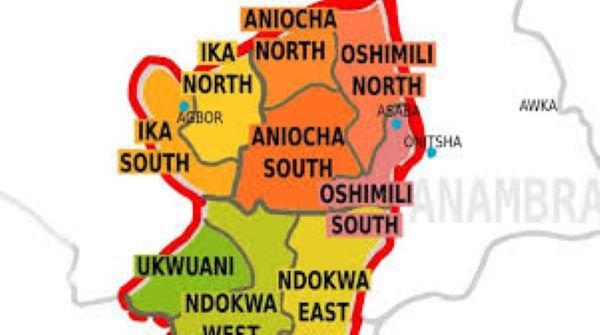
Political leaders from Delta North have rejected proposals suggesting that the long-demanded Anioma State should be merged into the South-east region.
Their message was firm, direct, and unanimous: Anioma belongs to the South-south, and no political negotiation will change that position.
The leaders delivered their stance in a statement issued in Asaba and circulated to journalists on Sunday. They reaffirmed their commitment to the creation of Anioma State but stressed that the new state must emerge strictly from the South-south region.
They argued that the South-south reflects Anioma’s cultural, historical, and administrative roots, and therefore remains the most accurate regional identity for its people.

They said their collective position followed extensive consultations on the renewed national debate surrounding state creation.
According to them, the agitation for Anioma State has been a decades-long movement anchored on justice, identity, and development.
They described it as a generational effort led by past and present stakeholders who believe Anioma deserves a clearly defined political status within Nigeria.
The leaders noted that the pursuit of statehood is not a political adventure but a historical mandate handed down by their forebears.
They insisted that the creation of Anioma State would strengthen equity and support the broader developmental aspirations of the Anioma people.
They expressed confidence that statehood would enhance representation and secure their cultural heritage.
They also declared full support for a proposed Anioma State carved from the existing nine local government areas of Delta North.
They listed the areas as Aniocha North, Aniocha South, Ika North-East, Ika South, Ndokwa East, Ndokwa West, Oshimili North, Oshimili South, and Ukwuani. According to the statement, Asaba remains the accepted and natural capital of the new state.
The group rejected ongoing suggestions linking Anioma to a merger with the South-east. They described those proposals as historically inaccurate and politically misleading.
They insisted that Anioma’s identity is firmly anchored in the South-south and warned that any idea suggesting otherwise is unacceptable.
They assured residents that they would continue to defend Anioma’s collective interest as national conversations on state creation intensify.
Meanwhile, House of Representatives members from Delta North dismissed the claim that Asaba might be replaced as the proposed capital of Anioma State.
The lawmakers Ngozi Okolie, Victor Nwokolo, and Nnamdi Ezechi issued a joint statement condemning the rumour as divisive and unpatriotic.
They warned that the speculation does not reflect the aspirations of the Anioma people.
They said the choice of Asaba as the capital is not a recent political decision but a product of decades of consultations, cultural logic, and broad historical consensus across all Anioma clans.
They noted that the agitation for Anioma State is not a personal project.
They argued that no individual, regardless of status or influence, can alter the agreements already reached by the communities of Aniocha, Oshimili, Ika, and Ndokwa/Ukwuani.
The lawmakers criticised what they called opportunistic campaigns driven by personal relevance rather than genuine advocacy for state creation.
They warned that reopening the question of the capital amounts to an attack on Anioma’s unity and cultural identity.
They emphasised that the boundaries and capital of the proposed state have been clearly defined and remain unchanged.
They urged residents to ignore misinformation and political distractions.
They assured their constituencies that they remain committed to the realisation of Anioma State and will continue to push for the true aspirations of the people at the National Assembly.




