


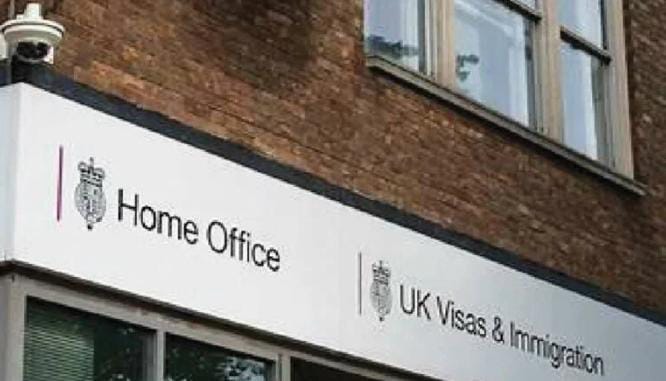
(DDM) – The United Kingdom has triggered an unprecedented immigration crackdown, suspending study visas for nationals of four countries following a dramatic spike in asylum claims.
Diaspora Digital Media (DDM) gathered that the decision was announced by the UK Home Office after internal data showed a sharp rise in migrants who entered legally before applying for asylum.
The affected countries are Afghanistan, Cameroon, Myanmar and Sudan.
Under what officials described as an “emergency brake,” sponsored study visas for nationals of the four countries will be halted.

In addition, skilled worker visas for Afghan nationals will also be suspended.
The changes are expected to be introduced through amendments to Immigration Rules on March 5 and will come into force on March 26.
According to official figures, nearly 135,000 individuals have claimed asylum in the UK after initially arriving through legal routes over the past five years.
Since 2021 alone, about 133,760 people who entered on student or other temporary visas subsequently lodged asylum applications.
The Home Office disclosed that asylum claims through legal entry routes now account for almost 40 percent of all applications.
In 2025, such claims represented 39 percent of the more than 100,000 asylum applications recorded.
Officials said asylum applications by students from the four affected countries increased by more than 470 percent between 2021 and 2025.
Applications from Myanmar reportedly rose sixteen-fold within the same period.
Claims from Cameroon and Sudan increased by more than 330 percent.
Between 2021 and the year ending September 2025, the proportion of Afghan asylum claims relative to study visas issued reached 95 percent.
Authorities also revealed that the number of Afghans on work visas now claiming asylum exceeds the number of new work visas being granted to them.
The British government stated that although student asylum claims fell by 20 percent in 2025, those who arrived on study visas still make up 13 percent of all pending asylum cases.
The Home Secretary, Shabana Mahmood, defended the tough measures, arguing that the visa system was being exploited.
She noted that asylum support currently costs British taxpayers more than £4 billion annually.
Nearly 16,000 nationals from the four countries are presently being supported at public expense.
More than 6,000 of them are reportedly housed in hotels funded by the government.
Mahmood stated that an above-average proportion of individuals from the affected countries declared destitution upon applying for asylum.
She maintained that Britain would continue to provide refuge to those fleeing war and persecution.
However, she insisted that the visa system must not be abused.
The visa suspension comes alongside sweeping asylum reforms introduced this week.
Under the new framework, refugee status for adults and their dependent children will now be reviewed every 30 months.
Previously, refugee status was granted for five years before individuals could apply for indefinite leave to remain.
Under the tightened rules, refugees from countries deemed safe will be expected to return home.
Unaccompanied minors will continue to receive five years’ leave pending the development of a long-term policy.
Those already in the UK will be assessed under the old framework.
The government confirmed that protection periods have been reduced from five years to 30 months starting March 2.
Officials said the move aims to reduce “pull factors” believed to encourage dangerous small boat crossings across the English Channel.
Reports indicate the reforms are partly modelled on Denmark’s stringent asylum system.
The Prime Minister has also reportedly adopted a firmer diplomatic approach to migration enforcement.
In November, Britain warned countries such as Angola, Namibia and the Democratic Republic of Congo that visa suspensions could follow if they failed to cooperate on deportations.
Within four months, return agreements were secured and deportation flights resumed.
Despite the crackdown, the government emphasized that it remains committed to humanitarian resettlement schemes.
Since 2021, Britain has offered sanctuary to more than 37,000 Afghans under dedicated resettlement programmes.
In 2025 alone, about 190,000 humanitarian visas were granted through safe and legal routes.
Between 2010 and 2025, the UK ranked as the sixth-largest global resettler of refugees referred by the UNHCR.
Migration remains one of the most contentious political issues in Britain.
The anti-migration Reform UK party has continued to gain traction in opinion polls amid public concerns over border control and housing pressures.
Analysts say the visa freeze signals one of the most dramatic immigration shifts in recent British history.
Critics argue the decision could harm international students and strain diplomatic relations.
Supporters, however, believe it is a necessary step to restore order to what they describe as a broken asylum system.
The coming weeks are expected to reveal the broader global and educational impact of the UK’s controversial move.




