


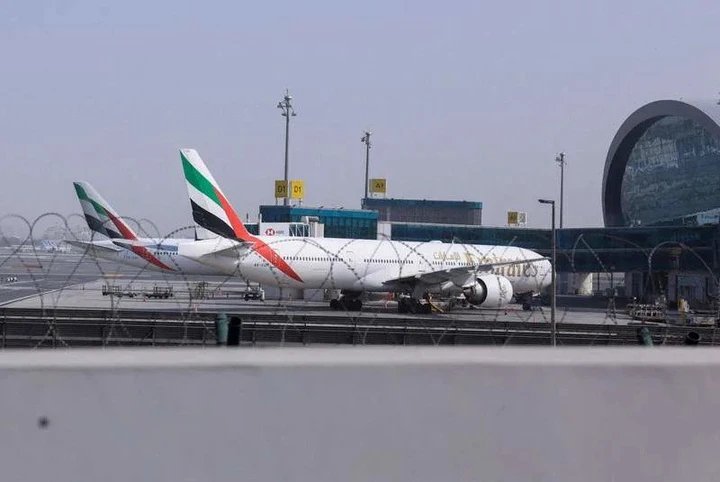
(DDM) – Commercial flights in the United Arab Emirates have continued to take off and land within minutes of missile alerts, raising serious global concerns about aviation safety in active conflict zones.
DDM reveals that aircraft operations at major airports, including Dubai International Airport, persisted even as warnings of incoming strikes were issued during the ongoing tensions involving Iran, the United States, and Israel.
Reports indicate that several planes departed just minutes before a drone struck a fuel storage facility near Dubai International Airport, highlighting the narrow margin between routine aviation activity and potential catastrophe.
Within a 30-minute window leading up to the strike, more than a dozen flights had already taken off, exposing passengers and crew to significant risk.

The development has intensified fears among aviation experts and the global public, particularly given past incidents where civilian aircraft were caught in military conflicts.
The current situation has drawn comparisons to the 2020 tragedy in which an Iranian missile mistakenly brought down a passenger aircraft, killing all 176 people on board.
Aviation analysts warn that flying near active conflict zones dramatically increases the likelihood of accidents, including the risk of planes being struck by missiles, drones, or misidentified by air defence systems.
Industry professionals, including pilots and security specialists, have expressed alarm over the continued operation of commercial flights in such volatile airspace.
One affected individual, who lost a loved one in the 2020 incident, questioned the decision to allow flights in dangerous zones, describing the situation as avoidable and deeply concerning.
Data from recent aviation activity shows that thousands of flights have operated in the region since the escalation of hostilities, despite repeated security alerts.
At Dubai’s aviation hub, dozens of flights were recorded taking off or landing within five minutes of official warnings about incoming threats.
Other UAE airports, including those in Abu Dhabi and Sharjah, also recorded similar occurrences, though at lower frequencies.
Security experts note that not all attacks are detected in advance, with some strikes occurring without prior warning, further increasing the danger to civilian aircraft.
One such incident involved a drone strike on a fuel tank facility near the airport, which reportedly occurred without an early alert system being triggered.
Airlines operating in the region have defended their decisions, stating that all flights undergo strict safety assessments before departure.
A spokesperson for a major UAE-based airline maintained that no flight is allowed to operate unless it has been thoroughly evaluated and deemed safe under existing protocols.
Despite these assurances, multiple aircraft have reportedly sustained damage while on the ground during the conflict, although no casualties have been recorded in those incidents.
The situation has sparked renewed debate within the aviation industry over the balance between maintaining global travel routes and ensuring passenger safety during periods of armed conflict.
Experts are now calling for stricter international regulations and clearer guidelines to prevent civilian aviation from operating too close to high-risk military zones.
As tensions in the Middle East continue to escalate, the risks facing commercial aviation remain a pressing concern for governments, airlines, and millions of passengers worldwide.




